Building Together: How Fidelity Invests in Utah’s Workforce
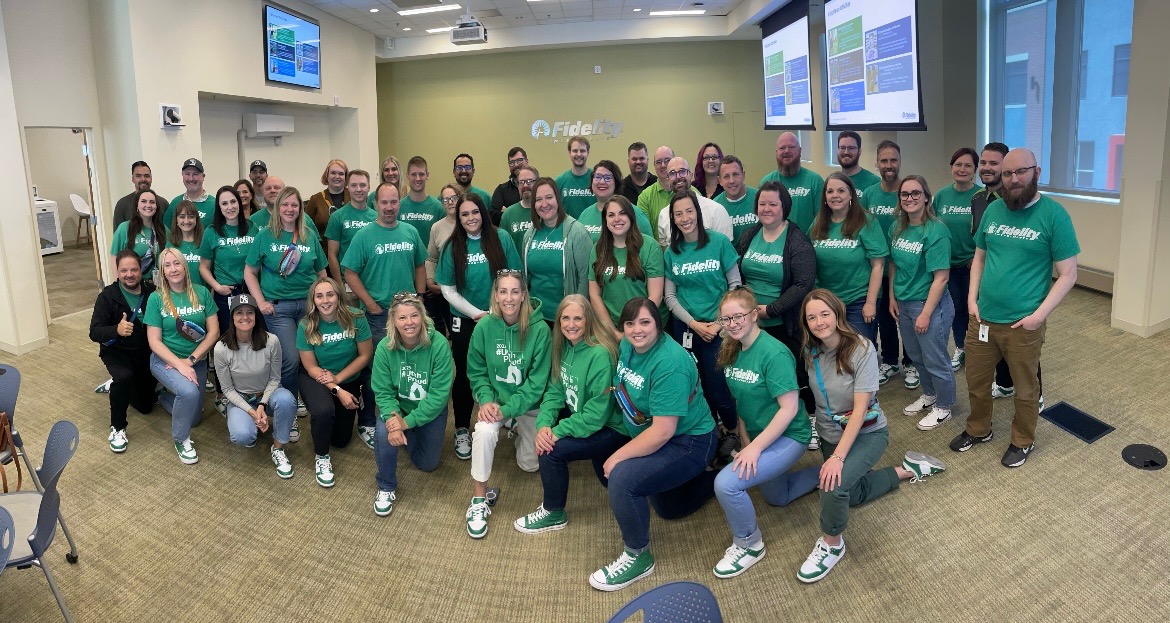
Fidelity Investments first established its presence in Utah in 1986, when it began operations with 100 brokerage associates. Fidelity’s regional presence has grown significantly since then, with the company now employing more than 3,400 associates across major business units such as brokerage, wealth, enterprise technology, and workplace investing. Fidelity is the largest private employer in downtown Salt Lake City and also has two investor centers in Salt Lake City and Orem. And, in November 2025, the company expanded its Invest in My Education initiative to Utah.
We spoke with Alex Janak, director of government relations and public affairs at Fidelity Investments, about Fidelity’s commitment to community engagement, education, and financial literacy programs.
I am originally from Idaho but moved to Salt Lake City over 20 years ago to attend the University of Utah for my undergraduate and graduate degrees. I began my career at the Utah Educational Savings Plan as a research analyst and then a financial analyst. I then spent nearly 10 years working for the Utah Legislature at the Office of Legislative Research and General Counsel, where I managed a team of policy analysts specializing in topics spanning transportation, taxation, public and higher education, public sector retirement and more. I had the opportunity to work on some really interesting projects, including the state’s efforts to host the 2034 Winter Olympic and Paralympic Games, collaborating with both the bid committee and then the organizing committee. I also worked on creating the public-private coordination for the Capital City Revitalization Zone project to revitalize the Delta Center, convention center, and surrounding area.
After more than a dozen years in the public sector, I wanted the opportunity to approach similar work from a new perspective. I joined Fidelity in August 2025 as director of government relations and public affairs. In this role, I represent Fidelity in several external facets, including through our community relations and philanthropic efforts; state and local legislative work; and building our relationships with local chambers of commerce and across the state’s business community.
While I have only been here a few short months, I have been blown away by the amount of goodwill at Fidelity and its emphasis on good corporate citizenship. I am looking forward to supporting and extending this work in partnership with my internal partners at Fidelity and external collaborators across Utah.
To extend our longstanding support of financial education and empowerment to the next generation, we launched Invest in My Education(ME)SM in 2023 to enrich the lives of under-resourced students and help them achieve better post-secondary outcomes, increased graduation rates, greater financial literacy, and access to stronger professional networks. Through its Fidelity Scholars Program, Invest in My Education combines student scholarships with comprehensive ongoing support, including college success coaches, mental health and wellness resources, Fidelity mentors, financial education, and career readiness resources and support. This fall, we expanded the program to Utah students, who can apply for our next application cycle now through January 29, 2026.
Unlike many other grant programs, Invest in My Education focuses on the “mighty middle” student – that is, students with GPAs of 2.5-3.59. Of our current student participants, 63% are the first in their families to attend college and 94% report the program is increasing or maintaining their motivation to earn a degree. By combining higher education accessibility and affordability with wraparound support, Invest in My Education is helping empower students to achieve greater economic mobility and pursue pathways to generational wealth, which can in turn can support better long-term outcomes for students and their communities.
Beyond student support, the initiative will also bring its Ecosystem-Building Grants and Completion Grants to Utah. Ecosystem-Building Grants improve pathways for thousands of under-resourced students, and Retention and Completion Grants help local higher education institutions keep at-risk students in school.
Increasing interest in and access to higher education to grow the regional workforce is one of Utah’s top priorities. A 2024 study commissioned by the Utah System of Higher Education found Utah employers crave increased communication skills and work ethic among recent graduates, deeper technical skills, stronger industry collaboration, and expanded work-based learning opportunities.
The state has taken steps to overhaul its higher education system, with greater emphasis on “career-ready” fields and enabling reinvestment in new programs and offerings, but financial barriers still hold too many people back from their dreams of attending college and completing their degrees. Invest in My Education and the Fidelity Scholars Program help bridge that gap, providing not only financial support but also mentorship and career development to help bolster students’ futures and, in turn, support industries and economies. The initiative is a great example of how K-12 education, higher education, nonprofit community partners, and the private sector can work together to ensure more students have the resources they need to succeed.
>> Read: Fidelity Chooses to Invest in Salt Lake City
Since our founding, Fidelity’s goal has been to strengthen the financial well-being of our customers. Our community relations work supports this mission by collaborating with organizations that address a broad spectrum of community needs, investing in under-resourced individuals and families, and harnessing our associates’ broad talents to help drive change.
We value deep, long-term relationships with nonprofit organizations across Utah. Utah is the top-ranked U.S. state for financial literacy education, which we proudly support through our work with Junior Achievement and the Utah Council for Economic Education. Our associates visit classrooms to reinforce curriculum and help students build essential money management skills; we host Family Savings Events that create welcoming spaces for parents and students to discuss budgeting and savings strategies together; and our work with Junior Achievement includes job shadowing experiences for high school students and participation in JA Finance Park. These programs empower students to understand how decisions today impact tomorrow, equipping them to navigate an increasingly complex economic environment with confidence.
We have also been an important partner of the Utah Food Bank for more than 30 years, conducting food and fund drives that have provided the equivalent of over 30 million meals to Utahns facing hunger and volunteering thousands of hours at the Utah Food Bank’s warehouse. In 2025, our Utah associates donated 1,412,840 meals – enough to feed 323 families of four for a year. Separately, we’ve also sponsored a school through the Mobile School Pantry program for a decade.
We also work with organizations like the Boys & Girls Clubs and the Salt Lake Education Foundation to provide meaningful support for youth and their families. We invest in academic success by supporting after-school tutoring and homework help programs and, beyond academics, we host events that bring families together, creating a welcoming space where they can enjoy activities and build connections with our Fidelity associates.
I am thrilled to be part of the Fidelity team and look forward to working more closely with our regional partners in this role. Please do not hesitate to reach me directly at alex.janak@fmr.com.
_____
“Building Together” highlights examples of the impact of your investment and EDCUtah’s work in communities across the state.
For additional information or to schedule an interview, please contact us.

250 jobs
$189 million capex
Project Interlocken
Congratulations to Salt Lake City! Stadler, a global leader in designing and building rail vehicles—ranging from modular regional and commuter trains to trams, intercity, high-speed, and specialty rolling stock, as well as advanced signalling and full-life-cycle services—has announced plans to expand its existing operations in Salt Lake City, Utah. The company intends to create 250 jobs and invest $189 million in Utah over the next 15 years.
“Stadler Rail’s expansion is a clear example of human-centered economic development in action—innovation that leads to good jobs and sustainable growth for Salt Lakers,” said Lorena Riffo Jenson, director of Salt Lake City’s Department of Economic Development. “With a $70 million investment, 250 new jobs, and room to grow even more in the future, this project strengthens our local workforce and ensures that opportunity is created here at home. Salt Lake City is proud to support investments that double down on our people while fueling the next chapter of economic growth.
The company’s announcement was the result of collaboration among Salt Lake City, EDCUtah, the Utah Inland Port Authority, and the Governor’s Office of Economic Opportunity (GOEO). EDCUtah reintroduced Stadler Rail to GOEO’s EDTIF incentive program and encouraged the company to apply. EDCUtah has supported Stadler Rail since 2016, when the company first began exploring an expansion into the United States. During that process, Stadler chose Utah for its central location in the West and strong workforce.
“Stadler Rail is laying tracks for innovation right here in Salt Lake City, where they are building electric and hydrogen rail systems that ship across the country,” said Ryan Starks, executive director of EDCUtah. Their products and commitment to workforce training are moving the rail industry full steam ahead, and Utah’s advanced manufacturing industry continues to be a catalyst for innovation and growth.”
Stadler Rail, a Swiss-based global leader in railway manufacturing, operates 16 production and component plants, six engineering centers, and more than 80 service locations worldwide, employing over 15,000 people from 75 countries. Its U.S. headquarters and primary manufacturing facility are in Salt Lake City, where the company builds a wide range of rail vehicles for the North American market, including light rail, metro, diesel-electric, and hydrogen-powered trains. Stadler US has delivered on high-profile projects including metro trains for Atlanta’s MARTA and America’s first hydrogen-powered trains for California. Recently announced, Stalder will build the Utah Transit Authority’s next-generation TRAX light-rail system.
“Since we opened our Salt Lake City facility in 2019, we’ve secured critical contracts, created hundreds of high-skilled jobs and firmly established Utah as a center of excellence in rail manufacturing,” said Martin Ritter, CEO of Stadler North America. “Thanks to the support of the Utah Governor’s Office of Economic Opportunity we are expanding our plant to boost production capacity and further invest in the training and expertise of our local workforce—strengthening both Stadler’s U.S. operations and the economic future of Utah.”
The Utah Governor’s Office of Economic Opportunity (GOEO) – an EDCUtah founding investor – assisted the project by approving Stadler for Economic Development Tax Increment Financing (EDTIF).
“Railway manufacturing drives high-quality job creation, strengthens Utah’s advanced manufacturing sector, and positions the state as a hub for innovation and next-generation transportation,” said Jefferson Moss, executive director of the Governor’s Office of Economic Opportunity. “Stadler’s growth highlights how global companies are drawn to Utah’s pro-business environment and innovative spirit. Investments like this create lasting value — for our economy and for Utahns through skilled careers and stronger communities.”
Stadler was also approved for an incentive by the Utah Inland Port Authority Board on March 24, 2025. The incentive allows a maximum of 10 percent of Stadler’s property tax liability to be rebated over 25 years. This post-performance rebate is part of UIPA’s efforts to support targeted industries within project areas. By incentivizing investments like these, UIPA aims to promote economic growth while fostering significant investments in public infrastructure.
“This investment solidifies Utah as a premier hub for cutting-edge passenger rail manufacturing,” Ben Hart, executive director of UIPA, said in March. “Stadler’s expansion will bring high-quality jobs, strengthen local supply chains, and drive innovation in zero-emission passenger rail technology—exactly the kind of growth we aim to support.”
Jared Stewart, senior business development manager, led Project Interlocken for EDCUtah.
_____
EDCUtah Investors: If you were involved with this project and would like to have your organization mentioned, please email connect@edcutah.org and we’ll update this article.
For additional information or to schedule an interview, please contact us.


17 jobs
Project Falcons
Congratulations to Weber County! Auria – a mission-driven enterprise advancing space, missile defense, and cybersecurity through cutting-edge software and engineering solutions – has established operations in Weber County. The company has already created 17 new jobs since arriving in Utah in 2021.
Auria’s expansion to Utah from Colorado was supported by collaboration from EDCUtah and the Northern Utah Economic Alliance (NUEA).
During a Utah site visit in 2021, Auria met with Chris Roybal of NUEA, who was key to providing introductions and support that advanced the expansion project by connecting Auria with essential state and local partners.
“Auria’s decision to expand in northern Utah is a tremendous win for our region,” said Chris Roybal, president of Northern Utah Economic Alliance (NUEA). “High-paying aerospace and defense jobs like these not only strengthen our economy, but also affirm that northern Utah continues to be a prime destination for innovation, advanced manufacturing, and national defense leadership.”
“Utah’s aerospace and defense industry is one of the state’s strongest economic drivers,” said Ryan Starks, executive director of EDCUtah. “The established companies that already call Utah home serve as anchors that attract new businesses, creating a thriving ecosystem that reinforces the industry as a whole. Auria’s expansion to Utah is a testament to the continued innovation and quality job creation happening across the sector and throughout our state.”
Auria is a mission-driven technology company that designs, engineers, and delivers advanced software solutions for space, satellite, and national security applications. It focuses on space operations, missile defense, cyber protection, and strategic deterrence systems, serving government, commercial, and international partners. Formed on January 1, 2024, through the merger of four leading space and defense firms—Boecore, Orbit Logic, Ascension Engineering Group, and La Jolla Logic—Auria was established to unify expertise and innovation in support of complex missions that ensure global security and advance space capabilities.
“There are so many factors that make Utah an enjoyable place to do business. The workforce in Utah is phenomenal, thanks to the number and quality of higher education institutions, along with the strong State support for education. Additionally, we found that Utah is a very attractive place to live for many aspiring engineers,” said Todd Young, Auria’s vice president of strategic & defense solutions. “With our headquarters in Colorado Springs, it felt like a natural progression to expand work into friendly and neighboring Utah. We look forward to continuing our work and expanding our presence here.”
Erin Farr, deputy director and VP business development, led Project Falcons for EDCUtah.
_____
EDCUtah Investors: If you were involved with this project and would like to have your organization mentioned, please email connect@edcutah.org and we’ll update this article.
For additional information or to schedule an interview, please contact us.

The Economic Development Corporation of Utah (EDCUtah) is pleased to close out the month with three new corporate expansion and relocation wins!
“Utah’s diverse and growing economy is strengthened by innovative companies across multiple sectors—from life sciences to clean technology and health and wellness,” said Ryan Starks, executive director of EDCUtah. “Companies like Microvascular Therapeutics, Reencle, and Maxtec, not only bring innovation and global investment to our state, but also create high-quality jobs and foster sustainable economic growth. Supporting these projects allows us to build on Utah’s reputation as a hub for innovation, attract international partnerships, and enhance the prosperity and quality of life for communities throughout Utah.”
Here are the latest companies to choose Utah.
Life sciences startup Microvascular Therapeutics (MVT) is collaborating with the University of Utah to advance a breakthrough device and procedure designed to stop brain tumors. Founder and CEO Evan Unger, currently operating out of his home through Utah’s ALTA program, plans to grow operations into an incubator space at the University of Utah. Over time, MVT anticipates creating up to 50 high-quality jobs in business development, clinical operations, finance, and medical specialties—building on the founder’s proven track record of company growth.
EDCUtah supported Project Kimble by hosting a site visit, conducting a market cost comparison through its research team, and outlining available state incentive programs. EDCUtah also facilitated an introduction to Kelvyn Cullimore of BioUtah. As MVT grows, the company plans to apply for Utah’s Economic Development Tax Increment Financing (EDTIF) program.
The company is gaining visibility and traction in the industry: MVT recently joined BioUtah and presented at the BIO International Convention in Boston.
MVT’s continued development reflects the strength of Utah’s life sciences sector and the value of collaboration among startups, research institutions, economic development partners, and social programs.
Reencle, a Korea-based producer of sustainable composting technology, is expanding its operations to the United States with a new presence in Springville, Utah. The company is leasing a 6,000-square-foot facility, creating six new jobs and investing $2 million in capital expenditures. Reencle delivers innovative, clean tech solutions that align with the growing U.S. demand for circular economy practices and environmentally responsible waste management. The Springville location represents Reencle’s first operational footprint in North America.
EDCUtah supported Project Worm by providing customized market data and cost comparison analysis to guide the company’s location strategy. EDCUtah also hosted Reencle’s North America General Manager and Korean CEO for a comprehensive “Why Utah” presentation.
The company is also collaborating with Brigham Young University on ongoing research and a commercial pilot project that demonstrates its technology’s ability to convert food waste into valuable compost, reducing landfill dependence and promoting sustainable waste management.
Maxtec – a healthcare technology company that produces respiratory and patient monitoring technologies – has reaffirmed its commitment to Utah by choosing to retain operations in West Valley City. Closely connected to its sister company Permapure in New Jersey, Maxtec evaluated several consolidation options and ultimately decided to maintain its 70-employee workforce in Utah.
EDCUtah supported Project Maxwell by conducting a comprehensive market cost comparison between Utah, New Jersey, and other potential locations. The findings helped demonstrate Utah’s competitive advantages and contributed to the decision to keep Maxtec’s operations in West Valley City.
Rex Buys, business development manager, led Projects Kimble, Worm, and Maxwell for EDCUtah.
_____
EDCUtah Investors: If you were involved with these projects and would like to have your organization mentioned, please email connect@edcutah.org and we’ll update this article.
For additional information or to schedule an interview, please contact us.
223 jobs
$34.1 million capex
Project Case 2025
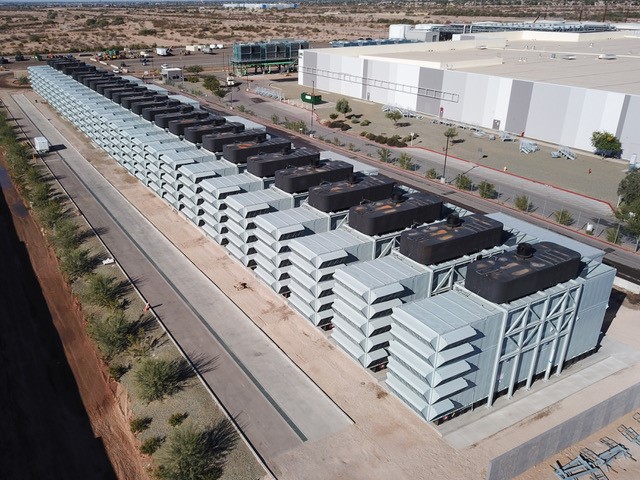
Congratulations to Clearfield City and Davis County! ACS Manufacturing, a manufacturer that designs and builds acoustical equipment enclosures—specifically for backup generators used in data centers, hospitals, and other critical industries—has announced plans to expand operations in Clearfield City. The company plans to create 223 new jobs and invest $34.1 million in Utah over the next 10 years.
The company’s announcement was the result of a collaboration among Spencer Brimley of Clearfield City, Davis County, EDCUtah, the Governor’s Office of Economic Opportunity, and the Northern Utah Economic Alliance.
Jeff Richards of CBRE Salt Lake City, who represented ACS Manufacturing during the project, brought the project lead to EDCUtah. EDCUtah worked closely with the project team to support the decision-making process and connected the company with key state and local partners.
“Clearfield City is thrilled to welcome ACS Manufacturing’s expansion,” said Mark Shepherd, mayor of Clearfield City. “This expansion will bring over 200 new jobs to our city and is a testament to our shared vision to strengthen Clearfield. We’re honored to be the home of the expansion and look forward to their continued success.”
“ACS Manufacturing will play a key role in supporting important industries across the state by manufacturing critical support systems right here in Utah,” said Ryan Starks, executive director of EDCUtah. “We appreciate our strong partnerships in northern Utah and the support from GOEO in providing an incentive to help bring this project to life. ACS Manufacturing has an important role in providing redundant and reliable systems. Additionally, they are creating high-wage jobs and delivering significant value to the community of Clearfield in Davis County.”
ACS Manufacturing is a specialty manufacturer that designs, engineers, and fabricates equipment for power generation, data centers, and other industries. It focuses on acoustical enclosures, fuel tanks, turbine systems, and skids, often serving as a single-source provider for complex projects. Incorporated in 1994 and founded on the principle that elegant solutions emanate from applying fundamental engineering principles, ACS was formed to meet the expressed need for single source, turnkey delivery of complex projects.
“As demand for our products continues to accelerate at a rapid pace, expanding our manufacturing operations in Utah is a strategic step forward,” said Dan Knox, CEO of ACS. “Utah offers a unique and compelling business environment, including its proximity to key customers and a deep pool of highly skilled labor. But what truly sets Utah apart is the exceptional work ethic of its people. We’re excited to invest in a region that shares our commitment to quality, innovation, and excellence in everything we do.”
The Utah Governor’s Office of Economic Opportunity (GOEO) – an EDCUtah founding investor – assisted the project by approving ACS Manufacturing Inc. for Economic Development Tax Increment Financing (EDTIF).
“Utah’s manufacturing sector is a key driver of our state’s economic resilience and prosperity,” said Jefferson Moss, executive director of the Governor’s Office of Economic Opportunity. “Companies like ACS Manufacturing are at the forefront of positioning Utah as a hub for technological advancement and innovation. Their growth creates high-quality jobs, strengthens our communities, and bolsters the state’s economy.”
Jared Stewart, senior business development manager, led Project Case 2025 for EDCUtah.
_____
EDCUtah Investors: If you were involved with this project and would like to have your organization mentioned, please email connect@edcutah.org and we’ll update this article.
For additional information or to schedule an interview, please contact us.
15 jobs
$9.5 million capex
Project Photosynthesis
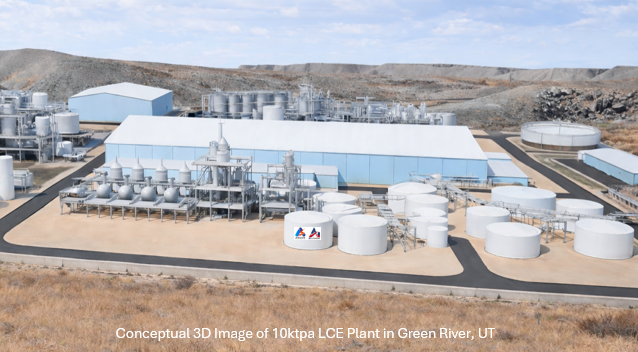
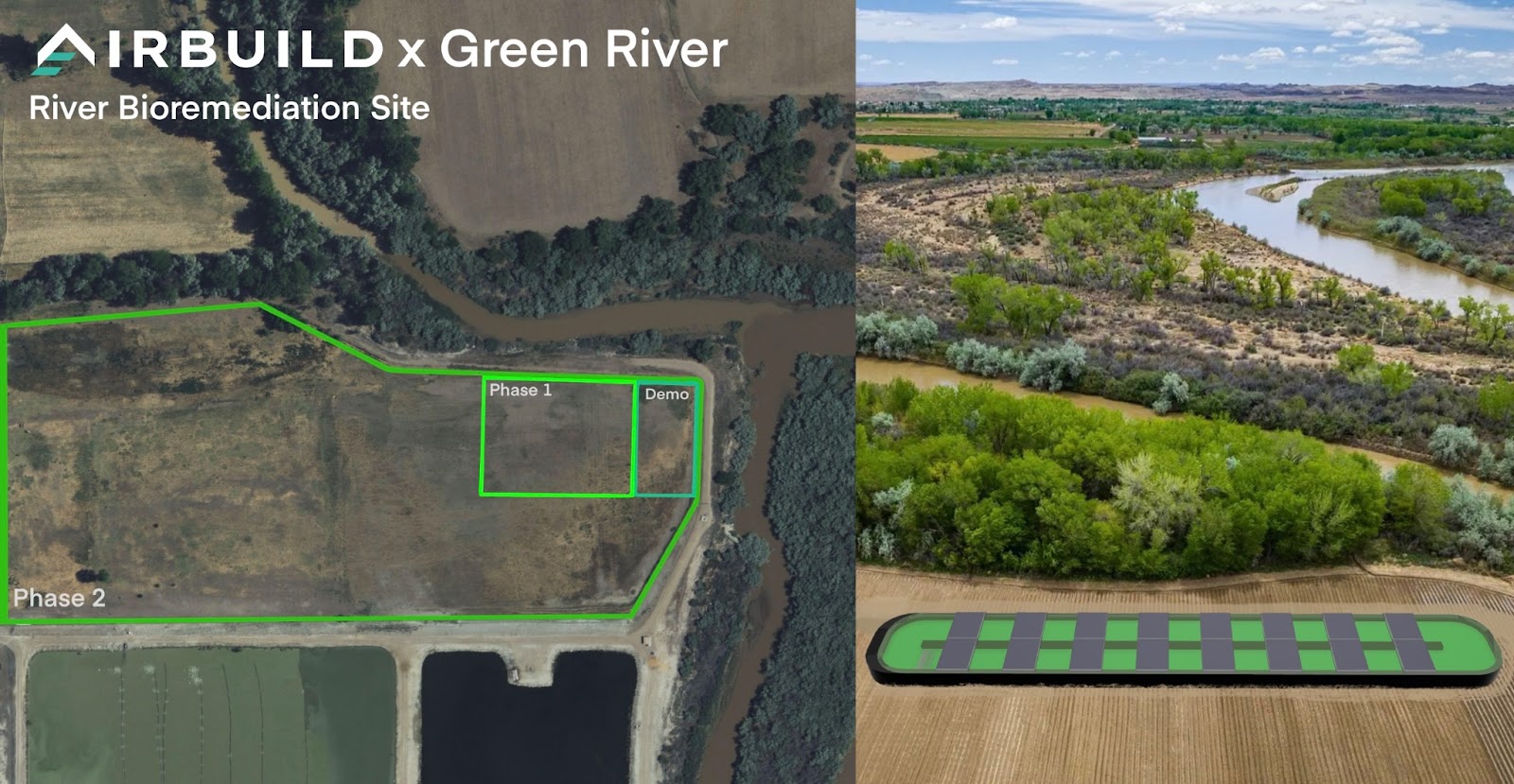
Congratulations to the City of Green River! Airbuild, a clean energy startup focused on carbon capture, water remediation, and biochar, announced plans to develop its first microalgae facility on property leased from the city. The company plans to create 15 new jobs in the City of Green River and invest $9.5 million in Green River alone over the next 3 years.
The company’s announcement came as the result of collaboration among City of Green River, EDCUtah, USU Eastern, Better City, Utah Inland Port Authority, and the University of Utah PEAK water sustainability engine.
EDCUtah connected with Airbuild during a Global Strategy & Outreach (GS&O) trip to San Diego in May 2024. Following the meeting, EDCUtah issued a statewide Request for Information (RFI) to identify partner communities and potential locations. The City of Green River responded with strong interest, and a site visit was held in November 2024. EDCUtah supported Airbuild with connections to state permitting agencies, facilitated networking opportunities to bolster their grant writing efforts, and provided research to help the company identify key supporting businesses and contractors.
“We are honored to welcome Airbuild to Green River and proud to stand alongside partners who believe in the power of rural innovation. This project brings more than jobs and investment – it brings purpose. By turning organic waste into biochar, Airbuild is helping us lay the foundation for a more sustainable approach to fertilizer production across our region. It’s a win for our environment, our economy, and our farmers,” said Edward Castro Bennett, city manager for the City of Green River. “This partnership reflects Green River’s commitment to a vibrant, resilient future rooted in stewardship, creativity, and bold collaboration. We’re especially grateful to EDCUtah for introducing Project Photosynthesis to our state and for championing this opportunity from the very beginning.
“Airbuild is an exciting example of what can be accomplished when we listen to community needs and pair private-sector goals with community champions,” said Ryan Starks, executive director of EDCUtah. “By addressing environmental challenges through collaboration with local partners, Airbuild is helping to drive sustainable economic growth in rural Utah. We’re thrilled to see companies like Airbuild helping to shape a more resilient future for Utah.”
Airbuild is a science and energy startup specializing in river bioremediation and sustainable resource recovery. Through partnerships with local governments and canal companies, the company implements systems that extract excess nutrients from waterways to improve water quality and downstream ecosystems. Airbuild transforms harvested algae and local organic waste into biochar, which is then used as fertilizer and sold for carbon credit initiatives delivering both environmental and economic benefits to the communities it serves.
“We’re incredibly grateful to the City of Green River and the EDCUtah team for their vision and leadership in making this project possible,” said David Gory, co-founder and CEO of Airbuild. “This collaboration shows what’s possible when innovation meets community. This deployment will not only remove thousands of tons of carbon and filter millions of gallons of water, it will also transform local organic waste into valuable biochar and create local jobs. This partnership proves that small cities can lead the way in environmental innovation and resilience.”
Jared Stewart, senior business development manager, led Project Photosynthesis for EDCUtah.
_____
EDCUtah Investors: If you were involved with this project and would like to have your organization mentioned, please email connect@edcutah.org and we’ll update this article.
For additional information or to schedule an interview, please contact us.

Anyone who has looked down into Rio Tinto Kennecott’s Bingham Canyon copper mine — located on the west side of the Salt Lake Valley and the largest human-made excavation in the world — can see that things are happening on a massive scale. In a sense, that’s also true about Kennecott’s other Utah land assets.
Kennecott owns approximately 95,000 acres of land (more than six times the size of Manhattan) in the Salt Lake and Tooele Valleys. The company’s land ownership is the result of over 100 years of copper mining in Utah’s Oquirrh Mountains. Today, this land is poised to become one of largest real estate opportunities in the western United States.
We spoke with Alan Matheson, Kennecott’s former general manager of land and water development, about the significance of these landholdings for Utah’s current and future real estate development and economic opportunities.
“Rio Tinto Kennecott owns most of the remaining undeveloped land in the Salt Lake Valley, and significant parcels in Tooele County,” explained Matheson. “Of course, not all 95,000 acres will be developed. Much of the land is in current mining operations, much provides a key safety buffer between communities and those operations, and other areas will be preserved for ecosystem conservation. Nevertheless, significant land along the foothills of the Oquirrh Mountains is developable and will help meet the needs of our growing community.”
Many of these areas are:
For developers, this means access to strong job markets, schools, and transportation, making the land ideal for residential, commercial, industrial, and mixed-use projects.
Because of Kennecott’s mining operations, large tracts of its land already have nearby infrastructure assets like roads, rail, and utilities. Many parcels are zoned for urban uses and have conceptual plans. Kennecott prioritizes ongoing collaboration with municipalities, public utilities, and transportation agencies to lower initial development costs, accelerate project timelines, and align with community goals. Taking a proactive approach, Kennecott is also addressing key challenges with water, remediation, and needed infrastructure upgrades. The result of these efforts is a series of highly attractive parcels that will contribute significantly to Utah’s future.
Kennecott’s landholdings tend to be large and contiguous, making them ideal for business centers, large-scale commercial hubs, and master-planned communities. Utah, like many other states, is experiencing a housing shortage, and this land can play a role in meeting Utah’s housing supply needs over the next few decades.
Matheson emphasized the value of partnerships: “We recognize that accommodating Utah’s growing population will require a team effort. To that end, we’re actively exploring partnerships with outstanding developers and public entities to provide the expertise, resources, and infrastructure needed to achieve our state’s vision.”
When it comes to master-planned communities, Utah has a proven model for success. “Most people are familiar with the Daybreak community,” said Matheson. “One of the most successful developments in the country, it’s a cutting-edge example of transforming land used for mining operations into a beautiful, livable, vibrant neighborhood.”
Plans for the Daybreak community – located in South Jordan, Utah, a suburb of Salt Lake City — began in 2001. At more than 4,000 acres, Daybreak is the largest master-planned community in the state’s history. Today, the community has an estimated 44,000 residents and just under 10,000 homes. Daybreak was developed to include key quality-of-life amenities such as housing, schools, retail, offices, transit, parks and trails, and entertainment.
In 2021, Larry H. Miller Real Estate purchased the remaining 1,300 acres of undeveloped land in Daybreak. They’re working together with the City of South Jordan on plans to build out a downtown center that includes the new baseball stadium for the Salt Lake Bees.
Kennecott prioritizes collaboration with local governments regarding the future use of its surplus land, and the company seeks development partners with a long-term vision for sustainability and economic opportunity. “What happens on our land will impact the future of not just the Greater Salt Lake region, but also the entire state,” Matheson said. “We are approaching the development of these lands strategically, with a focus on creating a brighter future for Utah.”
Corporate expansion and site selection trends can help inform Kennecott’s land-development strategy. And as the sites are developed, Utah’s public-private partnership for economic development can support companies and site selectors as they evaluate potential sites for corporate expansion.
“EDCUtah is a key player in Utah’s economic development ecosystem and a valuable partner for Rio Tinto,” said Matheson. “EDCUtah helps us network and build partnerships that allow us to achieve our goals. But more to the point, EDCUtah can help identify the companies that would relocate to this area, bringing jobs and economic opportunity. As we develop these lands, EDCUtah will play a critical role in attracting key tenants.”
“Most people don’t fully realize the history and impact of Kennecott and the Bingham Canyon Mine in Utah,” said Matheson. “Over the course of its 121-year history, the mine has produced more copper than any other mine in the world. But it’s also had significant local impact as one of the biggest taxpayers in the Salt Lake Valley—funding roads, schools, and other public infrastructure.”
In the early 1900s, the Utah Copper Company began developing the Bingham Canyon Mine in the Oquirrh Mountains. The company acquired tens of thousands of acres of land to support mining operations—everything from ore processing and waste storage to railroad infrastructure and company towns.
In 1936, the Utah Copper Company was acquired by the Kennecott Copper Corporation. Over the next several decades, mine production boomed. During World War II, for example, the mine produced about 30 percent of the copper used by the Allies.
Matheson explained: “The Kennecott mine is a vertically integrated operation. In addition to the mine itself, there is a concentrator, one of only two operating copper smelters in the United States, and a refinery. It’s unusual to have an operation that mines ore and then produces 99.99% pure copper in the same location. As we think about our nation’s energy future and economic interests, being able to produce copper and critical minerals domestically is essential.”
As Kennecott expanded the mine, the company continued acquiring land in western Salt Lake County and eastern Tooele County. This included not just mine sites, but also surrounding land for potential expansion and long-term residential buffer zones.
Then, in 1989, the global mining company Rio Tinto acquired Kennecott Corporation. Around the same time, Salt Lake Valley’s population growth started to take off—putting Rio Tinto’s land holdings on the periphery of rapidly growing suburbs. And as mining operations modernized and consolidated, less land was needed for industrial use. In response to these shifting trends, Rio Tinto formed the Kennecott Land Company in 2001 to plan and develop its surplus land in Utah.
“We know that our company has a social license to operate, and we need to make sure that we’re contributing to Utah’s quality of life, to the tax base, and to opportunities that benefit the residents of Utah,” said Matheson. “We have a resource that can be used to advance not just the interests of the company, but the people in the communities where we operate. We have been a big part of Utah’s history, and we want to be a constructive part of its future.”
For more information about Kennecott’s landholdings, contact Scott Baird, Kennecott’s current general manager of land & water development: Scott.Baird@riotinto.com.
_____
“Building Together” highlights examples of the collective impact of your investment and EDCUtah’s work in communities across the state. Do you have a story you’d like us to share? Email connect@edcutah.org.
For additional information or to schedule an interview, please contact us.
100 jobs
Project Lighthouse
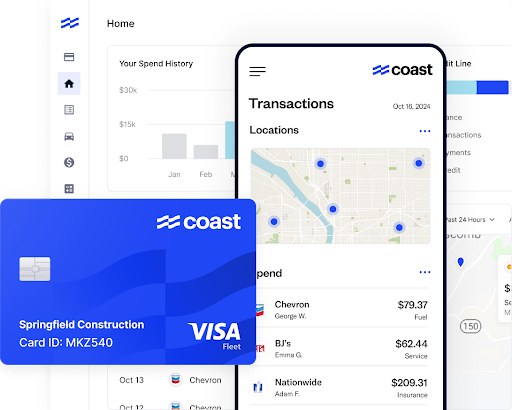
Congratulations to Salt Lake County and Draper City! CoastPay (Coast), which offers a simple and smart way for U.S. companies to manage fuel and fleet spending, is executing plans to bring approximately 100 new high-paying jobs to Utah over the next 20 years.
The company’s announcement resulted from collaboration among Kellie Challburg and Troy Walker of Draper City, EDCUtah, Governor’s Office of Economic Opportunity, Brock Adams with Weber State, Kristy Merrill with CCG, and Josh Smith with Colliers.
“Draper City is eager to welcome Coast to our community,” said City Manager Mike Barker. “The proposed office space is in a great location – close to housing opportunities for all income ranges, quality restaurants and retail, and a transportation system that provides easy access to Salt Lake and Utah County. We believe Coast will be a great addition to Draper, and their business model will fit in nicely with other thriving Draper businesses.”
EDCUtah first connected with the company during a corporate recruitment trip to New York City, where we initiated conversations about expanding their financial services operations to Utah. The Beehive State quickly emerged as a compelling location for growth. EDCUtah stayed in touch with Coast, sharing information and facilitating strategic introductions to support Coast’s evaluation process. This includes connecting the company with the Governor’s Office of Economic Opportunity (GOEO) for potential incentives, CCG for interior design and office furniture services, and Weber State University to better understand Utah’s labor force and available training programs for customer service and sales personnel.
“Coast’s decision to expand into Utah speaks volumes about the strength and momentum of our tech and fintech sectors,” said Scott Cuthbertson, president of EDCUtah. “Their expansion from New York highlights Utah’s strong business climate and deep talent pool, and we look forward to the impact Coast will have on our economy and innovation landscape.”
Coast reimagines fleet payments, enabled by mobile technology and state-of-the-art vehicle data and telematics. Thousands of businesses are now using Coast, some with just a handful of fleet cars and others with more than 1,000 cars. Surveyed customers saved an average of 9-10% on fuel bills and 16 hours of monthly administrative work when switching to Coast from another fuel card or payment method.
“We were pleased to have support from EDCUtah and the Utah Governor’s Office of Economic Opportunity on this site selection decision,” said Coast VP Operations Stephen Rosen. “Our expansion into Utah will help us accelerate our business and continue to drive both monetary and time savings to Coast customers.”
The Utah Governor’s Office of Economic Opportunity (GOEO) – an EDCUtah founding investor – assisted the project by approving Coast for EconomicDevelopment Tax Increment Financing (EDTIF).
“Utah is proud to support businesses that drive innovative solutions shaping our state’s future,” said Ryan Starks, GOEO executive director. “By simplifying fleet management and associated expenses, businesses can focus on what truly matters—growing their operations. Streamlining these processes not only saves time and reduces costs but also fosters economic growth in Utah by empowering businesses to reinvest in their communities.”
Rex Buys, business development manager, led Project Lighthouse for EDCUtah.
_____
EDCUtah Investors: If you were involved with this project and would like to have your organization mentioned, please email connect@edcutah.org and we’ll update this article.
For additional information or to schedule an interview, please contact us.
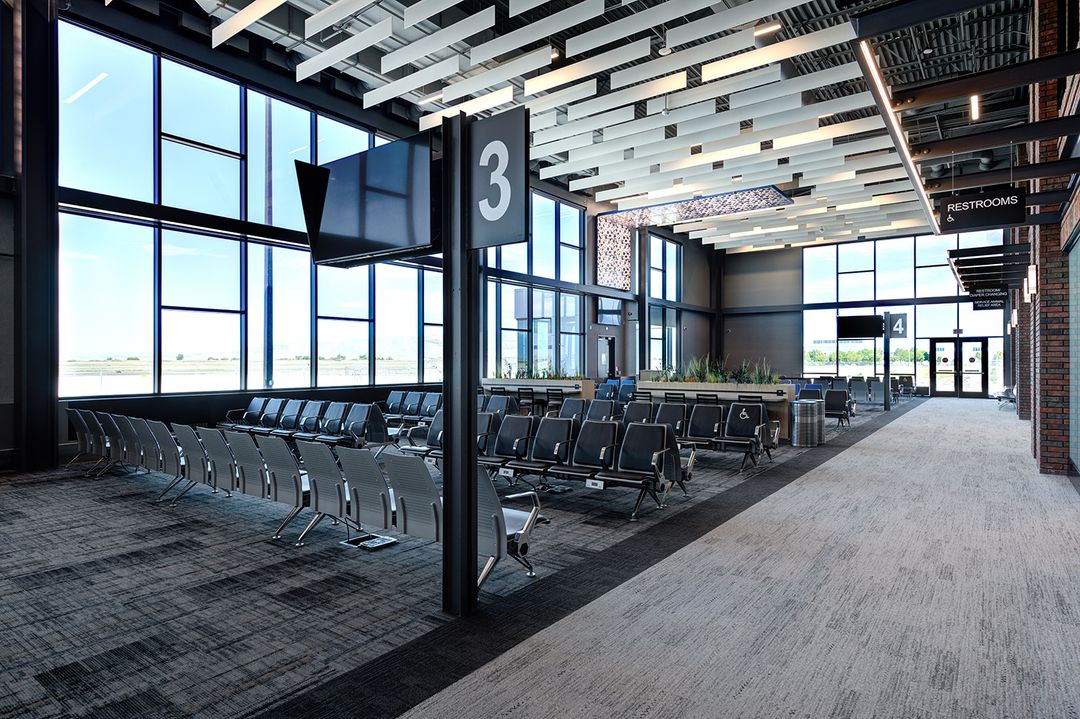
Located in Utah County and just 50 miles south of Salt Lake City International Airport (SLC), Provo Airport (PVU) is Utah’s second busiest airport and one of the fastest growing regional airports in the U.S.
In 2022, Provo City worked with Layton Construction – an EDCUtah Builder’s Circle Investor – to complete a significant expansion of Provo Airport, opening a 70,000 sq. ft. terminal with four gates. Jeff Palmer, executive vice president at Layton Construction said of the project, “We were brought on early in design to manage costs, accelerate the schedule and ultimately construct this exciting project for Provo. Few projects are as rewarding as this airport due to the immense impact it has had on the entire County.”
Now, Provo Airport and Layton Construction are scheduled to begin work to expand the facility to ten gates later this year – a reflection of and a further accelerant to the area’s ongoing industry growth. We caught up with PVU airport director Brian Torgersen to learn more about how the airport supports local residents, Utah businesses, and Provo City’s strategy for the future.
Well, first of all, Provo Airport offers commercial service. We have direct flights to 16 destinations, including San Francisco, Phoenix, Dallas-Fort Worth, Chicago, Washington DC, and Orlando. We like to say that with one connection, you can fly anywhere in the world from Provo.
American Airlines, through its partnership with SkyWest Airlines, is flying 65-passenger planes. Allegiant Air is flying 186-passenger planes, and Breeze is flying 123-passenger planes. Given the length of our runways, 85 percent of the planes that make up the entire U.S. commercial fleet could operate here, so there’s room for expansion in the future for all but the biggest wide-body aircraft.
From a passenger perspective, Provo Airport is also highly convenient and stress-free. Long-term parking is located less than 100 yards from the terminal, making for a short walk to ticketing, security screening, and baggage. All four gates are spacious and accommodating. One frequent business traveler told me that, with carry-on luggage, “seatbelt off to seatbelt on” is just eight minutes. That means when he lands, he’s off the plane and in his car in eight minutes!
In 2021, we had 77, 217 annual passenger enplanements – essentially passenger boardings. Several years ago, a study projected that we would reach 400,000 annual enplanements – or passenger boardings – by 2035. In 2022, we hit 211,741 enplanements. In 2024, we rose to 448,972. That’s a decade ahead of schedule, and the pace at which we’re growing is a driving factor in the plans to expand to ten gates.
There are 3,300 commercial airports in the country. We ranked no. 9 in the U.S. for passenger growth last year. When you look at airports with more than 100,000 annual enplanements, we were no. 2 in rate of growth, second only to Guam International which is still recovering to pre-pandemic passenger numbers. Our 481 percent growth rate since 2021 tops in the nation in pure commercial passenger growth.
Provo City Mayor Michelle Kaufusi speaks of the four “Provo pillars” – the city is Welcoming, Safe and Sound, Economically Vibrant, and Forward-Looking. The airport has a role in each of those pillars. Our space here is clean, well-organized, and secure. Our staff are friendly, and travelers feel welcome and safe here. The airport is a gateway to the world for our business community, so it contributes to economic vibrancy. And our ongoing planning process is certainly forward-looking.
As part of that planning process, we convene a meeting with local businesses several times a year. It’s our focus group to keep tabs on the business market and better serve our business’s travel needs.
We also keep tabs on our overall economic impact. In July 2022, the airport’s operations had direct, indirect, and induced economic benefits to Provo and Utah County of $131 million. That included tax revenues of $2.2 million. In November 2024, those figures rose to $209 million and $2.9 million. Airports like ours are economic drivers. It’s one of the reasons that Utah County has allocated $78 million in funding over the next 15 years to complete future expansion. We want to be, in the mayor’s words, “infrastructure ready” for the 2034 Winter Olympics and beyond.
UVU has two main operations at the airport. The University has a flight school with approximately 120 students in flight training. This is helping fill the pipeline for commercial and general aviation pilots.
The university also administers the Utah Fire Rescue Academy at the airport. It offers a wide range of training classes to firefighters statewide. These are other examples of us being forward-looking and infrastructure ready.
We attend several industry meetings a year, which are essentially speed dates with the airlines. On the business side, we pitch that Provo City is at the heart of Silicon Slopes and ranked 15 out of 403 U.S. metro areas in the Milken Institute’s 2025 Best Performing Cities report. We promote the amount of passenger traffic generated by local businesses, our two local universities, and other huge travel generators like the Missionary Training Center of the Church of Jesus Christ of Latter-day Saints. On the leisure side, we’re a half-hour drive to Sundance Mountain Resort and an hour to Snowbird or Deer Valley’s new East Village. We’re a three-hour drive to Arches, Canyonlands, and Capitol Reef National Parks. And we have a lot of residents who love to travel to Disneyland and Disney World.
The gate expansion will allow us to add carriers and routes. The airlines see the growth in the Provo-Orem Metropolitan Service Area, as well as Juab and Wasatch Counties. They see our potential for international travel. And they know the fees we charge the airlines are lower than those charged at Salt Lake City International Airport.
With that said, we’re not a competitive threat to SLC, nor are we planning to be. We’ll never be that big. We see ourselves as complementary to SLC – similar to the way, say, Long Beach Airport (LGB) complements Los Angeles International Airport (LAX). For a segment of the Utah market, we can be a convenient alternative to SLC.
Total acreage: 869
Two runways: 8,603-ft and 6,628-ft
Commercial carriers: Allegiant Air, American Airlines, Breeze
Gates: Four terminal-based gates and one temporary tarmac-based gate
Parking spaces and rates: 2,000 spaces, $12 per day
Car rental companies: Budget, Hertz, A to B
Utah Transit Authority bus service: Bus Route 833 hourly starting at 7:42 am until 6:44 pm
Direct destinations:
Website: https://airport.provo.gov/
_____
“Building Together” highlights examples of the collective impact of your investment and EDCUtah’s work in communities across the state.
For additional information or to schedule an interview, please contact us.
Approximately 500 jobs
$42.3 million capex
Project Bold Horizon
Congratulations to West Valley City and Salt Lake County! AeroVironment (AV) – a leader in autonomous and intelligent multi-domain systems, – announced plans to bring approximately 500 new high-tech jobs to West Valley City and invest $42.3 million in Utah over the next 5 years.
EDCUtah became involved with AV’s expansion project through strong relationships with site selectors, helping bring the company to Utah. We assisted AV in navigating state incentive programs and coordinated a site visit, connecting the company with potential communities and key partners.
“We’re thrilled to welcome AV to West Valley City,” said Scott Cuthbertson, president of EDCUtah. “As a leading defense tech company, AV’s expansion will not only bring high-quality jobs to the region but will also further solidify West Valley City’s position as a premier hub for cutting-edge industries. We look forward to the long-term contributions they will make to our economy and community.”
The company’s final decision came as the result of collaboration among EDCUtah, Governor’s Office of Economic Opportunity (GOEO), CBRE (San Diego and Salt Lake Office), West Valley City, and Salt Lake County.
“The workforce and economic environment in West Valley City and the State of Utah was a great fit for this project,” said Sydney August, director of CBRE, who represented AV in the site selection process. “The ease of doing business here, combined with the strong community support, makes Utah an ideal location for the expansion.”
Serving defense, government, and commercial customers, AV delivers cutting-edge technology solutions at the intersection of robotics, sensors, artificial intelligence, software analytics, and connectivity. Guided by a mission to secure lives through transformative innovation, the company has established itself as a leader in uncrewed aircraft systems, loitering munition systems, uncrewed ground vehicles, and high-altitude pseudo-satellites. With a steadfast commitment to advancing safety, operational resilience, and sustainability, AV empowers its customers with advanced solutions to meet today’s most critical challenges.
“AV’s autonomous precision-strike systems have revolutionized modern warfare, providing warfighters with the ability to neutralize high-value threats with unprecedented accuracy while minimizing risk to friendly forces,” said Wahid Nawabi, AV chairman, president, and chief executive officer. “This facility represents a critical step in our mission to expand manufacturing capacity, ensuring our forces have the technological superiority needed to deter and, if necessary, decisively defeat adversaries.”
The Utah Governor’s Office of Economic Opportunity (GOEO) – an EDCUtah founding investor – assisted the project by approving AeroVironment for Economic Development Tax Increment Financing (EDTIF).
“Utah is the ideal hub for advancing aerospace and defense technologies that are vital to national security and economic growth,” said Ryan Starks, executive director of the Governor’s Office of Economic Opportunity. “Strategic investments like this create jobs, accelerate innovation, and reinforce Utah’s leadership in aerospace and defense. Supporting companies like AV strengthens our state’s economy while driving cutting-edge advancements in the industry.”
Jared Stewart, senior business development manager, led Project Bold Horizon for EDCUtah.
_____
EDCUtah Investors: If you were involved with this project and would like to have your organization mentioned, please email connect@edcutah.org and we’ll update this article.
For additional information or to schedule an interview, please contact us.