Triple Point Security Expands to Salt Lake City, Utah


60 jobs
Project Blue Ridge
Congratulations to Salt Lake City! Triple Point Security — a cybersecurity consulting and talent development firm that provides leading-edge services and solutions to protect organizations and their data from digital threats — is bringing approximately 60 new and highly valuable cybersecurity jobs to Salt Lake City in the coming years. Through partnerships with academic institutions and local businesses, Triple Point Security will educate and train Utahns in cybersecurity subject matter areas of zero trust architecture (ZTA), cloud security, secure AI adoption, DevSecOps, and governance, risk, and compliance (GRC).
“Triple Point Security brings invaluable expertise to Salt Lake City’s growing technology sector,” said Lorena Riffo Jenson, director of Salt Lake City’s Department of Economic Development. “Their innovative approach to cybersecurity and commitment to protecting organizations from digital threats strengthen our city’s position as a leader in tech innovation. We are delighted to welcome a company with such a strong reputation for excellence and integrity to our business community.”
EDCUtah was engaged in this project through a referral from Beth Colosimo of The Mill Entrepreneurship Center at Salt Lake Community College (The Mill SLCC). EDCUtah collaborated with Triple Point Security to identify potential co-working spaces, providing support to help the company find a location that suited its needs.
“We’re excited to see Triple Point Security join Salt Lake City’s vibrant technology sector,” said Scott Cuthbertson, president of EDCUtah. “This expansion underscores Salt Lake City’s reputation as a hub for innovation, and we look forward to the contributions Triple Point Security will make to our local economy and business landscape.”
Triple Point Security is a cybersecurity firm that provides innovative security solutions to businesses across various industries. With a focus on proactive protection, the company offers services in risk management, threat detection, and incident response. Triple Point Security leverages cutting-edge technology and industry expertise to safeguard clients’ digital assets, ensuring robust defense against evolving cyber threats.
“We are excited to serve the Salt Lake City community and the state of Utah with our industry-leading cybersecurity experience in cloud computing security, ZTA, and secure AI adoption,” said Carlo Espiritu, founder and principal consultant of Triple Point Security. “I personally look forward to strengthening our existing relationships with academia, fostering cybersecurity talent development, and providing our services to Utah’s technology ecosystem.”
Rex Buys, business development manager, led Project Blue Ridge for EDCUtah. The company’s announcement resulted from collaboration among Salt Lake City Corporation, EDCUtah, Salt Lake Kiln, and Beth Colosimo with The Mill at Salt Lake Community College.
_____
EDCUtah Investors: If you were involved with this project and would like to have your organization mentioned, please email connect@edcutah.org and we’ll update this article.
For additional information or to schedule an interview, please contact us.
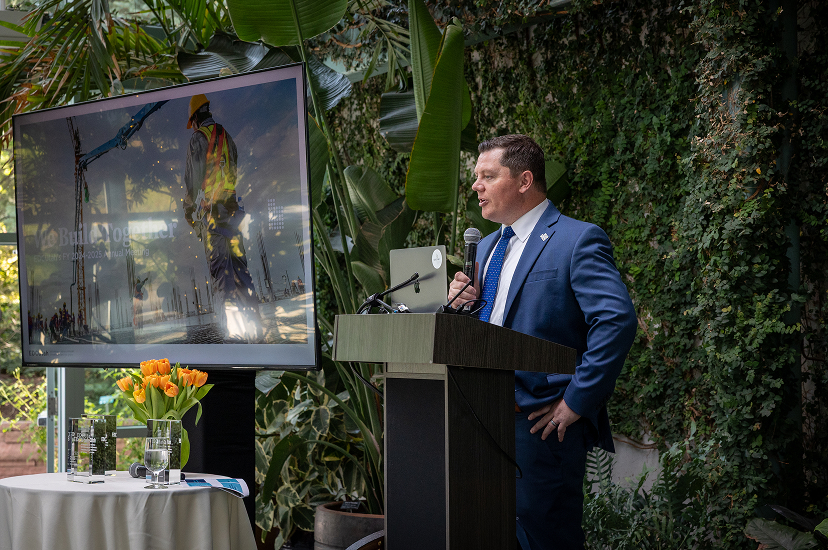

On Sept. 4, the Economic Development Corporation (EDCUtah) held its 2025 Annual Meeting to celebrate the success of Utah’s public-private partnership for economic development. EDCUtah released its 2024-2025 Annual Report as well as its strategic plan for the current fiscal year.
“EDCUtah runs on two things: a scrappy staff that delivers big results and investors who put real fuel in the tank,” said Ryan Starks, executive director of EDCUtah. “Together, we turned hard work into jobs, investment, and a whole lot of momentum for Utah.”
In the 2024-2025 fiscal year, every $1 of investment in EDCUtah generated an additional $3,876 in Utah’s economy. This figure is derived from an economic impact model, and it includes the direct, indirect, and induced financial impact of the corporate expansion and relocation projects announced last fiscal year.
Between July 1, 2024, and June 30, 2025, EDCUtah supported 20 companies in their decision to expand in or relocate to Utah. Together, these companies announced 3,213 new or retained jobs and $1.3 billion in projected capital expenditure. Notable project wins include AeroVironment in Salt Lake City, Edwards Lifesciences in Draper City, Fervo Energy in Beaver County, and Nucor in Brigham City. As of Sept. 4, EDCUtah had just over 100 active corporate recruitment projects in its pipeline.
EDCUtah also recognized outstanding individuals and developments for their leadership in Utah’s economic development. The following recipients of the 2025 leadership awards are making an incredible, tangible impact on our state – helping to bring jobs, investment, and prosperity to Utah communities:
The 2025 leadership awards were presented by Brigham City Mayor DJ Bott, Judd Cook of Enbridge Gas Utah, and Nancy Volmer of the Salt Lake City Department of Airports.
To learn more about our awardees and to view the 2024-2025 annual report, click here.
_____
For additional information or to schedule an interview, please contact us.
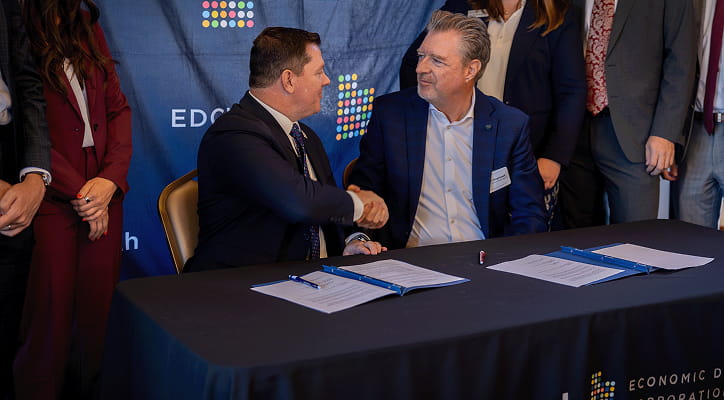
The Economic Development Corporation of Utah (EDCUtah) and the Southern Utah Economic Alliance (So.Utah) signed a Memorandum of Understanding (MOU) to formalize their partnership and strengthen coordination between Utah’s statewide business recruitment efforts and southern Utah’s five-county region.
Under the agreement, So.Utah will continue leading economic development engagement across Washington, Iron, Beaver, Kane and Garfield counties. The organization will provide companies and statewide partners with direct access to local leaders, communities, sites, infrastructure, workforce resources, and other regional opportunities.
EDCUtah and So.Utah have also established reciprocal representation on their respective boards, creating a direct and ongoing connection between statewide and regional economic development efforts.
Working alongside state and local economic development organizations, EDCUtah and So.Utah will coordinate company outreach, project responses and site visits for businesses evaluating opportunities in southern Utah.
Ryan Starks, executive director of EDCUtah said, “At EDCUtah, our mission has always been to bring the right people to the table on behalf of the businesses we serve. Collaboration is the ingredient that makes ‘Team Utah’ work, and agreements like this put that principle into practice. By formalizing our relationship with So.Utah, we are building a stronger, more coordinated effort to bring investment and critical jobs to communities across our state.”
“We’re honored to formalize this partnership with EDCUtah,” said Todd Brightwell, CEO of So.Utah. “Southern Utah has tremendous opportunities, and companies need a clear path to understand what we have and how to connect with the right people. We know our communities, our sites, and our local leaders. EDCUtah brings statewide and national reach, along with decades of recruitment experience, while collaborating with the state connects important state resources and programs. Bringing those strengths together gives southern Utah a stronger, unified voice and a better opportunity to compete for the projects that will bring high-value jobs and investment to our region.”
For businesses considering an expansion within Utah or a new location in the state, the agreement provides a coordinated team connecting state resources, statewide recruitment capabilities, regional expertise, and local decision-makers.
Ryan Starks and Todd Brightwell are available for interviews about this partnership upon request.
EDCUtah is Utah’s statewide economic development organization, working with state and local government and private industry to attract high-value companies and grow Utah’s economy. Since 1987, EDCUtah’s mission has been to catalyze quality jobs and capital investment across the state through corporate recruitment and retention, economic research, site selector marketing, and community strategy. Learn more at www.edcutah.org.
So.Utah, the Southern Utah Economic Alliance, is a private-sector-led, publicly supported regional economic development organization serving Washington, Iron, Beaver, Kane and Garfield counties. So.Utah works to expand, recruit, and retain businesses while serving as a regional convener and connecting companies, communities and partners with the data, relationships and resources needed to succeed. Its mission is to advance a resilient, competitive and sustainable economy across southern Utah. Learn more at soutah.org
_____
For additional information or to schedule an interview, please contact us.

100 jobs
100,000 sq. ft.
Project Queue
Congratulations to Quad MX Solutions “Quad” and Salt Lake City! Quad, a leading marketing experience company, announced plans to establish a new 100,000-square-foot packaging manufacturing facility in Salt Lake City, Utah. The facility is expected to be operational in the fourth quarter of 2026 and will create up to 100 new jobs, expanding Quad’s presence and manufacturing capabilities in Utah.
“Quad deliberately chose Salt Lake City because our position as the Crossroads of the West allows them to deliver faster and more efficiently for their customers,” said Lorena Riffo Jenson, the director of Salt Lake City Department of Economic Development. “We are thrilled to welcome them to Salt Lake City and to see our manufacturing portfolio continue to diversify. I’m confident our talented workforce will exceed their expectations.”
Quad is a global marketing experience company that helps brands connect with consumers through integrated creative, production, media, technology, and data-driven solutions. Its capabilities span digital and traditional marketing, print, packaging, and in-store experiences, helping leading brands streamline production, improve efficiency, and bring products and campaigns to market more effectively.
“EDCUtah is excited to support Quad MX Solutions as it establishes a western presence in Salt Lake City,” said Ryan Starks, executive director of EDCUtah. “Salt Lake City offers Quad MX Solutions a strategic location to connect with its growing network and expand its reach across the West. We look forward to seeing the companies they support in Utah and throughout the region, and the opportunities their growth will bring to our state.”
This is an important milestone for Quad’s packaging offering,” said Joel Quadracci, Chairman and CEO of Quad. “By rounding out a national manufacturing footprint for packaging, Quad is making it easier for clients to reduce lead times, improve logistics efficiency and scale packaging programs across multiple regions while maintaining the quality, consistency and partnership they expect from us.”
The project win was the result of collaboration with many EDCUtah partners including real estate, municipal governments, state agencies, employment agencies, educational institutions, and industry associations.
Former EDCUtah business development manager, Rex Buys, led Project Queue for EDCUtah. Please contact Erin Farr with any questions.
_____
EDCUtah Investors: If you were involved with this project and would like your organization mentioned, please email connect@edcutah.org and we’ll update this article.
If you were involved with this project and would like your organization mentioned, please email connect@edcutah.org and we’ll update this article.
For additional information or to schedule an interview, please contact us.
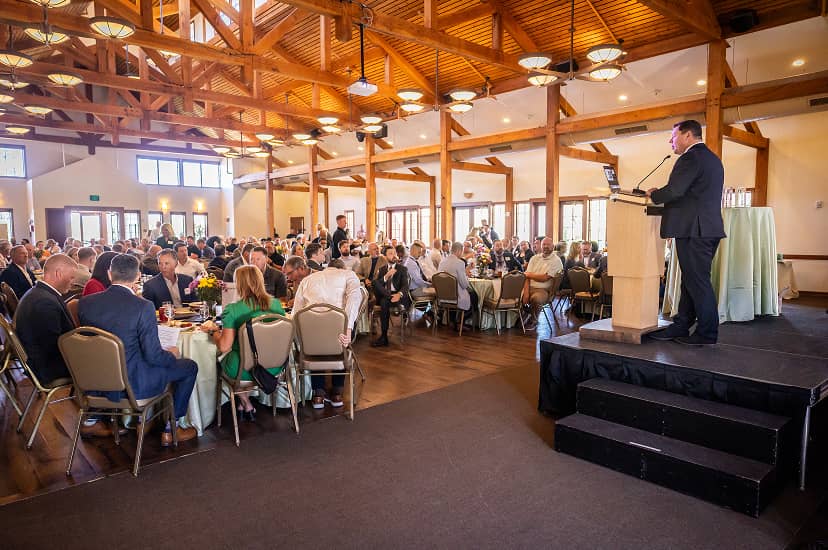
Once a year, EDCUtah highlights the fiscal year’s achievements, notable project wins, and key people and organizations that helped these efforts. Between July 1, 2025 and June 30, 2026, EDCUtah helped 12 companies expand in or relocate to Utah, representing 8,519 new and retained jobs and $20.2 billion in projected capital expenditure. Capital expenditure is at a record high, and every $1 invested in EDCUtah generated $8,180 in Utah’s economy this year.
The year’s results took center stage at EDCUtah’s Annual Meeting at The Garden Place at This Is The Place Heritage Park, filled to the brim with leaders, partners, and government officials eager to hear how Utah’s economy keeps landing at the top of national rankings, and what comes next, including a new partnership aimed at southern Utah.
Executive Director Ryan Starks welcomed attendees and highlighted EDCUtah’s expanding list of partners, including an MOU we signed with the Utah Governor’s Office of Economic Development (GOED) at the beginning of 2026. He previewed deeper work with site selection teams nationwide and a city partner exchange to Austin, Texas, then closed with the line that carried through the meeting: “Let’s build together.”
Derek Miller, President and CEO of the Salt Lake Chamber, delivered a brief keynote centered on partnership, framing economic development as work that depends on the state, local government, and the private sector moving together. He credited Utah’s current strength to investments made a decade ago and cautioned against complacency: “The prosperity we enjoy right now was earned a decade ago. We cannot coast. We have to keep our foot on the gas.”
Wins spanned industries, from American Tungsten and Antimony Ltd (formerly Trigg Minerals) to Karman Space & Defense and Stadler Rail, with 101 more projects active in the pipeline as of Sept. 3. EDCUtah Deputy Director Erin Farr broke down how this year’s 12 wins came together: 33% site selector led, 30% through EDCUtah partners, 27% company direct. “Let’s play the long game and build together,” she said.
EDCUtah cannot accomplish these wins alone; dedicated partnerships and passionate Utah leaders make them possible. At the meeting three companies shared how they’re expanding in the state:
EDCUtah announced a new Memorandum of Understanding (MOU) with the Southern Utah Economic Alliance (SoUtah), designed to strengthen collaboration between the two organizations.
EDCUtah recognized three partners for turning collaboration into results. Bob Stevenson, Davis County Commissioner, received the Public Sector Leadership in Economic Development award: “I’m very touched and honored by this award. I love Utah and it’s a privilege to serve the residents and businesses of our community.”
Christy Alter, a vice president at Goldman Sachs, received the Private Sector Leadership in Economic Development award: “Goldman Sachs invested in Salt Lake City over 25 years ago in part because of Utah’s exceptional talent and the collaborative ecosystem fostered by organizations like EDCUtah.”
And Rocky Mountain Power received the Institutional Cornerstone in Economic Development award, with President Dick Garlish noting, “Energy is the backbone of economic development, and Rocky Mountain Power is proud to help provide the reliable energy foundation that allows communities and businesses to grow, innovate and thrive.”
Between the GOED MOU, the SoUtah partnership, deeper work with site selectors around the country, and the Austin state-to-state exchange, EDCUtah is signaling that the year’s results represent a floor, not a ceiling. As Ryan Starks and nearly every speaker put it: let’s build together.
Since 1987, EDCUtah has worked with state and local government and private industry to attract and grow competitive, high-value companies and spur the expansion of local Utah businesses. More at www.edcutah.org.
Lindsey LeBaron, Director of Marketing and Communications, 801-420-5815


177 jobs
78,000 sq. ft.
$36 million capex
Project Ghostrider
Congratulations to KIHOMAC, Layton City, and Davis County! KIHOMAC, a veteran-owned company specializing in aerospace engineering, advanced manufacturing, custom fabrication, and lifecycle support, announced plans for a new project in Utah. The project is expected to create 177 new jobs and bring $36 million in capital investment to the state, further expanding KIHOMAC’s presence in Utah.
The company’s announcement came as the result of collaboration among Layton City, Davis County, R&O Construction, EDCUtah, and the Utah Governor’s Office of Economic Development (GOED).
“We’re excited to see KIHOMAC continue to grow and invest in Utah,” said Ryan Starks, executive director of EDCUtah. “Layton City and Davis County have demonstrated a strong commitment to supporting Utah’s aerospace industry and creating an environment where companies like KIHOMAC can thrive. We’re thrilled to see KIHOMAC choose to expand in Utah and look forward to the new opportunities this investment will create for the community and our state.”
Founded in 2003, KIHOMAC is a veteran-owned company based in Reston, Virginia. With over 350 employees, it specializes in aerospace engineering, reverse manufacturing, custom fabrication, and lifecycle support for military and commercial aviation. Its main focus is to extend the value of U.S. aerospace weapon systems through full-lifecycle support. The company’s investment supports advanced manufacturing and enables them to increase production and deliver secure, domestically produced drone solutions.
“Utah has been an important part of KIHOMAC’s growth for many years, and we continue to see tremendous opportunity to expand our capabilities here,” said Adam Grimm, President and COO of KIHOMAC. “The state provides an exceptional combination of a highly skilled aerospace and defense workforce, proximity to key customers and partners, and a business environment that supports continued investment. This expansion will allow us to grow our engineering and advanced manufacturing capabilities, create high-quality jobs, and increase our capacity to deliver innovative, mission-critical solutions to our customers. We appreciate the support of the state, Davis County, Layton City, and our economic development partners as we continue investing in KIHOMAC’s people, capabilities, and future in Utah.”
The Utah Governor’s Office of Economic Development (GOED) assisted the project by approving KIHOMAC for a Economic Development Tax Increment Financing (EDTIF) incentive.
“Utah’s aerospace and defense sector is a key component of our long-term economic plan,” said GOED Commissioner Jefferson Moss. “KIHOMAC’s growth in Davis County highlights our commitment to supporting high-tech manufacturing, ensuring a strong supply chain, and delivering mission-critical capabilities for national defense. Their investment opens up skilled engineering and fabrication jobs that support our statewide economic goals.”
Spencer Layton, business development manager, assisted Project Ghostrider for EDCUtah.
_____
EDCUtah Investors: If you were involved with this project and would like your organization mentioned, please email connect@edcutah.org and we’ll update this article.
If you were involved with this project and would like your organization mentioned, please email connect@edcutah.org and we’ll update this article.
For additional information or to schedule an interview, please contact us.

138 jobs
$546 million capex
Project A1
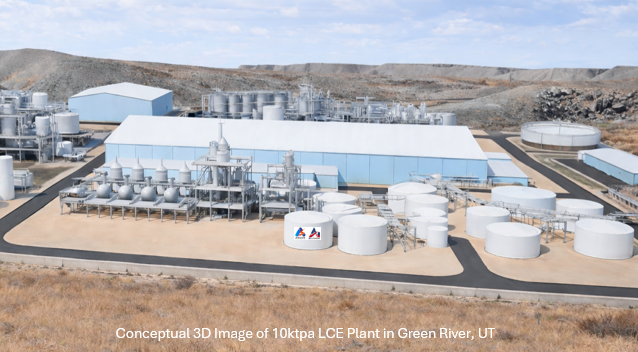
Congratulations to A1 Lithium, the City of Green River, and Emery County! A1 Lithium, a company focused on developing critical mineral resources, announced plans to advance the Green River Lithium Project in Utah’s Paradox Basin. The project is expected to create 138 new jobs and bring $546 million in capital investment to Utah, strengthening domestic lithium production and supporting the growing U.S. EV and energy storage industries.
The company’s announcement came as the result of collaboration among the City of Green River, EDCUtah, the Utah Inland Port Authority (UIPA), and the Utah Governor’s Office of Economic Development (GOED).
“This is a major step forward, not only for A1 Lithium but also for Green River and rural Utah,” said David Wilson, director of planning and enforcement with the City of Green River. “This project brings real investment, good-paying jobs, and long-term economic opportunities to our community while putting Green River at the center of strengthening America’s domestic supply of critical minerals. We’re excited to see how this investment moves forward and what it can mean for Green River for years to come.”
“A1 Lithium’s investment in south-eastern Utah will be transformational for the City of Green River, Utah’s production of critical minerals, and our nation’s broader reindustrialization efforts,” said Ryan Starks, executive director of EDCUtah. “EDCUtah is proud to support A1 Lithium as they grow and expand, and our network looks forward to continuing to support the company as they invest in the region and create long-term opportunities.”
A1 Lithium Inc. explores and develops critical minerals, operating as a wholly owned subsidiary of Australian-listed Anson Resources. Based in Utah, it aims to supply high-purity lithium carbonate for EVs and energy storage, employing environmentally friendly extraction methods. The Green River Lithium Project, situated in Utah’s Paradox Basin, is an advanced-stage lithium extraction site strategically positioned to become a key domestic supplier of battery-grade lithium carbonate for the growing U.S. EV and energy storage sectors.
The first phase of the project is designed to produce approximately 10,000 metric tons of battery-grade lithium carbonate annually. Lithium is a critical mineral used in electric vehicles, energy storage systems, electronics, defense applications and other advanced technologies.
“Apart from the advantageous geological conditions of the Green River Lithium Project, A1 Lithium decided to invest in Utah due to the high-level support for the development of critical mineral projects to meet the strategic objective of re-establishing supply chains in the USA,” said Bruce Richardson, president of Anson Resources. “Utah’s transparent mining policies and aim of making quick application determinations were also a factor in this decision. We have received an unprecedented level of support from GOED and UIPA as well as other Government of Utah agencies for which we express our appreciation. We are excited to proceed with this project that we expect will bring about a generational change in the economy and livelihood of the people of Green River and south-eastern Utah.”
To support the project, the Utah Inland Port Authority recently offered A1 Lithium a property tax incentive. These incentives are designed to promote economic growth, including significant investments in public infrastructure.
“This project has the potential to create generational economic opportunity in Green River while strengthening a supply chain that is increasingly important to our national economy and security,” said Ben Hart, UIPA executive director. “It builds on the region’s history, infrastructure and skilled workforce while opening the door to an entirely new industry for eastern Utah.”
The Utah Governor’s Office of Economic Development (GOED) assisted the project by approving A1 Lithium for a Rural Economic Development Tax Increment Financing (REDTIF) incentive.
“Developing domestic supply chains for critical minerals is a key focus of both state and national energy infrastructure strategies,” said GOED Commissioner Jefferson Moss. “The Green River Lithium project in Emery County marks a significant advancement for rural economic growth in Utah. It establishes a sustainable and long-term industrial base, creating well-paying jobs in rural areas and strengthening Utah’s role in producing energy materials domestically.”
Jared Stewart, senior business development manager, assisted Project A1 for EDCUtah.
_____
If you were involved with this project and would like your organization mentioned, please email connect@edcutah.org and we’ll update this article.
For additional information or to schedule an interview, please contact us.

In May, EDCUtah announced the appointment of Jon Hawkins, principal at Inside the Rings, as a strategic advisor. In this role, Jon will help support community development, advise cities on Olympic readiness initiatives, and foster economic development opportunities throughout Utah.
Jon’s experience in Olympic readiness includes consulting, governance, and advocacy. He serves on the boards of the Utah Sports Commission, the Olympic Legacy Foundation, and the USA Climbing Foundation, and he also chairs the legislative Olympic Coordinating Committee. In each of these roles, Hawkins has helped shape projects, policy, and conversations around major events, stakeholder priorities, and the broader impact of sport.
Recently Jon has been talking with dozens of EDCU investors and other contacts. We caught up with him to find out more about Utah’s Olympic efforts.
The Kem C. Gardner Policy Institute puts the potential economic impact at about $6.6 billion, but I think it could actually be a bigger opportunity, when you look at how businesses, cities, counties, higher education institutions can multiply the effect of the Games themselves. If these constituents really put forth an effort to participate, the economic opportunity for everyone is going to be massive. One of the reasons I say that is because the Olympics touch nearly every sector of the economy.
The organizations that are prepared to participate will benefit the most. And by prepared, it’s not a matter of starting in 2032 or even 2030, it means starting now. The partnerships that are needed to maximize the impact of the Games for your organization, those relationships take time to build. Working through logistics of things, that’s going to take time as well. Starting with a strategy and a plan now is a lot better and a lot less expensive than waiting until 2030 or 2032 to come around.
I’ve been talking to all sectors of the economy, organizations both public and private. It’s interesting that despite the diverse nature of these organizations, the conversation is pretty much the same. It’s along the lines of “I know that I want to get involved, but I don’t know how. Help me understand how to get involved.”
What we do at Inside the Rings is to understand what a given organization’s goals are, determine the right pathway for their involvement, and then we strategize on the approach that will take the fullest advantage of the Olympic Winter Games.
Not all communities can afford to have a venue, or to be honest with you, wants to have a venue. But they do want to capture the magic that comes with the Olympic Games, and there are a set number of pathways or different routes to participating.
In our discovery discussions, we identify the different pathways that would help them reach their goals.
There are other questions such as “Can we get a venue here? Can we actually host an event?” The answer is probably not, because the cost is astronomical and a lot of the planning is already in place. It’s very limiting for communities that don’t have an existing venue that want to host a competition now.
For the communities that already have Olympic venues, they’re asking, “Is this venue good enough? Does it need to be upgraded? Is there something else that’s going to be built that might take that opportunity away?”
The answers here are generally that our venues are in good shape, and other than some shifting of a few ski and snowboard events to different venues, things are pretty well set.
First of all, the cool thing is almost everybody is excited to have the Olympics back. There’s a lot of nostalgia around 2002 and the wonderful opportunity that it was.
One of the biggest things that I’ve noticed in talking with organizations and communities that were involved in 2002, the focus then was on the venues, traffic, ticket sales and merchandise sales.
The opportunity before us in 2034 includes those same concerns, but there are other opportunities. I recently talked to a contact of mine at the State Department who is the liaison to the International Olympic Committee (IOC). What he highlighted is that the IOC, the U.S. Olympic and Paralympic Committee (USOPC), and the organizing committee here in Utah all are working to ensure that the athletes have the best experience possible. The questions revolve around setting up the field of play and venue infrastructure, getting athletes from place to place, and housing and feeding the athletes and their coaches.
One thing my contact said to me was that no one’s ever focused on how the business community can get involved, or how the fans can get involved. He made me realize, “The Olympics are coming to Utah, but how is Utah coming to the Olympics?”
An opportunity for Utah organizations is to create an experience for community members and fans. For example, how do we set up cities and counties to be able to bring people out of their homes, bring people together to have an Olympic experience that doesn’t necessarily involve getting a ticket and going to an official venue. Watch parties, for example, are a way to bring residents, visitors, community organizations and businesses together to create an Olympic memory.
That’s another common question I hear. Not every business wants to be a big sponsor or can afford to do so. The same goes for cities. There are more modest levels of support at an individual sport level that can be very impactful for the team and for the organization giving the support.
Every other country in the world that participates in the Olympics has government sponsorship of its Olympic teams. The U.S. does not. I’ve talked to several different national governing bodies (NGBs). These NGBs are the official overseers of specific sports. Folks are familiar with U.S. Swimming, U.S. Ski and Snowboarding, U.S. Track and Field, those sort of organizations. The big ones are doing great and have resources. But other NGBs are not so fortunate, and have some pretty tight constraints.
I would advise companies and communities to look for ways to get involved in the short term. As I mentioned before, I would say start planning and building those relationships now. The Olympics in 2034 might seem like a long ways away. The good thing is we have three Games between now and then that allow us to dry-run different approaches. Every year between now and 2034, any relationship with an NGB picks up momentum.
As I mentioned, other national governments help sponsor their countries’ Olympic team, and because of that, those teams have funds to do a lot of research and development.
For example, with the sliding sports, especially Germany, Austria, Switzerland, even Latvia, those teams are crushing it. That’s in part due to research and spending on composite materials. They have a technology advantage over the U.S. team.
We’re doing a really good job winning medals with the resources that we have here. If we could involve our manufacturing side, expand the research and development, and develop better technologies for our sliding sports, we’d be in a more competitive position with those countries that are leading those sports. The same goes for biathlon, and even ski and snowboard to an extent.
There are U.S. manufacturers out there that are willing to help, but they may not be aware of the opportunity or how to get involved. I’m encouraged by some early efforts at Weber State University and by our friends at the 47G industry association to bring better composite technology to our sliding sports. Developments like that tell me that there are opportunities to build public-private partnerships that could be as meaningful to our teams as high-dollar donations.
I think what’s been reaffirmed is excitement for the games. In the conversations that I’ve had, you don’t have to sell them to anybody. It is one of the easiest door openers I’ve seen. Everyone wants to be invited and included and participate in the games.
I think that’s unique to Utah. Obviously we have this phenomenal legacy from 2002. If you’re out on the streets of Salt Lake or anywhere else in the state, you’ve got people still wearing their Olympic volunteer uniforms. That’s because of the experience they had, and the positive uplift that it was for Utah. So it’s not surprising there is total excitement.
I think one of the most surprising things are the number of organizations that are engaged in planning. There are organizations up in Ogden, for example, that have already outlined 50 to 60 different projects that they want to work on. These are to support a reimagined downtown Ogden, in other words, a level of planning to make the city a major Olympic hub.
These are not small-scale projects, and that effort reaffirmed to me that it’s time to start preparing now across our state.
Everybody at the organizing committee is doing a phenomenal job. They’re great to work with, and they’re great people. They have a lot on their plate and a lot of people don’t understand what the committee’s responsibility is. I’ve talked to some of the members, and they say they can’t do what people are asking them to do.
Some of the requests are simply not in the committee’s scope. There are very strict parameters that the organizing committee can and can’t do. The committee just has to focus on what those responsibilities are, and not try to get every organization in Utah involved. That’s why EDCUtah and the Chambers of Commerce are great places to begin the process of getting involved. We can figure out a plan together, and not be a burden on the organizing committee.
Six months ago, I called Ryan Starks of EDCUtah and told him I was starting this consulting business. I was calling to ask, “What do you think?”
His immediate response was that EDCUtah would love to bring Inside the Rings on as a strategic advisor for the Olympics. Ryan recognizes that for EDCUtah and its investors, the Olympics are perhaps the greatest opportunity to showcase Utah to the global business marketplace and to site selectors that we’ll see in our lifetimes.
So I don’t work for EDCUtah but I do engage with the organization and with the clients that EDCUtah sends to me, to help them understand what the opportunity is for involvement in the Olympics. My services can help strengthen the relationship with EDCUtah. We’ll provide more detail in the coming months.
_____
For additional information or to schedule an interview, please contact us.

The Economic Development Corporation of Utah (EDCUtah) is pleased to announce recent additions to our Business Development team. Please join us in congratulating Justice Russell on her new role and welcoming Preston Brightwell to the team.
As Business Development Managers, Justice and Preston will support EDCUtah’s business recruitment and expansion efforts, working with companies exploring opportunities to locate and grow in Utah.
Justice joined EDCUtah in 2023 and has played an integral role in planning and executing events for EDCUtah investors, site selection consultants, and company leaders who bring corporate expansion projects to EDCUtah. Through her work, she has built strong relationships across Utah’s economic development network while creating meaningful experiences that support EDCUtah’s mission.
Justice holds a Bachelor of Science in Economics from Portland State University.
Preston joins EDCUtah with experience in public policy, stakeholder engagement, and relationship management. His background in building partnerships and supporting strategic initiatives will strengthen EDCUtah’s business recruitment and expansion efforts.
Preston holds a Master of Public Administration and a Bachelor of Science in Political Science from the University of Utah.
_____
For additional information or to schedule an interview, please contact us.
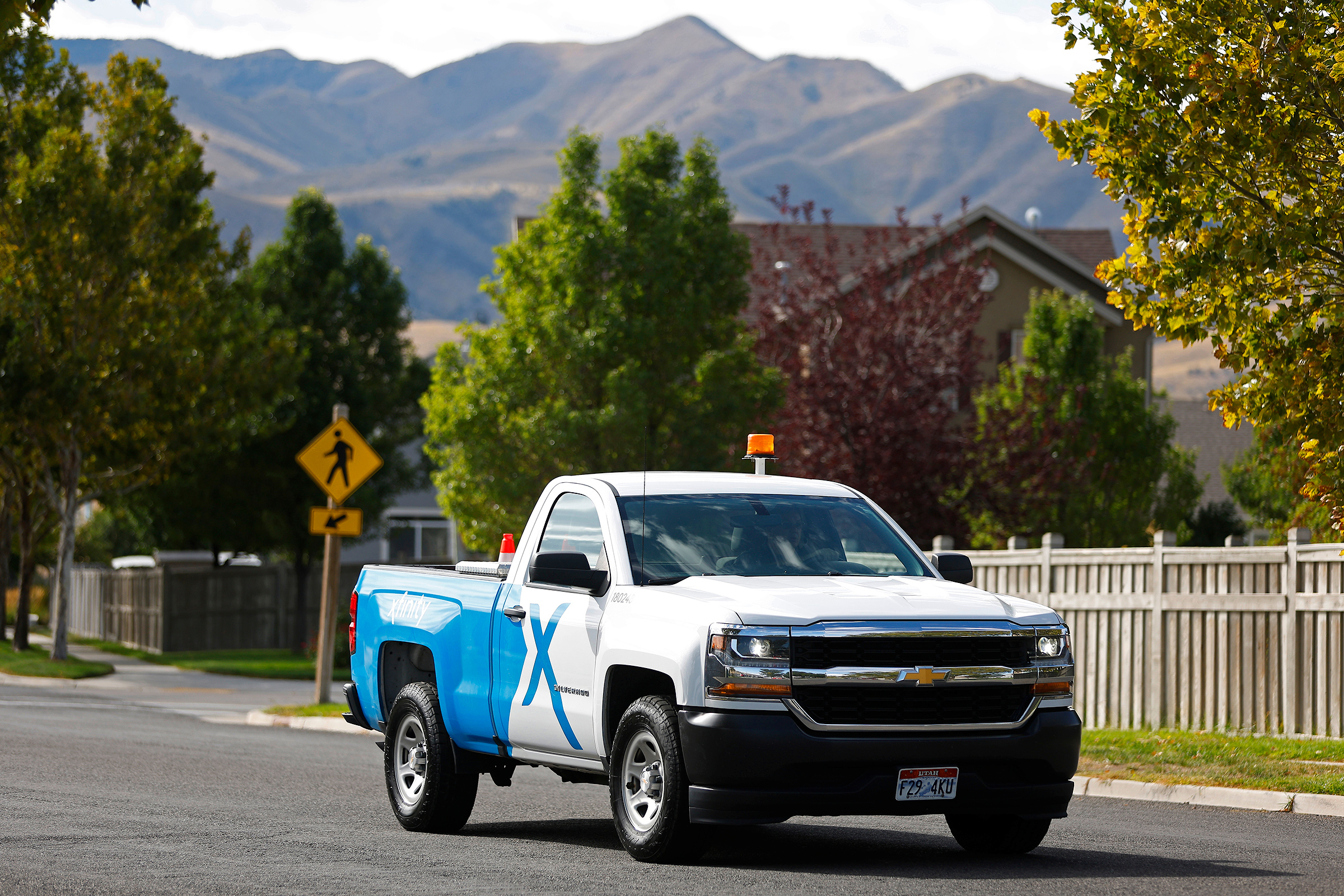
Paul Smith, Comcast network project manager-construction drives through the neighborhood on Friday, Sept. 22, 2023 in Eagle Mountain, Utah. (Jeff Swinger/AP Images for Comcast)
In recent years, Comcast has invested $1 billion in Utah to serve its 1.1 million household and business customers in the state. We caught up with Jennifer Somers, vice president of government & community affairs, to learn more about how the long-time EDCUtah investor is supporting business growth and tackling the “digital divide.”
Across the country, Comcast has invested nearly $200 billion over the past five years to expand broadband, support U.S. jobs, and strengthen communities—and Utah is an important part of that story.
In the last three years alone, Comcast has invested more than $1 billion here in Utah — spanning network infrastructure and our workforce — with more than half a billion dollars going directly into our network, because we know connectivity is the foundation for economic growth.
Today, our network reaches more than 1.1 million homes and businesses statewide, helping create the conditions for job creation, business expansion, and long-term investment.
Utah continues to be an important market for the company because of the state’s strong population growth, business-friendly environment, and expanding communities that continue to drive demand for fast, reliable connectivity. Utah is a market where Comcast can expand our network and support long-term economic growth.
We’re seeing that translate into real economic impact across Utah communities, including in Eagle Mountain, where we expanded our network to more than 18,000 homes and businesses, supporting growth in one of the state’s fastest-growing communities. Through partnerships with the Eagle Mountain Chamber of Commerce and the local library, Comcast supported a digital navigator program that provides hands-on training to help residents, including seniors, build essential digital skills to access services, participate in the workforce, and stay connected in today’s digital economy.
Broadband today is essential; it’s what allows communities and economies to compete.
That’s why we’ve made sustained investments at scale, in the last five years we’ve invested more than $80 billion into our network nationwide.
In Utah, that infrastructure powers everything from small business operations to advanced industries. When businesses have access to high-speed, reliable internet, they can hire, expand, and reach new markets with confidence. That digital foundation is what allows communities to attract investment and build a resilient, future-ready economy.
The reality is—every sector benefits.
From small businesses to global enterprises, connectivity enables companies across Utah to operate, innovate, and scale.
Nationally, Comcast powers more than 2 million small businesses—more than any other provider—which gives a sense of how critical connectivity is to economic growth at every level.
And we see that same impact play out here in Utah—across industries like healthcare, manufacturing, education, and retail.
This work only happens when the private sector and public sector are aligned.
At the national level, Comcast’s network of more than 65 million homes and businesses with access to our network demonstrates both the scale of the opportunity and the experience required to deliver infrastructure at this level.
That experience carries directly into how we partner with state and local leaders in Utah.
Comcast is proud to partner with the Utah Broadband Center to further expand our network, bringing service to unserved areas and addressing critical connectivity gaps across the state.
As part of this partnership, Comcast is investing $20 million to support broadband deployment and improve access for underserved communities throughout Utah. We work closely with communities to align investments, streamline deployment, and expand connectivity into new areas—especially those that have historically been harder to reach.
Programs like the Broadband Equity Access and Deployment Program (BEAD) offer a major opportunity, and success will come down to strong partnerships and proven execution.
Small businesses are the backbone of Utah’s economy, and connectivity is central to their success.
Across the country, Comcast supports millions of businesses with the connectivity they need to operate and grow, and that same focus applies here in Utah.
We’re not just connecting businesses, we’re helping them compete. We’ve introduced new, simplified pricing options designed specifically for small businesses, making it easier for them to access the connectivity they need with more predictable, transparent costs.
From fast, reliable internet to secure and scalable solutions, we help Utah businesses operate efficiently and expand into new markets
Beyond connectivity, we’re also investing directly in local entrepreneurs. In 2025, Comcast RISE awarded 100 grant packages to small businesses across the Wasatch Front, providing $5,000 monetary grants, technology upgrades, marketing support, and business consultation services.
For our Comcast RISE recipients, that support is driving real growth, helping them invest in their businesses and expand their impact. As an example, Francis Castillo, CEO and owner, JFS IT Solutions, and Comcast RISE recipient, said: “Words cannot fully describe the happiness and gratitude I feel. This grant is an incredible opportunity to overcome challenges, grow, and help other entrepreneurs leverage technology to build their businesses.”
We also partner with local organizations and business communities to provide entrepreneurs with the tools, connectivity, and support they need to start, scale, and succeed in an increasingly digital economy.
Building the network is just the first step. Making sure people can actually use it is just as important. Nationally, Comcast’s investments are focused not just on infrastructure, but on strengthening communities and expanding opportunity.
In Utah, that shows up through programs like Internet Essentials, which has connected more than 241,000 low-income residents to affordable internet over the past decade.
At the same time, through our $1 billion Project UP initiative, we’re investing in digital skills, workforce development, and entrepreneurship – including $8 million in the last three years right here in Utah.
When you combine access, affordability, and skills, that’s when you start to see real, lasting economic mobility.
Utah is growing quickly, and we’re building our network to match that momentum.
Our investments in the state are part of a much broader, long-term commitment.
In Utah, that means expanding into new communities, including rural areas, and advancing our network to support multi-gig speeds and next-generation technologies.
We’re not just building for today—we’re building for where the economy is going.
_____
For more information, visit www.comcast.com. “Building Together” highlights examples of the impact of your investment and EDCUtah’s work in communities across the state.
For additional information or to schedule an interview, please contact us.