Building Together: Comcast Matches the Momentum in Utah
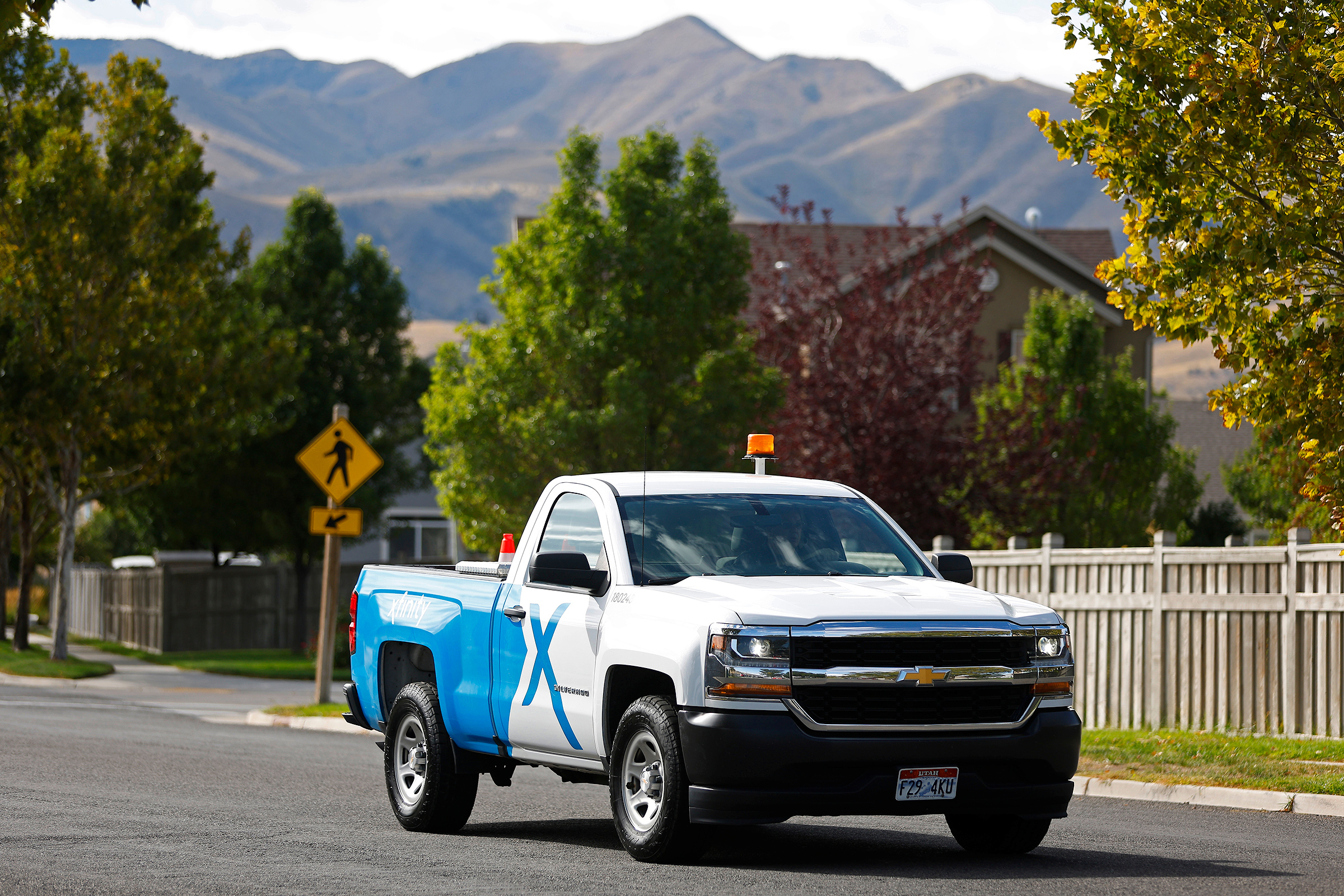
Paul Smith, Comcast network project manager-construction drives through the neighborhood on Friday, Sept. 22, 2023 in Eagle Mountain, Utah. (Jeff Swinger/AP Images for Comcast)
In recent years, Comcast has invested $1 billion in Utah to serve its 1.1 million household and business customers in the state. We caught up with Jennifer Somers, vice president of government & community affairs, to learn more about how the long-time EDCUtah investor is supporting business growth and tackling the “digital divide.”
Across the country, Comcast has invested nearly $200 billion over the past five years to expand broadband, support U.S. jobs, and strengthen communities—and Utah is an important part of that story.
In the last three years alone, Comcast has invested more than $1 billion here in Utah — spanning network infrastructure and our workforce — with more than half a billion dollars going directly into our network, because we know connectivity is the foundation for economic growth.
Today, our network reaches more than 1.1 million homes and businesses statewide, helping create the conditions for job creation, business expansion, and long-term investment.
Utah continues to be an important market for the company because of the state’s strong population growth, business-friendly environment, and expanding communities that continue to drive demand for fast, reliable connectivity. Utah is a market where Comcast can expand our network and support long-term economic growth.
We’re seeing that translate into real economic impact across Utah communities, including in Eagle Mountain, where we expanded our network to more than 18,000 homes and businesses, supporting growth in one of the state’s fastest-growing communities. Through partnerships with the Eagle Mountain Chamber of Commerce and the local library, Comcast supported a digital navigator program that provides hands-on training to help residents, including seniors, build essential digital skills to access services, participate in the workforce, and stay connected in today’s digital economy.
Broadband today is essential; it’s what allows communities and economies to compete.
That’s why we’ve made sustained investments at scale, in the last five years we’ve invested more than $80 billion into our network nationwide.
In Utah, that infrastructure powers everything from small business operations to advanced industries. When businesses have access to high-speed, reliable internet, they can hire, expand, and reach new markets with confidence. That digital foundation is what allows communities to attract investment and build a resilient, future-ready economy.
The reality is—every sector benefits.
From small businesses to global enterprises, connectivity enables companies across Utah to operate, innovate, and scale.
Nationally, Comcast powers more than 2 million small businesses—more than any other provider—which gives a sense of how critical connectivity is to economic growth at every level.
And we see that same impact play out here in Utah—across industries like healthcare, manufacturing, education, and retail.
This work only happens when the private sector and public sector are aligned.
At the national level, Comcast’s network of more than 65 million homes and businesses with access to our network demonstrates both the scale of the opportunity and the experience required to deliver infrastructure at this level.
That experience carries directly into how we partner with state and local leaders in Utah.
Comcast is proud to partner with the Utah Broadband Center to further expand our network, bringing service to unserved areas and addressing critical connectivity gaps across the state.
As part of this partnership, Comcast is investing $20 million to support broadband deployment and improve access for underserved communities throughout Utah. We work closely with communities to align investments, streamline deployment, and expand connectivity into new areas—especially those that have historically been harder to reach.
Programs like the Broadband Equity Access and Deployment Program (BEAD) offer a major opportunity, and success will come down to strong partnerships and proven execution.
Small businesses are the backbone of Utah’s economy, and connectivity is central to their success.
Across the country, Comcast supports millions of businesses with the connectivity they need to operate and grow, and that same focus applies here in Utah.
We’re not just connecting businesses, we’re helping them compete. We’ve introduced new, simplified pricing options designed specifically for small businesses, making it easier for them to access the connectivity they need with more predictable, transparent costs.
From fast, reliable internet to secure and scalable solutions, we help Utah businesses operate efficiently and expand into new markets
Beyond connectivity, we’re also investing directly in local entrepreneurs. In 2025, Comcast RISE awarded 100 grant packages to small businesses across the Wasatch Front, providing $5,000 monetary grants, technology upgrades, marketing support, and business consultation services.
For our Comcast RISE recipients, that support is driving real growth, helping them invest in their businesses and expand their impact. As an example, Francis Castillo, CEO and owner, JFS IT Solutions, and Comcast RISE recipient, said: “Words cannot fully describe the happiness and gratitude I feel. This grant is an incredible opportunity to overcome challenges, grow, and help other entrepreneurs leverage technology to build their businesses.”
We also partner with local organizations and business communities to provide entrepreneurs with the tools, connectivity, and support they need to start, scale, and succeed in an increasingly digital economy.
Building the network is just the first step. Making sure people can actually use it is just as important. Nationally, Comcast’s investments are focused not just on infrastructure, but on strengthening communities and expanding opportunity.
In Utah, that shows up through programs like Internet Essentials, which has connected more than 241,000 low-income residents to affordable internet over the past decade.
At the same time, through our $1 billion Project UP initiative, we’re investing in digital skills, workforce development, and entrepreneurship – including $8 million in the last three years right here in Utah.
When you combine access, affordability, and skills, that’s when you start to see real, lasting economic mobility.
Utah is growing quickly, and we’re building our network to match that momentum.
Our investments in the state are part of a much broader, long-term commitment.
In Utah, that means expanding into new communities, including rural areas, and advancing our network to support multi-gig speeds and next-generation technologies.
We’re not just building for today—we’re building for where the economy is going.
_____
For more information, visit www.comcast.com. “Building Together” highlights examples of the impact of your investment and EDCUtah’s work in communities across the state.
For additional information or to schedule an interview, please contact us.
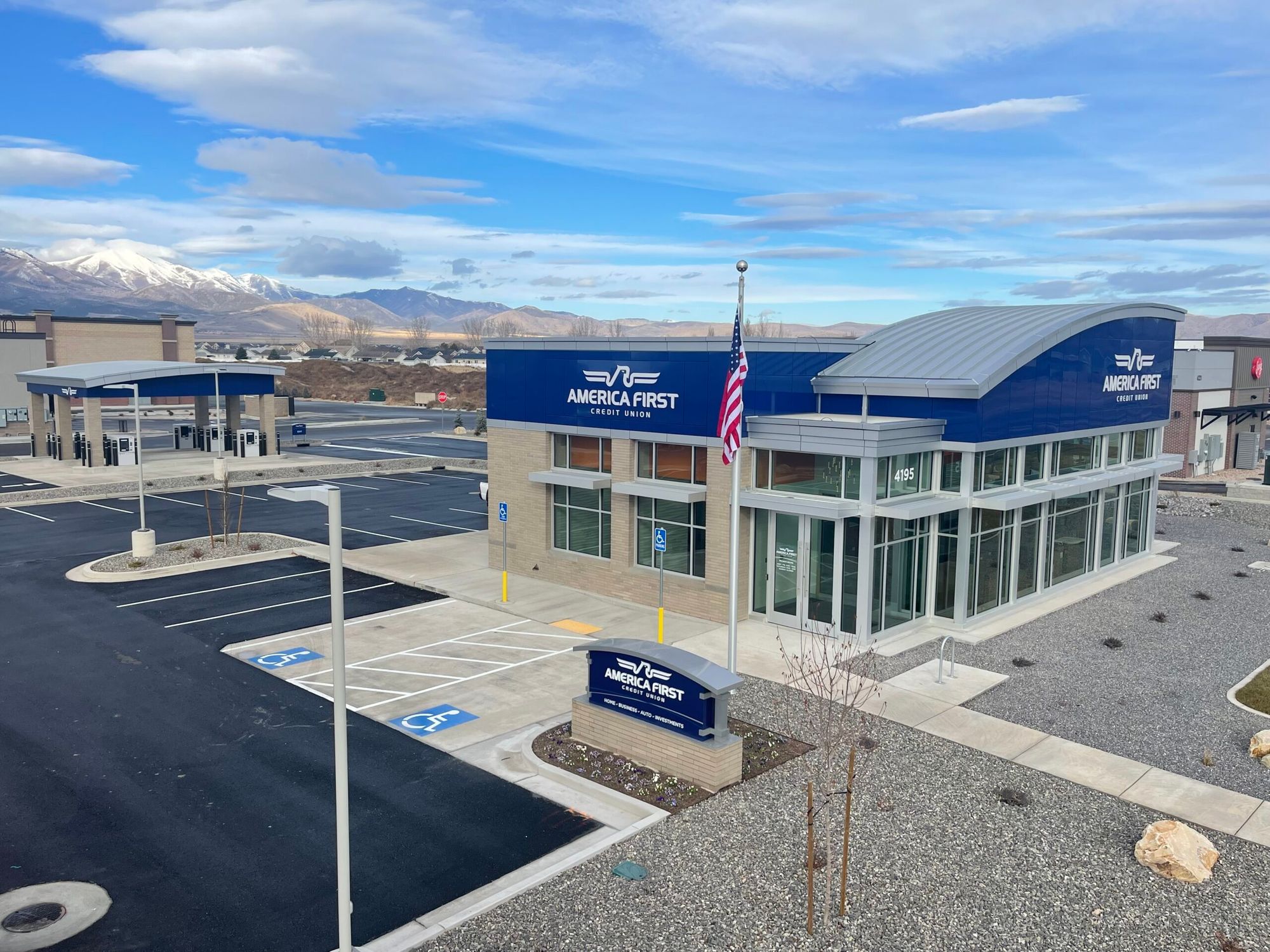
Did you know that two of the nation’s 10 largest credit unions are located in Utah? From maintaining one of the largest branch networks in the country to investing millions in local safety nets, America First Credit Union is deeply rooted in Utah’s economic story.
Founded in Salt Lake City in 1939, AFCU was originally chartered as Fort Douglas Federal Employees Credit Union. Today, AFCU is the sixth largest credit union in the United States, with $23 billion in assets and more than 1.5 million members.
We caught up with Brett Christensen, chief lending officer, to learn about the Utah business climate and the “business of winning.”
We have a presence in Utah, Nevada, Arizona, Idaho, New Mexico, and California, but about 60 percent of our members and our business is located in Utah. We view it as very important.
Not only are we one of the largest credit unions in the country, we have one of the largest branch networks, with 116 locations. Branch offices support our presence in the community.
Branches have changed over time. We don’t have all the thousands and thousands of transactions at the teller window like we did in the past. A lot of that’s done online and through mobile applications now. But when people have a problem, or they want to open an account, or they want to get a big loan, they still want an in-person presence. And so, we’re always evaluating how we can maximize our branches in our areas, and how we can help to develop the communities where our members live.
We take our commitment to the community seriously, and that shows up best in the local organizations we choose to support. For instance, we’ve partnered with YCC Ogden by donating $500,000 to help build transitional housing for those escaping domestic violence. We also invested $250,000 in the Fullmer Foundation’s youth boxing arena, which provides a free after-school haven for underprivileged youth in Salt Lake.
Our support extends to specialized care and education as well; we donated $1 million to Primary Children’s Hospital in Lehi to support their school zone and pantry, and $600,000 to Make-A-Wish Utah for the expansion of their Salt Lake facility. We also focused on accessibility and housing by giving $25,000 to the Ronald McDonald House SLC for ADA updates and providing $100,000 to establish Teen Centers in Weber and Davis Counties. These centers offer homeless students a safe place to shower, do laundry, and use computers to keep up with their schoolwork. By teaming up with these dedicated developers and municipalities, we aren’t just donating money. We’re helping build the infrastructure our neighbors need to thrive.
We started 84 years ago with a focus on consumer banking. The next step was mortgage lending, and then the next step after that was commercial and business lending. Today, our business is about 64 percent consumer, 26 percent mortgage and 10 percent commercial.
We’ve got 88,000 business accounts and a portfolio of $1.7 billion in commercial loans and Small Business Administration (SBA) loans. We’re one of the largest credit union SBA lenders in the country.
We’re acquiring a bank in the next few months out of Las Vegas, and that’ll increase our commercial and business opportunities. Once we complete that acquisition, we’ll have about $3 billion total in business loans, and it’ll be about 18 percent of our portfolio. So supporting businesses is a growing part of our business, and a very important part.
We’ve actually grown business lending and business deposits at a faster rate than our consumer side. Many of our consumer accounts are people who are business owners. We’ve already gained their trust with consumer activities, and it’s a natural transition for them to bring their business accounts to us. And many of what were initially business accounts, well, those people bring their consumer lending here for much the same reason.
When we analyze the value of a member account or a business account, we include all the consumer and the business activities. We consider those mixed business and consumer accounts to be some of our most valuable. We continue to grow our products and services to meet the needs of larger businesses.
The economic metric that touches us the most is employment numbers. When people are feeling good about their jobs and their incomes, then they’re borrowing more, and that helps us on the loan side. When they’re doing well with their jobs and their incomes, then they’re able to pay their loans on time, and that helps us on the collection side.
I wake up most mornings feeling very fortunate that 60 percent of our business is in Utah, because Utah has done very well economically. When you look at growth rates of businesses, growth rate of the population, unemployment rates, growth in income, delinquency or losses of different loan types, and so on, Utah is generally in a very favorable spot. Utah often ranks in the top five out of 50 U.S. states in about every metric you look at.
We certainly view that as a wonderful advantage to be headquartered, and have the majority of our business, in a state that’s doing so well. We can’t take it for granted. We still have to work hard and make good business decisions as we manage the business. But we know that the state has done very well economically, and we’re thankful for that.
We have around 3,600 employees. Training them, keeping them, and providing a meaningful career path for them is a big part of our program.
I think we do better than most at it, based on the amount of longevity that I see. We’re big enough that people can grow into positions over the course of their careers. For example, we have a senior management team of about 40 managers and vice presidents, and I would say the average tenure in that room is 20 to 25 years. We also bring in quite a few students, in intern programs and part-time teller positions, and work them up through the organization.
We work hard to build a culture that’s family oriented. We let people know that work is important, but also their personal life and their personal time is important to us. We want them to have a good work-life balance. It’s worked out well for us as an organization.
To stay relevant, especially for younger members and businesses – it’s all technology-driven. Just look at the fintechs, the financial technology companies that are out there. They’re growing like crazy, and it’s because they have great tech.
As important as technology is, we’ve learned that having a person-to-person relationship, with a member or business owner, can go a long way as well. Our goal as an organization is to become that hybrid of a financial service provider with great technology that you want, expect and deserve, and also have an exceptional human service element.
We’re growing 8 to 10 percent a year, and a big part of our strategic plan is improving in technology. One example is on the business side, where one of the hardest parts is opening up new accounts. It’s such a labor-intensive process, with lots of human involvement, and it can take a week or two or three in a worst-case scenario. There are so many different forms and different things that have to be gathered up and processed.
We have invested a lot of money with a software provider to develop the ability to open up our business accounts online and at a much quicker pace. That’s a huge advantage for us now. What used to take weeks, we can get done on the same day. That’s a big deal, and it only happens through technology.
We’re also going down that road for our loan products. It’s easy to apply online, and you can get a quick underwriting decision. We’re taking it to the next step of getting documents signed and money dispersed. We have big initiatives on digital accounts and digital loans and digital deposit products as well.
When you get to the brass tacks of making a loan, or opening a deposit account, running a checking account, or a money market account, or a CD, or a car loan, or a credit card – banks and credit unions are very similar. The key difference is really the ownership structure. A credit union is a not-for-profit organization. Our members are our owners.
Both banks and credit unions need to do well financially to prosper, but I think the motive’s a little different. Our motive, you know, isn’t governed by driving hard bottomline results as much as it is doing well for the members. If we can do that, then we can return that income back to our membership with better deposit rates, or better loan rates, or better products and better services.
Many years ago, I was stationed at Hill Air Force Base as a second lieutenant. I became a big fan of the Utah Jazz. Then we moved to Las Vegas, and then to Texas where we raised our family. But I was still a Jazz fan. I tell people that the two reasons my wife and I moved back here are Donovan and Mitchell. He was so, so good, and so fun to watch.
I think the latest trade by the Jazz for Jaren Jackson is going to be great. I’m just so thrilled to be out of the business of trying to lose, and back in the business of trying to win. It’s going be fun next year. We’re going to be a good team.
_____
“Building Together” highlights examples of the impact of your investment and EDCUtah’s work in communities across the state.
For additional information or to schedule an interview, please contact us.
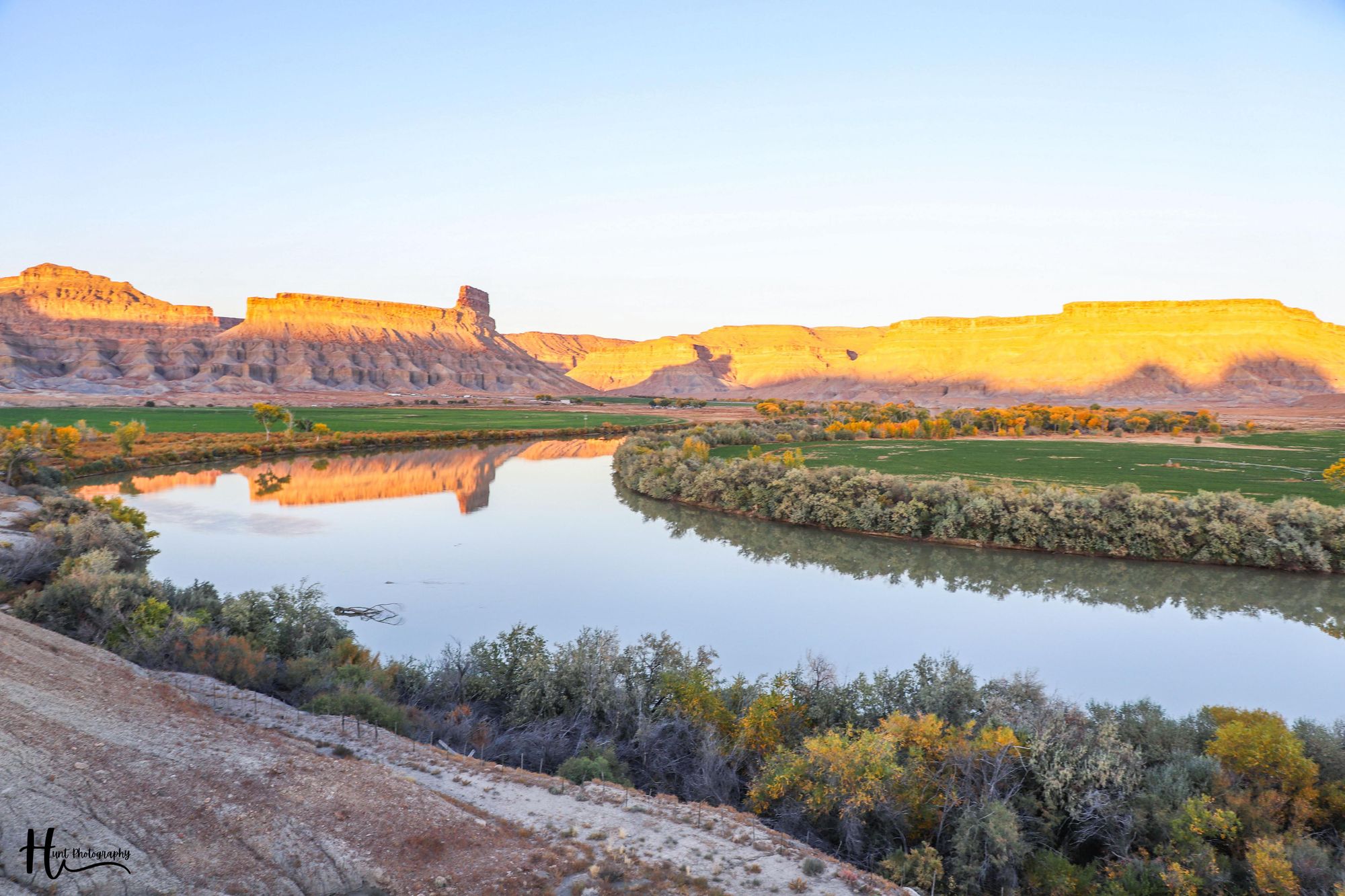
EDCUtah’s Community Spotlights seek to elevate Utah communities and connect them with business leaders to help shape future growth. In this Q&A, Green River City Manager Edward Castro Bennett shares how the community is leveraging regional partnerships, infrastructure planning, and clean energy innovation to support projects that are feasible and built to last.
Green River is a small, resilient, western desert community on the edge of some of the most remarkable landscapes in the country. We sit in Utah’s Gunnison Valley, surrounded by the Book Cliffs, canyon country, major highways, rail lines, and vast stretches of public land. People tend to pass through us on their way elsewhere, and what often gets missed is that Green River is much more than just a stop along the way.
We are a service town in the truest sense. We provide food, lodging, fuel, emergency services, and infrastructure support for travelers, recreationists, truckers, energy workers, researchers, and neighboring rural communities. That service role extends well beyond our city limits and into a region that depends on us far more than the size of our population suggests.
We are also a river town. The Green River has shaped our history, our economy, and our relationship with the land. Water here is not abstract or taken for granted. It’s something we manage carefully, respect deeply, and plan around with intention because so much depends on getting it right.
At the same time, Green River is a connector. We connect people to the outdoors, to energy development, to rail and freight movement, and to remote parts of the state that rely on a stable hub. With that comes responsibility. Our decisions affect visitors, workers, and communities spread across a wide area.
Green River offers steady progress, serious partners, and a community that is prepared to do this work the right way.
What sets us apart is not just where we are on the map, but the role we play. We carry regional weight with a small team, limited resources, and a strong sense of stewardship. That has shaped how we think, how we plan, and how seriously we take our obligation to do things right, not just for today, but for the long haul.
I am most proud of the foundational work we are doing. When I arrived, my mandate was to bring the city into a modern economic development ecosystem.
This past year, we launched a rebrand that gave Green River a fresh identity with a .gov web domain, a new executive seal, and our guiding North Star: “Waypoint to Wild.” It’s more than a slogan – it’s a direct call to action. It reflects who we are as a community, rooted in grit and history, while opening doors to new opportunities for growth, pride, and belonging.
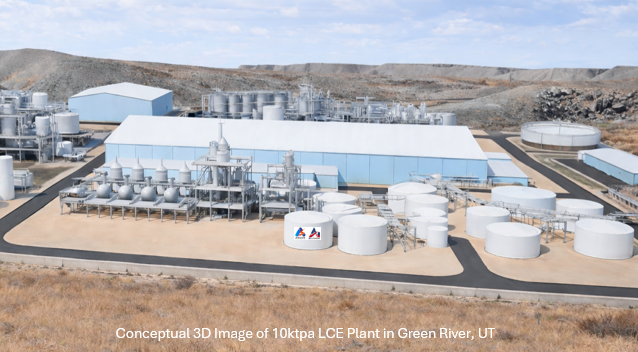
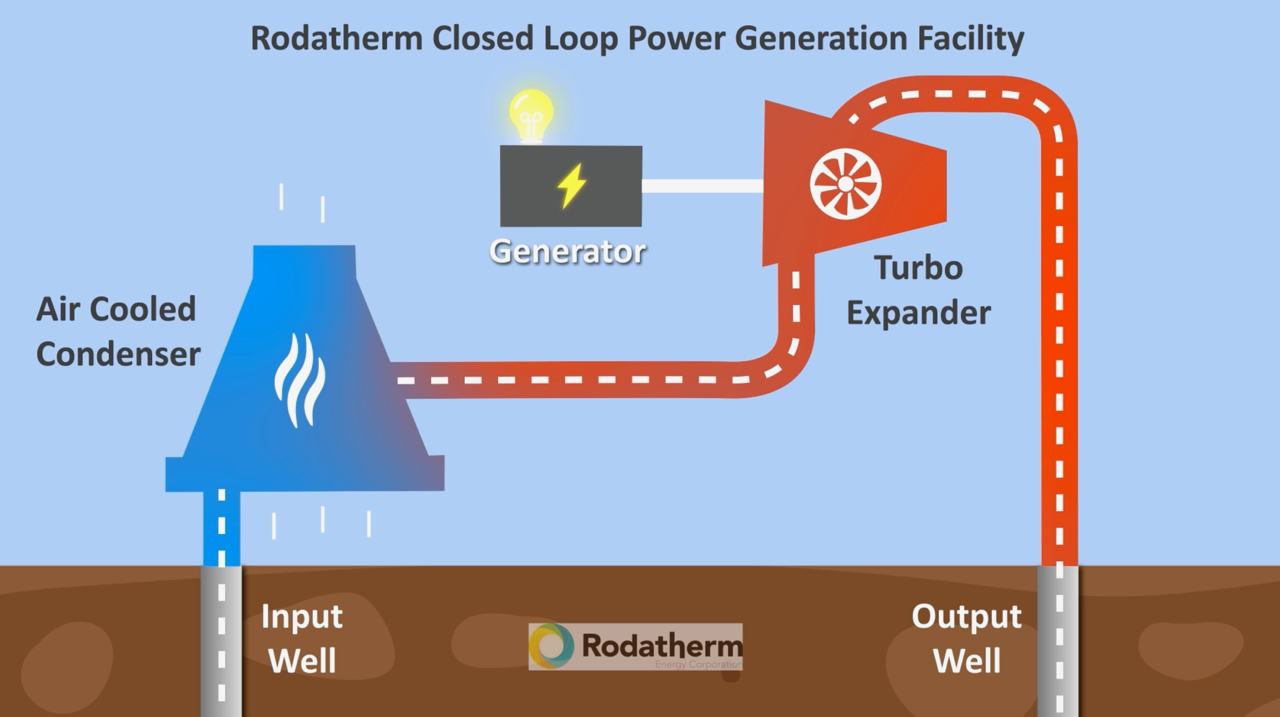
We also made history with Airbuild Inc, the first EDCUtah-supported corporate expansion project in Emery County’s history. When their proof of concept succeeds, it will be a revolutionary step for sustainability. We’ve also continued to support A-1 Lithium as it expands operations here, proving Green River is playing a real role in the future of energy in Utah and the intermountain West.
Airbuild matters because it reflects the direction Green River is heading. The company brings clean energy innovation, job creation, and environmental stewardship together in a way that is practical and grounded. We expect our partners to uphold our ideals of experiencing the west and being active members of the community. Airbuild is doing that in real time.
The project also demonstrates that Green River can support complex, forward-looking investments. It shows that a small rural community can be a serious partner in projects that matter at a regional and national level.
We strive to be transparent and consistent. We focus on clear rules, early and open communication, and mutual respect. Developers and property owners deserve to know what is expected of them, how timelines look, and where flexibility can (or does not) exist.
I have a four-pronged approach to everything we do in town. I ask three questions (the third has two parts):
That’s it. That’s the criteria for every decision we make.
We work to partner without compromising the long-term interests of the community. That means asking as many questions as possible early-on in the conversation. There is an incentive to avoid surprises later-on, and focusing on projects that are feasible, responsible, and aligned with our planning goals makes all these things easier.
The City of Green River supports development through coordination and partnerships rather than one-off local incentives. We work closely with the Governor’s Office of Economic Opportunity (GOEO), EDCUtah, and most importantly the Utah Inland Port Authority to connect projects to state level tax incentives, financing tools, and funding programs that a city our size simply does not have the capacity to administer in house.
The Inland Port partnership, in particular, allows Green River to leverage tools that would otherwise be out of reach. Instead of trying to recreate complex incentive programs locally, we focus on being a strong, reliable on the ground partner while the state brings resources, expertise, and scale. We currently have nearly 10,000 acres of Inland Port project zones within our city limits.
Our role is to do the best we can for our citizens and all the residents in our little corner of the world. When we can align with the right partners and keep city processes clear and predictable, then good projects move faster, risks are better managed, and investors can move forward with confidence knowing commitments are real and coordination is already in place.
Right now, we have five major economic development and downtown revitalization efforts underway at the same time. That includes the Thriving Communities Program through the U.S. Department of Transportation, our Brownfields work with the U.S. Environmental Protection Agency (EPA), the Broadway and Main engineering and redesign project and a Green River Economic Development Blueprint, both sponsored by GOEO, and our participation in Utah Main Street through the State Historic Preservation Office. That’s a lot for a small city, but it’s intentional. These projects are complimentary and we are engaging in them so we can do all the background, technical groundwork all at once.
As these efforts wrap up, we will have clear plans, the ability to prioritize projects, and tools to allow for real implementation of future development. Instead of reacting to opportunities as they appear, we will be ready with engineered designs, cleaned and usable sites, aligned incentives, and a shared downtown vision through which developers, property owners, and the community can move forward.
A big part of our work right now is not just physical projects, but cultural as well. We are intentionally shaping how the city functions, how people are treated, and what kind of community we want to be. That means setting clear expectations for residents, staff, and council; follow through; communication; and mutual respect – both within city government and across the broader community.
On the development side, we are being deliberate about the kind of growth we support. Forward-thinking development for us means projects that recognize there are real people living here, not just parcels of land or investment opportunities. We are working to create places where people can gather, walk, work, and live in ways that strengthen connection instead of fragmenting it.
Quality of life is built through consistency and care. When a city like ours operates predictably and plans with humans in mind, I truly believe we can create a culture where people feel invited, supported, and willing to build their future here.
If we build it, they will come. If we focus on planning ahead, then we can mitigate the risks instead of waiting for systems to fail. On infrastructure, that means assessing capacity, prioritizing maintenance, and sequencing projects so investments make long-term sense. Water and wastewater planning is especially critical given our desert environment. We are consistently working on upgrades and working with interested parties to reduce angst and allow for the leveraging of resources.
We coordinate closely with our local utility providers and regional partners to ensure reliability and future capacity. Road improvements are prioritized based on safety, condition, and long-term use rather than short-term fixes. This is automated at this point, utilizing an AI program to evaluate our roads and give us clear direction on maintenance and upkeep.
On growth, workforce, and housing, we recognize that these challenges are regional, not isolated. We work with intrastate agencies and potential employers to find solutions that reflect the scale and realities of rural Utah rather than importing models that do not fit.
I wish more people understood how much responsibility we carry. Green River does far more than its size suggests. We keep things moving for travelers, industries, public lands, and nearby rural communities across a huge stretch of the state, often with a very small team and limited resources. When something works, we are probably serving people well beyond our city limits.
That reality shapes how we think, act, and feel. We have to be careful and we have to think long term. There is not much room for trial and error in a rural place like this. Decisions around water, roads, infrastructure, public safety, and land use carry real consequences, and fixing mistakes later is hard and expensive. And money is not something we have in spades to use willy-nilly. We value our taxpayers and recognize every penny we spend is because of them.
Because of this, we tend to move deliberately. We focus on doing things right the first time, even if it takes longer. The responsibility we carry has made this community aware that what we do here matters to a lot more people than most realize.
People should invest in Green River because a lot of unglamorous work has happened behind the scenes to make sure systems function, expectations are clear, and long-term decisions are not being made in isolation. We’re not chasing trends or trying to sell a version of Green River that doesn’t exist. We’re focused on building the basics first. That means infrastructure, land use, utilities, downtown reinvestment, and regional coordination that can actually support growth rather than strain it. When projects move forward here, they will do so on a foundation that is thought through and durable.
Green River knows who it is and what role it plays in the region. We respect the limits of a small rural city, and we plan within them instead of pretending they are not there. At the same time, we are clear about where we are going and the kinds of projects that make sense here. For investors who think long term, this is the moment. The plans are coming together, the groundwork is nearly complete, and the city is positioned to move from planning to implementation. Green River offers steady progress, serious partners, and a community that is prepared to do this work the right way.
_____
“Building Together” highlights examples of the impact of your investment and EDCUtah’s work in communities across the state.
For additional information or to schedule an interview, please contact us.
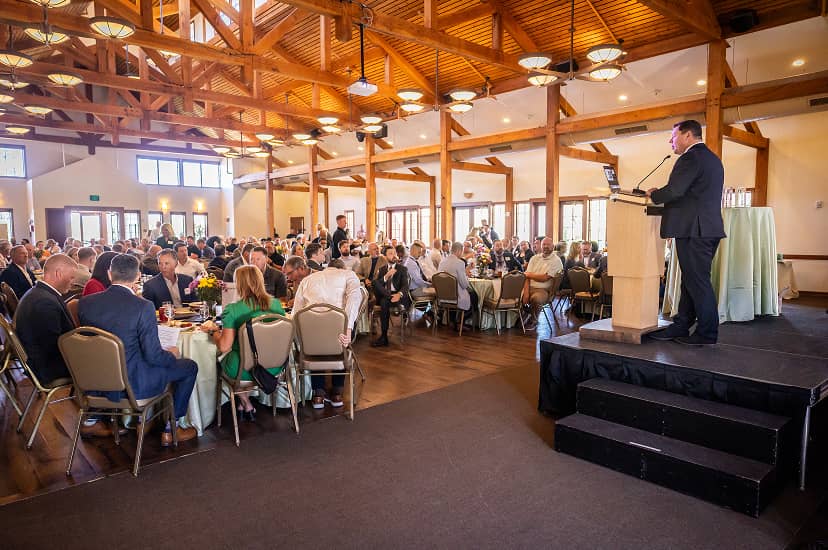
At the most recent Business Development breakfast for EDCUtah investors, the Business Development (BD) team celebrated a surge in Utah project wins.
Previously, in September, we closed the first quarter of the fiscal year with two project wins. While this was fewer wins than the same period last year, it was also expected – we’ve found that companies often delay or pause their final site selection decisions in election years.
But wins picked up again, with 10 companies announcing plans to expand in or relocate to Utah between October 2024 and February 2025. As a result of these wins, EDCUtah exceeded our capital expenditure forecast for the year and landed well ahead of our forecast for square footage absorption.
January 2025 was our busiest month for project wins, with four companies announcing their site selection decisions. For context, EDCUtah has only closed this many monthly wins four times in the last three years.
Securing these site selection decisions for Utah always requires the hard work and contributions of many partners across the state. EDCUtah’s public and private investors bring invaluable expertise, resources, and connections that help companies envision themselves in Utah. As John Merlini of JSL Partners said, “You make the process seamless and present great contacts … [this] played a significant role in JSL choosing Salt Lake City over Phoenix.”
Here are a few of the project wins we discussed at the BD Breakfast:
EDCUtah was pleased to host representatives from Nucor at the BD Breakfast, where they were able to connect with EDCUtah investors. In January, Nucor announced plans to expand in Brigham City, a decision that was nearly four years in the making. EDCUtah supported the project by coordinating requests for information (RFIs) in 2022 and 2023; facilitating connections with Brigham City, UIPA, and D.A. Davidson; as well as organizing a site visit to advance the initiative. Their final decision was the result of collaboration among Brigham City, EDCUtah, Utah Inland Port Authority (UIPA), and the Utah Governor’s Office of Economic Opportunity (GOEO).
“This new facility marks a significant milestone for Nucor Towers & Structures as we scale up our operations to meet the growing demand for utility infrastructure in western states. Utah’s robust infrastructure and skilled workforce make it the ideal location for this investment,” said Laurent De Mey, vice president and general manager of Nucor Towers & Structures. “We are proud to deepen our roots in Brigham City and appreciate the partnership with local leaders.”
Representatives from OxEon Energy also joined EDCUtah staff and investors at the BD Breakfast. In January, the company announced plans to expand its existing Davis County operations with 103 new high-paying jobs and an estimated investment of $99 million over the next six years.
The company’s announcement came as the result of collaboration among EDCUtah, the Northern Utah Economic Alliance (NUEA), Davis County, and the Utah Governor’s Office of Economic Opportunity (GOEO).
EDCUtah supported OxEon by facilitating strategic networking opportunities and providing guidance throughout the tax incentive process. While OxEon worked with GOEO on the state incentives application, EDCUtah provided support and resources to help advance the company’s goals. EDCUtah will continue supporting OxEon in future development phases.
Jessica Elwell, chief operating officer at OxEon Energy, said about the company’s decision to grow in Davis County, Utah:
“Utah offers a unique combination of skilled professionals, a supportive business environment, and access to critical infrastructure, making it the perfect place to scale our efforts. […] We are excited to continue contributing to the state’s growth while driving progress in clean energy technologies.”
Nucor plans create 200 new, high-paying jobs in Brigham City and invest $200 million in Utah over the coming years, reinforcing its role in advancing the steel industry.
Also in January, Bridor selected Salt Lake City for a new food manufacturing facility that will add 400 new jobs and $277 million in capital expenditure over the next 13 years. EDCUtah collaborated with Bridor and a site selection consultant to issue an RFI, connecting the company with available sites and communities. The project received support from EDCUtah investors including JLL, Enbridge, and Salt Lake City.
The company issued the following statement about its decision to locate in Salt Lake City: “Utah’s connectivity to major transportation routes, top-notch labor market, and proximity to diverse and rich agricultural products quickly elevated Utah to the top of our five-state regional review. The strong local support of our project helped Bridor visualize the roadmap for establishing operations here.”
After working with EDCUtah, AeroVironment (AV) announced plans in February to expand its Utah presence by creating 500 new, high-paying jobs in Salt Lake City and investing $42 million over the next five years.
Site selectors at CBRE reached out to EDCUtah at the onset of the project to pull together the right partners for successful deployment. EDCUtah assisted AV in navigating state incentive programs and coordinated a site visit, connecting the company with potential communities and key partners.
“The workforce and economic environment in Salt Lake City and the State of Utah was a great fit for this project,” said Sydney August, director of CBRE, who represented AV in the site selection process. “The ease of doing business here, combined with the strong community support, makes Utah an ideal location for the expansion.”
Hypercraft is the most recent electric vehicle (EV) company to announce an expansion in Utah, with plans to create approximately 183 new high-paying jobs and invest $39 million in Utah over the next seven years.
The company’s decision to expand in Utah was facilitated by EDCUtah and the Governor’s Office of Economic Opportunity (GOEO). EDCUtah assisted Hypercraft in navigating state incentive processes and in coordinating with communities across Utah’s Wasatch Front region. GOEO approved Hypercraft for Economic Development
Tax Increment Financing (EDTIF). EDCUtah will continue to help Hypercraft with incentives from other agencies and by connecting them with our network of private and public sector partners.
Utah continues to advance its leadership in innovative aerospace solutions. In December, CleanJoule announced plans to bring approximately 100 new technically-oriented jobs to Salt Lake City and invest $150 million in Utah over the next ten years.
EDCUtah supported the project by coordinating requests for information on behalf of the company and facilitating connections between CleanJoule and local brokers, including Newmark. Jeff Rossi of Newmark assisted the company in finding its location.
“Utah has an incredible talent pool and excellent leadership at the city and state levels, and Utah’s business-friendly legislature has been instrumental in allowing us to attract outside capital and drive growth,” said Mukund Karanjikar, CEO and founder of CleanJoule. “We see immense potential in the Salt Lake City community and are excited to be part of an ecosystem that values forward-thinking approaches and cultivates an environment where businesses and individuals alike can thrive.”
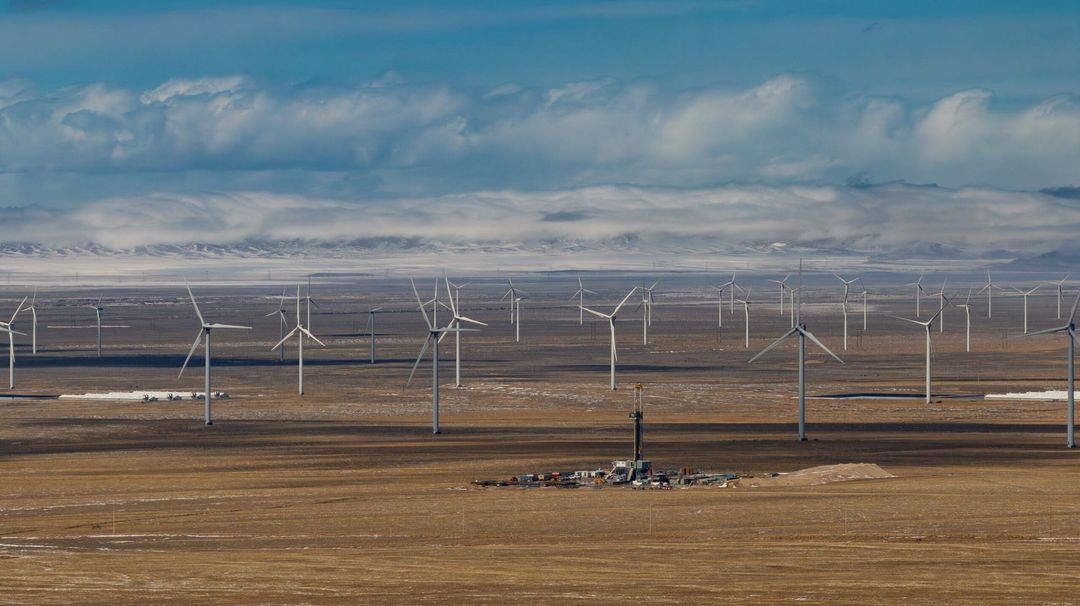
In October, Fervo broke ground on an enhanced geothermal energy production project in Beaver County. Cape Station is slated to produce 400 megawatts of power in the first two phases of the project, and Phase I will begin delivering around-the-clock power to the grid in 2026. Fervo Energy is a potential partner to future companies as they begin generating power, which can be used to attract new development to Beaver County.
“We are so lucky to be building our first greenfield project in Beaver County, Utah,” said Sarah Jewett, vice president of strategy for Fervo Energy. “The community has been hugely welcoming and collaborative and has been an essential partner in the progress we’ve made to date.”
EDCUtah was connected to Fervo Energy by Beaver County and the Governor’s Office of Economic Opportunity. EDCUtah assisted Fervo in exploring available incentive programs in Utah and introduced the company to the Utah Office of Energy Development and the Utah Inland Port Authority. Fervo Energy is a potential partner to future companies as they begin generating power, which can be used to attract new development to Beaver County. Together, EDCUtah, Beaver County, and Fervo Energy will work to attract other companies that will benefit the community.
While we were pleased to see the surge in project wins, we’re keeping a close eye on corporate expansion activity for the rest of the year. The uncertainty of international trade policies and other macroeconomic trends may have a dampening effect on corporate investments—but we don’t yet know how these impacts will play out in the Utah market.
_____
“Building Together” highlights examples of the collective impact of your investment and EDCUtah’s work in communities across the state. Do you have a story you’d like us to share? Email connect@edcutah.org.
For additional information or to schedule an interview, please contact us.