Building Together: Bringing It Home in Brigham City


Brigham City Economic Development Director Paul Larsen has worn many hats during his nearly three decades of service — planner, problem-solver, and community builder. This year, he received EDCUtah’s Public Sector Leadership in Economic Development Award honoring his long-time efforts in Box Elder County. As he prepares to retire at year’s end, Larsen shares lessons from a career dedicated to helping his community thrive.
I’ve always approached the job as someone who lives here. It’s important to experience the consequences of your decisions. My first bit of advice is to live in the community you serve.
Second, see every project through residents’ eyes. Development always has impacts, and your responsibility is to minimize those where you can. If you can defend your work to the average resident, you’ll sleep well at night.
When I came here nearly 30 years ago, I didn’t know much about Brigham City. Growing up in Montpelier, Idaho, my only connection was driving over for peaches and pears during harvest season. My mother canned fruit. We would drive over here every year during harvest time, fill the car with peaches and pears, and drive home. Then she would spend two weeks bottling fruit.
Before my job interview, I arrived early and was struck by how much I liked the place — the Main Street, the parks, the mountains. It felt like home. Over the years, I’ve learned its history and what makes it special – from the co-op, the Academy building, and the bird refuge to the Fruitway, Spiral Jetty and Golden Spike National Historic Park. That deep appreciation helps me understand what matters to residents.
Have a broad background. My career has spanned natural resources, planning, land use, and economic development, and that mix has been invaluable. You don’t need to know everything, but you should know who to call when you don’t.
Get involved with EDCUtah, the Utah Alliance for Economic Development, and professional groups like the Urban Land Institute or American Planning Association or Main Street America. Keep learning.
Also, recognize that everything a city does contributes to economic development — from public safety and utilities to libraries and parks. Our city budget is about $100 million, and I like to say that’s our economic development budget. Because quality services make businesses want to be here.
Economic development is full of highs and lows. Recently, we worked for over a year on a food manufacturing project only to have it fall through. The reasons were out of the control of either the company or Brigham City, and it happened quickly. We went from having a press release, to suddenly…they’re not coming.
My advice is to focus on what you can control. Do your best on your end and accept that sometimes external factors will change the outcome.
On the bright side, persistence often pays off. Niagara Bottling is a great example — their first site fell through, but we worked with them to find a better option on Forest Street, and they’ve grown steadily since.
Nucor is another success story. They’re now on their third expansion here, but our first interaction almost went off the rails. During a site visit in 2005, after heavy rains, one of their reps called me from a flooded property asking, “What are you trying to sell me? I’m standing in 18 inches of water!” Fortunately, we worked through it, and the company has become a fantastic partner. The lesson: be flexible, understand company needs, and play to your community’s strengths.
In economic development, sometimes you just think to yourself, “I want this project so badly.” And you’re tempted to sugarcoat things. But in reality, you need to tell companies the hard truths. If a company needs more water or new power infrastructure, be upfront about costs and timelines.
Good projects appreciate transparency. It’s not their first rodeo, either. They know that development requires investment. When you’re honest, you can work together to solve challenges.
Main Street is the heart of the community, you know? A healthy downtown reflects a healthy city. I once read about a CEO who visited a town with boarded-up storefronts and decided not to locate there. The reverse is also true.
When we were working with Procter & Gamble on its Box Elder County site, their visiting team loved eating at the Idle Isle Café on Main Street. It was a beloved café with hometown cooking. They’d step outside after lunch, look around, and say how great our downtown looked. That impression mattered.
Although Idle Isle has since closed, downtown Brigham City looks better than ever thanks to grant funding and revitalization efforts combined with the hard work of merchants and business owners. You can’t replicate that atmosphere in new developments. It shows pride, and that resonates with both residents and prospective businesses.
I couldn’t have done my job without EDCUtah. When I was talking about my career path, EDCUtah was critical in bringing me along and helping me understand economic development.
Their business development team worked with us on major projects like Procter & Gamble, Niagara, and Nucor. Their research team provides the kind of demographic and market data a city our size could never compile alone.
And the events…the quarterly breakfasts, the opportunity to network and meet people. That’s just priceless. I tell people that of all our memberships, EDCUtah is the last one I’d ever want to lose.
I grew up wanting to be an astronomer, until my first semester of physics and calculus convinced me otherwise. My other love was the outdoors, so I earned a degree in fisheries and wildlife at Utah State University. I planned to become a bear biologist, but the job market didn’t cooperate.
There were two openings on the Interagency Grizzly Study Team up in Yellowstone National Park, a five-year project. I was one of five finalists, but I didn’t get picked. If I’d have got that job, I’d be a bear biologist today. Professor Barry Gilbert suggested I look into landscape architecture. I really liked what I saw, so I went back and got my master’s degree. That degree landed me in West Valley City as a planner.
Six years later, I applied to be Brigham City’s city planner. The job description never mentioned economic development, but when I started, they said, “Oh, by the way, you’re also our Economic Development Director.” I had no idea what that meant, so I attended classes at the Economic Development Institute for three years, joined the Utah Alliance and EDCUtah, and leaned on great mentors like EDCUtah’s Alan Rindlisbacher (now retired).
Economic development is a deeply gratifying field. Seeing how your work improves people’s lives — through jobs, infrastructure, and community vitality — makes it all worthwhile.
_____
“Building Together” highlights examples of the collective impact of your investment and EDCUtah’s work in communities across the state.
For additional information or to schedule an interview, please contact us.


17 jobs
Project Falcons
Congratulations to Weber County! Auria – a mission-driven enterprise advancing space, missile defense, and cybersecurity through cutting-edge software and engineering solutions – has established operations in Weber County. The company has already created 17 new jobs since arriving in Utah in 2021.
Auria’s expansion to Utah from Colorado was supported by collaboration from EDCUtah and the Northern Utah Economic Alliance (NUEA).
During a Utah site visit in 2021, Auria met with Chris Roybal of NUEA, who was key to providing introductions and support that advanced the expansion project by connecting Auria with essential state and local partners.
“Auria’s decision to expand in northern Utah is a tremendous win for our region,” said Chris Roybal, president of Northern Utah Economic Alliance (NUEA). “High-paying aerospace and defense jobs like these not only strengthen our economy, but also affirm that northern Utah continues to be a prime destination for innovation, advanced manufacturing, and national defense leadership.”
“Utah’s aerospace and defense industry is one of the state’s strongest economic drivers,” said Ryan Starks, executive director of EDCUtah. “The established companies that already call Utah home serve as anchors that attract new businesses, creating a thriving ecosystem that reinforces the industry as a whole. Auria’s expansion to Utah is a testament to the continued innovation and quality job creation happening across the sector and throughout our state.”
Auria is a mission-driven technology company that designs, engineers, and delivers advanced software solutions for space, satellite, and national security applications. It focuses on space operations, missile defense, cyber protection, and strategic deterrence systems, serving government, commercial, and international partners. Formed on January 1, 2024, through the merger of four leading space and defense firms—Boecore, Orbit Logic, Ascension Engineering Group, and La Jolla Logic—Auria was established to unify expertise and innovation in support of complex missions that ensure global security and advance space capabilities.
“There are so many factors that make Utah an enjoyable place to do business. The workforce in Utah is phenomenal, thanks to the number and quality of higher education institutions, along with the strong State support for education. Additionally, we found that Utah is a very attractive place to live for many aspiring engineers,” said Todd Young, Auria’s vice president of strategic & defense solutions. “With our headquarters in Colorado Springs, it felt like a natural progression to expand work into friendly and neighboring Utah. We look forward to continuing our work and expanding our presence here.”
Erin Farr, deputy director and VP business development, led Project Falcons for EDCUtah.
_____
EDCUtah Investors: If you were involved with this project and would like to have your organization mentioned, please email connect@edcutah.org and we’ll update this article.
For additional information or to schedule an interview, please contact us.

223 jobs
$34.1 million capex
Project Case 2025
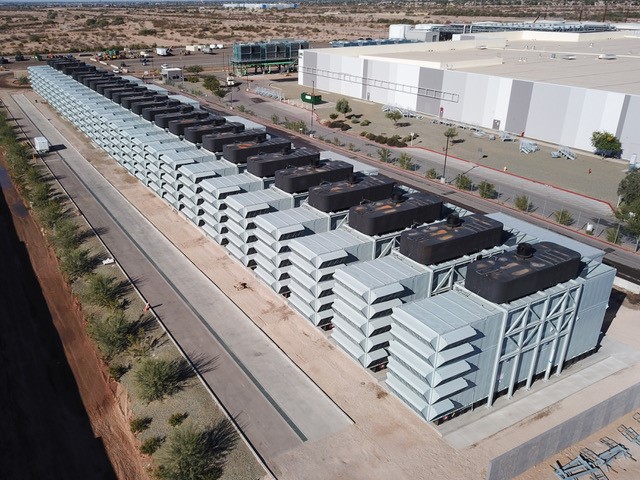
Congratulations to Clearfield City and Davis County! ACS Manufacturing, a manufacturer that designs and builds acoustical equipment enclosures—specifically for backup generators used in data centers, hospitals, and other critical industries—has announced plans to expand operations in Clearfield City. The company plans to create 223 new jobs and invest $34.1 million in Utah over the next 10 years.
The company’s announcement was the result of a collaboration among Spencer Brimley of Clearfield City, Davis County, EDCUtah, the Governor’s Office of Economic Opportunity, and the Northern Utah Economic Alliance.
Jeff Richards of CBRE Salt Lake City, who represented ACS Manufacturing during the project, brought the project lead to EDCUtah. EDCUtah worked closely with the project team to support the decision-making process and connected the company with key state and local partners.
“Clearfield City is thrilled to welcome ACS Manufacturing’s expansion,” said Mark Shepherd, mayor of Clearfield City. “This expansion will bring over 200 new jobs to our city and is a testament to our shared vision to strengthen Clearfield. We’re honored to be the home of the expansion and look forward to their continued success.”
“ACS Manufacturing will play a key role in supporting important industries across the state by manufacturing critical support systems right here in Utah,” said Ryan Starks, executive director of EDCUtah. “We appreciate our strong partnerships in northern Utah and the support from GOEO in providing an incentive to help bring this project to life. ACS Manufacturing has an important role in providing redundant and reliable systems. Additionally, they are creating high-wage jobs and delivering significant value to the community of Clearfield in Davis County.”
ACS Manufacturing is a specialty manufacturer that designs, engineers, and fabricates equipment for power generation, data centers, and other industries. It focuses on acoustical enclosures, fuel tanks, turbine systems, and skids, often serving as a single-source provider for complex projects. Incorporated in 1994 and founded on the principle that elegant solutions emanate from applying fundamental engineering principles, ACS was formed to meet the expressed need for single source, turnkey delivery of complex projects.
“As demand for our products continues to accelerate at a rapid pace, expanding our manufacturing operations in Utah is a strategic step forward,” said Dan Knox, CEO of ACS. “Utah offers a unique and compelling business environment, including its proximity to key customers and a deep pool of highly skilled labor. But what truly sets Utah apart is the exceptional work ethic of its people. We’re excited to invest in a region that shares our commitment to quality, innovation, and excellence in everything we do.”
The Utah Governor’s Office of Economic Opportunity (GOEO) – an EDCUtah founding investor – assisted the project by approving ACS Manufacturing Inc. for Economic Development Tax Increment Financing (EDTIF).
“Utah’s manufacturing sector is a key driver of our state’s economic resilience and prosperity,” said Jefferson Moss, executive director of the Governor’s Office of Economic Opportunity. “Companies like ACS Manufacturing are at the forefront of positioning Utah as a hub for technological advancement and innovation. Their growth creates high-quality jobs, strengthens our communities, and bolsters the state’s economy.”
Jared Stewart, senior business development manager, led Project Case 2025 for EDCUtah.
_____
EDCUtah Investors: If you were involved with this project and would like to have your organization mentioned, please email connect@edcutah.org and we’ll update this article.
For additional information or to schedule an interview, please contact us.

At the most recent Business Development breakfast for EDCUtah investors, the Business Development (BD) team celebrated a surge in Utah project wins.
Previously, in September, we closed the first quarter of the fiscal year with two project wins. While this was fewer wins than the same period last year, it was also expected – we’ve found that companies often delay or pause their final site selection decisions in election years.
But wins picked up again, with 10 companies announcing plans to expand in or relocate to Utah between October 2024 and February 2025. As a result of these wins, EDCUtah exceeded our capital expenditure forecast for the year and landed well ahead of our forecast for square footage absorption.
January 2025 was our busiest month for project wins, with four companies announcing their site selection decisions. For context, EDCUtah has only closed this many monthly wins four times in the last three years.
Securing these site selection decisions for Utah always requires the hard work and contributions of many partners across the state. EDCUtah’s public and private investors bring invaluable expertise, resources, and connections that help companies envision themselves in Utah. As John Merlini of JSL Partners said, “You make the process seamless and present great contacts … [this] played a significant role in JSL choosing Salt Lake City over Phoenix.”
Here are a few of the project wins we discussed at the BD Breakfast:
EDCUtah was pleased to host representatives from Nucor at the BD Breakfast, where they were able to connect with EDCUtah investors. In January, Nucor announced plans to expand in Brigham City, a decision that was nearly four years in the making. EDCUtah supported the project by coordinating requests for information (RFIs) in 2022 and 2023; facilitating connections with Brigham City, UIPA, and D.A. Davidson; as well as organizing a site visit to advance the initiative. Their final decision was the result of collaboration among Brigham City, EDCUtah, Utah Inland Port Authority (UIPA), and the Utah Governor’s Office of Economic Opportunity (GOEO).
“This new facility marks a significant milestone for Nucor Towers & Structures as we scale up our operations to meet the growing demand for utility infrastructure in western states. Utah’s robust infrastructure and skilled workforce make it the ideal location for this investment,” said Laurent De Mey, vice president and general manager of Nucor Towers & Structures. “We are proud to deepen our roots in Brigham City and appreciate the partnership with local leaders.”
Representatives from OxEon Energy also joined EDCUtah staff and investors at the BD Breakfast. In January, the company announced plans to expand its existing Davis County operations with 103 new high-paying jobs and an estimated investment of $99 million over the next six years.
The company’s announcement came as the result of collaboration among EDCUtah, the Northern Utah Economic Alliance (NUEA), Davis County, and the Utah Governor’s Office of Economic Opportunity (GOEO).
EDCUtah supported OxEon by facilitating strategic networking opportunities and providing guidance throughout the tax incentive process. While OxEon worked with GOEO on the state incentives application, EDCUtah provided support and resources to help advance the company’s goals. EDCUtah will continue supporting OxEon in future development phases.
Jessica Elwell, chief operating officer at OxEon Energy, said about the company’s decision to grow in Davis County, Utah:
“Utah offers a unique combination of skilled professionals, a supportive business environment, and access to critical infrastructure, making it the perfect place to scale our efforts. […] We are excited to continue contributing to the state’s growth while driving progress in clean energy technologies.”
Nucor plans create 200 new, high-paying jobs in Brigham City and invest $200 million in Utah over the coming years, reinforcing its role in advancing the steel industry.
Also in January, Bridor selected Salt Lake City for a new food manufacturing facility that will add 400 new jobs and $277 million in capital expenditure over the next 13 years. EDCUtah collaborated with Bridor and a site selection consultant to issue an RFI, connecting the company with available sites and communities. The project received support from EDCUtah investors including JLL, Enbridge, and Salt Lake City.
The company issued the following statement about its decision to locate in Salt Lake City: “Utah’s connectivity to major transportation routes, top-notch labor market, and proximity to diverse and rich agricultural products quickly elevated Utah to the top of our five-state regional review. The strong local support of our project helped Bridor visualize the roadmap for establishing operations here.”
After working with EDCUtah, AeroVironment (AV) announced plans in February to expand its Utah presence by creating 500 new, high-paying jobs in Salt Lake City and investing $42 million over the next five years.
Site selectors at CBRE reached out to EDCUtah at the onset of the project to pull together the right partners for successful deployment. EDCUtah assisted AV in navigating state incentive programs and coordinated a site visit, connecting the company with potential communities and key partners.
“The workforce and economic environment in Salt Lake City and the State of Utah was a great fit for this project,” said Sydney August, director of CBRE, who represented AV in the site selection process. “The ease of doing business here, combined with the strong community support, makes Utah an ideal location for the expansion.”
Hypercraft is the most recent electric vehicle (EV) company to announce an expansion in Utah, with plans to create approximately 183 new high-paying jobs and invest $39 million in Utah over the next seven years.
The company’s decision to expand in Utah was facilitated by EDCUtah and the Governor’s Office of Economic Opportunity (GOEO). EDCUtah assisted Hypercraft in navigating state incentive processes and in coordinating with communities across Utah’s Wasatch Front region. GOEO approved Hypercraft for Economic Development
Tax Increment Financing (EDTIF). EDCUtah will continue to help Hypercraft with incentives from other agencies and by connecting them with our network of private and public sector partners.
Utah continues to advance its leadership in innovative aerospace solutions. In December, CleanJoule announced plans to bring approximately 100 new technically-oriented jobs to Salt Lake City and invest $150 million in Utah over the next ten years.
EDCUtah supported the project by coordinating requests for information on behalf of the company and facilitating connections between CleanJoule and local brokers, including Newmark. Jeff Rossi of Newmark assisted the company in finding its location.
“Utah has an incredible talent pool and excellent leadership at the city and state levels, and Utah’s business-friendly legislature has been instrumental in allowing us to attract outside capital and drive growth,” said Mukund Karanjikar, CEO and founder of CleanJoule. “We see immense potential in the Salt Lake City community and are excited to be part of an ecosystem that values forward-thinking approaches and cultivates an environment where businesses and individuals alike can thrive.”
In October, Fervo broke ground on an enhanced geothermal energy production project in Beaver County. Cape Station is slated to produce 400 megawatts of power in the first two phases of the project, and Phase I will begin delivering around-the-clock power to the grid in 2026. Fervo Energy is a potential partner to future companies as they begin generating power, which can be used to attract new development to Beaver County.
“We are so lucky to be building our first greenfield project in Beaver County, Utah,” said Sarah Jewett, vice president of strategy for Fervo Energy. “The community has been hugely welcoming and collaborative and has been an essential partner in the progress we’ve made to date.”
EDCUtah was connected to Fervo Energy by Beaver County and the Governor’s Office of Economic Opportunity. EDCUtah assisted Fervo in exploring available incentive programs in Utah and introduced the company to the Utah Office of Energy Development and the Utah Inland Port Authority. Fervo Energy is a potential partner to future companies as they begin generating power, which can be used to attract new development to Beaver County. Together, EDCUtah, Beaver County, and Fervo Energy will work to attract other companies that will benefit the community.
While we were pleased to see the surge in project wins, we’re keeping a close eye on corporate expansion activity for the rest of the year. The uncertainty of international trade policies and other macroeconomic trends may have a dampening effect on corporate investments—but we don’t yet know how these impacts will play out in the Utah market.
_____
“Building Together” highlights examples of the collective impact of your investment and EDCUtah’s work in communities across the state. Do you have a story you’d like us to share? Email connect@edcutah.org.
For additional information or to schedule an interview, please contact us.

200 jobs
$200 million capex
Project Charm
Congratulations to Brigham City! Nucor, a leading steel producer and pioneer in sustainable manufacturing, announced plans to bring approximately 200 new technically-oriented jobs to Brigham City and invest $200 million in Utah over the coming years.
The company’s announcement came as the result of collaboration among Brigham City, EDCUtah, Utah Inland Port Authority (UIPA), and the Utah Governor’s Office of Economic Opportunity (GOEO).
EDCUtah supported the project by coordinating requests for information in 2022 and 2023; facilitating connections with Brigham City, UIPA, and D.A. Davidson; as well as organizing a site visit to advance the initiative.
“Brigham City is excited to welcome Nucor once again to our community. We are well acquainted with Nucor’s quality and integrity and look forward to working with them on a fourth project within our city,” said Brigham City Mayor Dennis J. Bott. “Our staff has worked with Nucor, UIPA, and GOEO on this project for over a year. Nucor’s decision to locate in Brigham City is a validation of the positive business environment we have worked hard to cultivate. We look forward to many years of partnership with Nucor Towers & Structures.”
“Nucor’s continued investment in Brigham City highlights their long-term commitment to manufacturing in Utah,” said Scott Cuthbertson, president of EDCUtah. “Their growing presence in Brigham City, now with multiple facilities, underscores the region’s strategic importance. Nucor’s focus on cleaner, more sustainable steel manufacturing sets a standard for innovation, and the addition of steel galvanization capabilities helps address supply chain needs within Utah’s manufacturing ecosystem.”
Nucor is a leading steel and steel products manufacturer committed to driving sustainability and innovation in the steel industry. With a pioneering approach, Nucor utilizes a highly efficient electric arc furnace (EAF) technology to produce high-quality steel with one of the lowest carbon footprints in the sector. Leveraging a diverse range of recycled materials, Nucor has built a scalable and flexible production process that meets the evolving needs of construction, automotive, energy, and other critical industries. Supported by its extensive network of partners and a dedication to continuous improvement, Nucor is revolutionizing steel production while advancing its mission to deliver sustainable solutions for a resilient future.
“This new facility marks a significant milestone for Nucor Towers & Structures as we scale up our operations to meet the growing demand for utility infrastructure in western states due to clean energy projects, transmission upgrades, and a growing population,” said Laurent De Mey, vice president and general manager of Nucor Towers & Structures. “Utah’s robust infrastructure and skilled workforce make it the ideal location for this investment. We are proud to deepen our roots in Brigham City and appreciate the partnership with local leaders.”
As part of the project, Nucor was approved for a tax differential by the board of the Utah Inland Port Authority, an EDCUtah champion investor. Tax differential, often referred to as tax increment, represents the growth in property tax revenues in a project area. These incentives are designed to promote economic growth, including significant investments in public infrastructure.
“This is a testament to the power of collaboration in driving economic growth,” said Ben Hart, UIPA executive director. “Nucor’s expansion underscores our mission to attract industries that align with Utah’s long-term vision for innovation and sustainability. The addition of skilled jobs and significant investment will be a catalyst for continued development in the region.”
The Utah Governor’s Office of Economic Opportunity (GOEO) – an EDCUtah founding investor – assisted the project by approving Nucor for Economic Development Tax Increment Financing (EDTIF).
“This project highlights Utah’s commitment to fostering innovative industries that prioritize sustainability and community impact,” said Ryan Starks, GOEO executive director. “We’re proud to support initiatives that create opportunities for both businesses and residents.”
Spencer Layton, business development analyst, led Project Charm for EDCUtah.
_____
EDCUtah Investors: If you were involved with this project and would like to have your organization mentioned, please email connect@edcutah.org and we’ll update this article.
For additional information or to schedule an interview, please contact us.
103 jobs
$99.4 million capex
Project Oxygen
Congratulations to Davis County and the City of North Salt Lake! OxEon Energy, an innovative leader in clean energy technology and advanced materials, announced plans to bring approximately 103 new high-paying jobs to Davis County and invest $99.4 million in Utah over the next 6 years.
The company’s announcement came as the result of collaboration among the Northern Utah Economic Alliance (NUEA), EDCUtah, Davis County, and the Utah Governor’s Office of Economic Opportunity (GOEO).
EDCUtah supported OxEon by facilitating strategic networking opportunities and providing guidance throughout the tax incentive process. While OxEon worked more directly with GOEO, EDCUtah provided encouragement and resources to help advance the initiative. EDCUtah will continue supporting OxEon in future development phases.
“OxEon has been a valued partner in Davis County since 2021, and we fully support their growth,” said Chanel Flores, economic development director of the Office of Community & Economic Development for Davis County. “They exemplify how businesses can effectively leverage loan funding to drive impactful innovation. We’re grateful to the GOEO board for extending this EDTIF opportunity, which will further support OxEon Energy’s expansion and contributions to our community.”
“In the coming decades, clean energy will be a key component of economic growth not only in northern Utah but also globally. We congratulate OxEon on their advances in energy technology and look forward to their continued expansion in northern Utah’s economy,” said Chris Roybal, president of NUEA.
“OxEon’s growth is a testament to the remarkable energy innovation happening right here in Utah,” said Scott Cuthbertson, president of EDCUtah. “This project showcases our commitment to fostering the success of local companies and highlights the potential for groundbreaking innovation within our communities. EDCUtah will continue to champion initiatives that support the growth of Utah-based businesses and strengthen our state’s economy.”
OxEon Energy is a pioneering leader in the development of solid oxide technologies and is committed to driving innovation and sustainability in the energy sector. With expertise in solid oxide fuel cells (SOFC) and solid oxide electrolysis cells (SOEC), OxEon specializes in transforming carbon dioxide and water into clean fuels and high-purity gases. Their advanced systems enable efficient energy storage and production, addressing the needs of industries ranging from aerospace to renewable energy. Renowned for their contribution to NASA’s MOXIE project, which produced oxygen on Mars, OxEon is at the forefront of groundbreaking advancements. By leveraging state-of-the-art technologies and a dedication to sustainable solutions, OxEon is reshaping the future of clean energy while enabling industries to meet global energy demands sustainably.
“OxEon Energy’s decision to expand our operations in Utah reflects our deep commitment to the state’s thriving innovation ecosystem and talented workforce,” said Jessica Elwell, chief operating officer at OxEon Energy. “Utah offers a unique combination of skilled professionals, supportive business environments, and access to critical infrastructure, making it the perfect place to scale our efforts in advancing sustainable energy solutions. The state’s unparalleled outdoor culture also enhances work-life balance for our employees, helping us attract and retain top talent. We are excited to continue contributing to the state’s growth while driving progress in clean energy technologies.”
The Utah Governor’s Office of Economic Opportunity (GOEO) – an EDCUtah founding investor – assisted the project by approving OxEon for Economic Development Tax Increment Financing (EDTIF).
“Utah is committed to advancing clean energy solutions and creating jobs that fuel economic growth,” said Ryan Starks, executive director of GOEO. “This incentive helps build a more sustainable future by supporting companies like OxEon as they develop groundbreaking technologies to shape the future of energy.”
Jared Stewart, senior business development manager, led Project Oxygen for EDCUtah.
_____
EDCUtah Investors: If you were involved with this project and would like to have your organization mentioned, please email connect@edcutah.org and we’ll update this article.
For additional information or to schedule an interview, please contact us.

In November 2023, Ogden City welcomed Ya YA Foods to the city’s business community. Ya YA Foods, a Canadian based company, announced it would bringing more than 300 new jobs to Ogden, Utah, over the next ten years. The company is bringing new jobs to Ogden at a quicker pace than initially anticipated, thanks in part to the qualities of Utah’s workforce.
Ogden City’s Engineering Division and Economic Development Division has also been collaborating with Ya YA Foods on utility line upgrades that will greatly improve the city’s residential and business infrastructure.
We caught up with Ya YA Foods president Yahya Abbas to learn more about the company’s experience opening its first U.S. operations in Utah.
Most of our operations are in Toronto, and Utah is our first site in the U.S. We looked at Arizona and Texas and Utah. Because we wanted to have a western U.S. location, Utah was the most reasonable and sensible place for us to expand. Then came the opportunity to partner with Oatly at their Ogden City location. That’s how it all came together.
Our agreement with Oatley has us assuming the production of their finished products. It’s a long-term agreement, and it gives us an anchor customer for the Ogden site. This will allow us to expand on the site and serve other customers, too.
It was customer driven. We have the same customer base in Canada and the U.S.: long-established clients who are expanding and who need a trusted production partner in the western United States. Some of them are multi-national corporations, and one has done business with us for more than 34 years. The newest client has done business with us for eight years.
We employ a lot of engineers and technicians – highly-paid, skilled labor. In our business, we focus on automation, so we need the talent. If I’m not mistaken, we pay very well for that talent in this market.
We relocated only five people from Toronto. They bring expertise, and they train the rest of the people in the plant. Our focus is hiring in Utah. We want to prepare Utah employees to be leaders, to scale up the business. So far, it’s working very well.
At the beginning, this expansion was projected to be 100 jobs in the near term. Right now, we’re at 150 jobs. By the end of this year, we’ll add another 67. In the first six months of 2025, we should add another 100 jobs. I think this site will eventually reach 400 employees.
Ogden City has given us many leads for finding talent, such as the university and the local community college. It’s interesting that through the job fairs and other events, we’ve actually seen people from other states coming to Utah looking to work for us. Idaho, California, Texas, Arizona… Maybe in all, 14 of these out-of-state people have been hired, but that’s significant for us. Because of our focus on technology in the manufacturing process and our pay scales, we’re getting attraction. Plus living in Northern Utah has lower costs than other parts of the country.
I believe that about Northern Utah, yes. We are very impressed with the workforce in Utah. For one thing, when we ask employees to do something a specific way, a lot of repetition is not needed. We tell them once, and it happens. They get it.
The other thing is they value their jobs. They are loyal to the employer if the employer is loyal to them. I hadn’t expected that, and it was a nice surprise.
Founded in 2008 and headquartered in Toronto, Ya YA Foods specializes in end-to-end packaging solutions for multinational beverage and liquid food companies across North America. The company has expertise in producing a broad range of aseptic products, including plant-based milk for companies such as Oatly, high-protein beverages, juices, broths, sports drinks, dairy-based drinks, and more.
_____
“Building Together” highlights examples of the collective impact of your investment and EDCUtah’s work in communities across the state.
For additional information or to schedule an interview, please contact us.

210 jobs
Project Tomcat
Today, the Utah Governor’s Office of Economic Opportunity (GOEO) and the Economic Development Corporation of Utah (EDCUtah) are pleased to announce that Precision Hermetic Technology plans to bring 210 new, high-paying jobs in Utah over the next 10 years.
“We are thrilled to welcome Precision Hermetic Technology’s expansion to Utah,” said Ryan Starks, executive director of the Utah Governor’s Office of Economic Opportunity. “Utah is home to thriving aerospace, defense, and manufacturing industries that demand high-quality, reliable components for advanced systems. Our state will benefit greatly from the company contributing to these industries, job creation, and the state’s economy.”
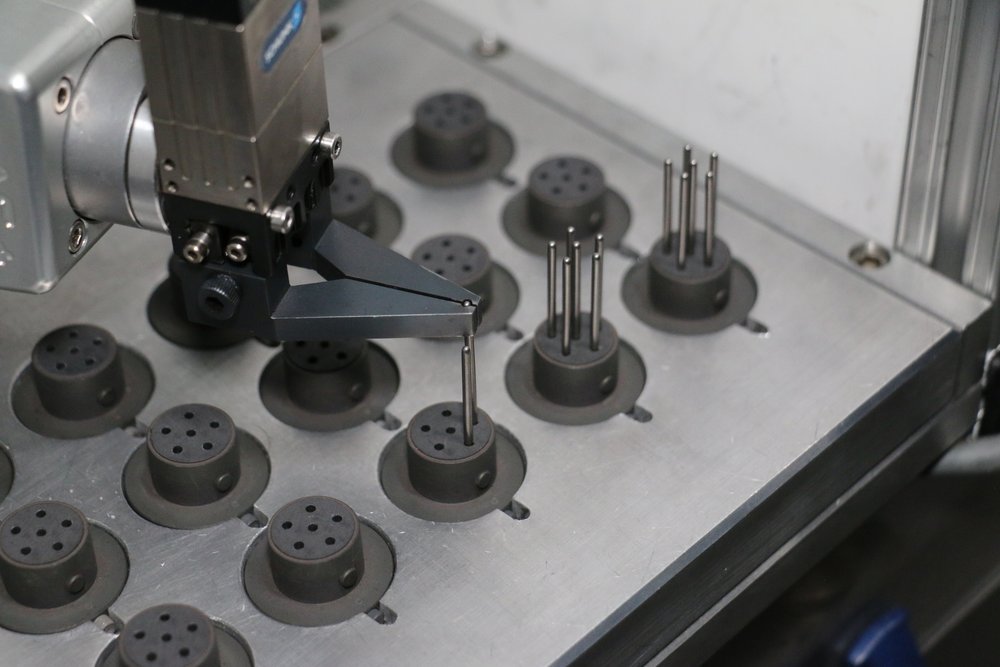
Precision Hermetic Technology (PHT) specializes in manufacturing high-reliability interconnect products for extreme environments and conditions. Founded in 1989 by Daniel Schachtel, PHT has become a recognized leader in the aerospace and defense sectors, known for its exceptional performance in mission-critical applications. Precision Hermetic Technology proudly holds certifications such as ISO-9000, AS-9100, ITAR, JCP, and NIST-800, enabling it to serve many prime defense contractors.
The company noted, “Precision Hermetic Technology is excited to announce its strategic relocation from Redlands, California, to Ogden, Utah. This move positions PHT for significant growth, with a larger manufacturing space enabling new product lines and added capabilities. Utah’s business-friendly environment and Ogden’s skilled workforce in aerospace and defense perfectly align with PHT’s expansion plans within these industries.”
More than just business, the move brings PHT closer to the owners, who have fostered a personal connection to the state over 20 years of family visits. PHT remains dedicated to its customers and employees, and this relocation promises a bright future.
“Utah’s business-friendly environment and robust aerospace and defense industry continue to attract new companies at all points in the manufacturing supply chain,” said Scott Cuthbertson, president & CEO of EDCUtah. “Precision Hermetics Technology plans to convert vacant office space into a manufacturing facility, and we look forward to seeing the improvements and innovation they’ll bring to Utah’s business community.”
“On behalf of Ogden City, I’m excited to welcome Precision Hermetic Technology to our community. PHT will create high-quality jobs for Ogden residents and further strengthen Northern Utah’s aerospace and defense industry,” said Ben Nadolski, mayor of Ogden City. “We are grateful to the 47G UAMMI Institute for introducing PHT to Ogden, and to EDCUtah and GOEO for supporting this important project.”
Spencer Layton, business development analyst, led Project Tomcat for EDCUtah. Cameron Cook from Boyer, an EDCUtah Builder’s Circle investor, worked on the project.
_____
EDCUtah Investors: If you were involved with this project and would like to have your organization mentioned, please email connect@edcutah.org and we’ll update this article.
For additional information or to schedule an interview, please contact us.

The manufacturing industry has long played an important role in Utah’s economy, and the share of manufacturing companies in EDCUtah’s corporate expansion pipeline has dramatically increased since 2020.
However, the scale of the projects, their challenges in terms of utilities and talent availability, and the locations considered are all shifting in interesting ways.
In this Q&A, EDCUtah’s business development team discusses trends in the projects bringing manufacturing jobs to Utah.
For the current fiscal year (July 2023 – June 2024), we’ve seen 57 manufacturing facility projects. Of 28 total project wins in that timeframe, 18 have been manufacturing. That’s consistent with patterns we’ve seen since the beginning of the Covid-19 pandemic, when office projects slowed, and manufacturing and distribution came to the fore in our pipeline.
The wins have come from companies in a variety of manufacturing sectors, such as advanced materials, aerospace & defense, energy & natural resources, and life sciences. The rest fall into the “other” category, which includes consumer goods, food manufacturing, and other companies. It’s a good balance.
Utah’s business environment is primarily attractive for our comparatively lower operating costs. That includes a combination of lower utility costs and talent costs. Costs may not feel low for those of us living here, and the cost gap has been closing over time, but it’s still a factor—especially when we’re recruiting manufacturing companies from coastal U.S. cities. When these companies see Utah average hourly rates for assembly positions, they are blown away. If the company is coming from the Midwest, they are seeing comparable prices or maybe prices that are even lower than Utah’s. However, in the context of our surrounding western states, we’re still doing well on cost.
Utah is also pro-business. Both at the state and local levels, companies can secure permits efficiently, especially for large manufacturing projects.
In terms of locations, manufacturing companies are choosing less urban sites more often. A significant amount of manufacturing facilities is landing on the Wasatch Front “shoulder counties,” in places like Juab County, Tooele County, and Box Elder County. These are places where manufacturing companies can access a large labor pool and lower costs for land or building leases. Five years ago, we didn’t receive many inquiries about some of these places. Now there is a lot of interest. Places like Tooele, Saratoga Springs, Eagle Mountain, Payson, and Box Elder County have growing populations who prefer to work locally rather than commute. This means access to a large labor pool eager to work for new, local employers.
New, non-residential construction supports local property tax revenue, which helps keep costs lower for cities, offsetting some of the tax burden for residents.
New manufacturing jobs allow residents to live, work, and play in the same community – without having to endure long commutes to other cities.
Back in the 1980s, Utah’s economy mostly consisted of agriculture, manufacturing, and mining. Leaders at the state, local, and business levels realized that if we wanted to better weather economic downturns, we needed a more diverse economy. That realization led to the creation of a public-private partnership focused on corporate recruitment: EDCUtah.
As we worked to diversify our economy, the manufacturing industry retained its importance as the backbone of Utah’s economy. Nowadays, it lends an overall steadiness. Utah manufacturing companies have helped our economy to grow in related sectors like life sciences, aerospace and defense, and advanced materials.
Utah manufacturing companies are growing in or near their current facilities, rather than sinking significant capital into new locations. Some examples are Proctor & Gamble and Nucor expanding their existing operations in Box Elder County. Ionic Mineral Technologies in Provo City, instead of relocating to a new facility elsewhere, is expanding into the building right next door.
Companies are more cautious about their real estate commitments than they were a couple of years ago. It was common for companies to build or lease space that they would eventually grow into, and we saw square footage between 250,000-500,000 for the average project. Now we see companies committing to only what they need and then reevaluating if they grow.
Nowadays, power capacity is top of mind. Nationwide utility infrastructure constraints are one reason why companies are pursuing smaller expansions. In some cases, it makes more sense to upgrade the power supply to an existing building – whether owned or leased – than to build a brand-new building with the hope of getting power quickly.
It’s been surprising to see how quickly the issue has snowballed nationwide. Two years ago, consultants and companies were saying power constraints could be a thing on the horizon. At a more recent site selector conference, power was the number one topic. Site selectors expect to see power capacity challenges at most sites across the U.S.
The international manufacturing companies coming into the market are hard to categorize. Some, like Fairmat, have established a robust presence here, while other projects have brought in much smaller operations. In the latter cases, the small presence again denotes a cautious approach of testing the market.
A good number are in the clean-tech space. These companies still have a lot of research and development they need to do. And, coming from an emerging industry, their bankability is not as strong as companies in other industries. Investors are more reticent to fund them in a big way. This all leads to starting small.
When the project seeks federal funds, timelines are like a slinky toy, expanding and contracting. That’s due to funding stipulations, where the company must identify a potential site and community support as part of the application process. The company is not guaranteed to receive federal funding, so it’s a rush to put the application package together followed by a wait to find out whether they receive the funding.
This is another nationwide issue, with mixed results for Utah. Unless you’re already an established manufacturer like Texas Instruments, some of the newer companies are coming in hot with site selection requests, then easing off because they have to wait six to eight months for the federal funding decision. Federal funding has created a lot of interest in Utah sites, but not many projects have landed here yet.
Site selectors travel to different markets in the country, and they notice how well Utahns collaborate to solve problems for companies interested in establishing a presence in the state. The consultants often remark on the quality of service they receive in Utah. Whether it’s state government, local government, city engineers, private sector engineering firms, you name it—Utahns work together.
Without our utility providers, manufacturing projects would be impossible to manage. They’ve done a great job supporting the state and getting those projects running.
As talent availability has become a much larger question in the last two years, talent recruitment firms have played a bigger role in the site selection process.
Our general contractors and civil engineering firms are also answering a lot of infrastructure questions upfront—whether it’s around cost data they are seeing in the market, or timelines needed to get a tilt-up concrete building out of the ground. The willingness of EDCUtah investors to share their expertise with potential projects is a huge plus.
When it comes to manufacturing, Utah performs exceptionally well. So, the first bit of advice is: come take a look. If the company needs utilities, ask about them immediately to determine if it’s possible to set up here. If they have any logistical questions, get those addressed early in the process as well.
Next, partner with EDCUtah! EDCUtah, along with our network of 200 public and private sector investors, helps businesses set up in Utah with ease. It is surprising to some companies, especially those doing their own site selection, how smooth the process can be when they work with a skilled organization like EDCUtah that facilitates every aspect of their potential development.
_____
“Building Together” highlights examples of the collective impact of EDCUtah and our investors in communities across the state. Do you have a story you’d like us to share? Email connect@edcutah.org.
For additional information or to schedule an interview, please contact us.
86 jobs
$160 million capex
Project Fish
Today, the Utah Governor’s Office of Economic Opportunity (GOEO) and the Economic Development Corporation of Utah (EDCUtah) are pleased to announce that Campbell Soup Company plans to bring 86 new, high-paying jobs and invest nearly $160 million in rural Utah over the next 10 years.
“Pepperidge Farm has been a long-standing pillar in the food industry in northern Utah, and we’re pleased to see the company expand its footprint,” said Ryan Starks, executive director of the Utah Governor’s Office of Economic Opportunity. “Utah has a diverse and thriving agricultural landscape where companies like Pepperidge Farm can leverage local resources and producers. This expansion will continue to foster partnerships within the local supply chain, create many new jobs, and support the economy in rural Utah.”
The company is investing in its Richmond, Utah bakery to expand production of Goldfish crackers to help meet increased consumer demand. The new line will increase the bakery’s output of Goldfish by 50% and produce over five million Goldfish per hour, or 1,500 Goldfish every second. The expansion also includes the construction of an onsite flour mill that will be separately owned and operated.
“We’re thrilled to be investing in our Richmond bakery to support the growth of our business and the community,” said Chris Foley, executive vice president of Campbell Soup Company and president of Campbell’s Snacks. “We appreciate the support from the state and look forward to seeing the positive impact this project will have on the local economy.”
With a bakery in Richmond and operations in Logan, the company currently employs more than 400 people in the Cache Valley region. The bakery, which has made Pepperidge Farm products for over 50 years, was recently named one of the top employers in northern Utah by the Cache Valley Daily and Cache Valley Media Group.
“Campbell Soup Company has a long-standing history of quality corporate citizenship, and we’re thrilled to see them reinvest in rural Utah,” said Scott Cuthbertson, president and CEO of EDCUtah. “This expansion aligns with the state’s focus on food security, and it demonstrates the impact of local community involvement in business retention efforts.”
“Campbell Soup Company brings a welcome expansion to Cache County’s economic and agricultural base,” said Cache County executive, David Zook. “For decades, Pepperidge Farm has been an important employer for Cache County residents, as well as a valued partner to our local farmers.”
Katherine Morrell-Moser, senior business development manager, led Project Fish for EDCUtah.
_____
EDCUtah Investors: If you were involved with this project and would like to have your organization mentioned, please email connect@edcutah.org and we’ll update this article.
For additional information or to schedule an interview, please contact us.