How Recent Changes to Federal Employment Law Could Impact Utah Employers


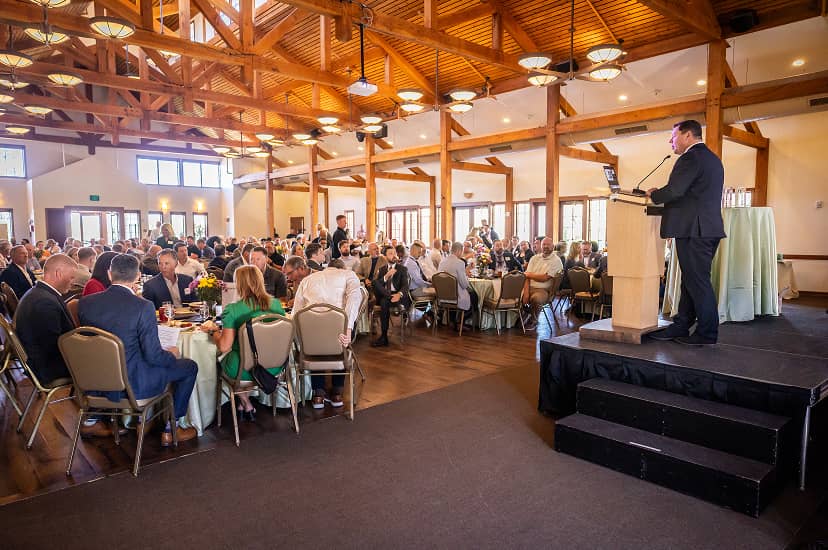
Law firm Ogletree Deakins – an EDCUtah Builder’s Circle investor – recently held an employment law briefing and invited EDCUtah to attend. We sat down with Kathleen D. Weron, who has an extensive employment law practice with a focus on occupational safety and health, labor law and litigation, to get the latest updates.
An important note: Ms. Weron stresses that the conversation that follows is not confidential legal advice and that you should seek guidance from your own counsel.
We covered a broad range of Federal and State laws and regulations in the seminar, which I can cover briefly. For me, topics that stand out are the Federal Trade Commission’s (FTC) ban on Non-Compete Agreements, the Equal Employment Opportunity Commission’s (EEOC) guidance on sexual harassment, and changes to the National Labor Relations Board’s (NLRB) approach to “concerted activities” as defined in the Unfair Labor Practice Act.
Not yet. The first thing I’ll tell you is that there’s a lot of misinformation out there. I caution companies not to get their legal advice from headlines.
For one thing, the rule doesn’t take effect until September 4, and it’s the target of two lawsuits, so in all likelihood it’ll be subject to a stay in the federal courts and may eventually get overturned.
But for prudence’s sake, companies should evaluate at their non-compete agreements, their non-solicitation agreements, and their confidentiality agreements, because this is an opportunity to narrow and tighten the language to better withstand challenges in the future. One takeaway here is to separate these agreements into different documents and narrowly tailor them to protect legitimate business interests.
The FTC’s rule effectively bans all non-competes, retroactively and going forward. The rule’s language requires employers to refrain from enforcing most existing non-compete agreements. It also states an employer cannot prohibit, penalize, or prevent a worker from seeking or accepting work in the U.S. or from operating a business. A “worker” is defined as anyone from an executive to frontline employees to independent contractors.
If it goes into effect, employers will be required to send notices to employees who have non-competes, advising the employees that the non-competes are no longer enforceable. Should the rule navigate past the lawsuits, this notice would need to be sent in September 2024.
Yes, there are three. One involves existing agreements with senior executives entered into before the effective date of the rule. A second involves sale-of-business non-competes, and the third involves any causes of action that accrue before the September 4th effective date.
Senior executives are defined as employees in policymaking positions who have annualized compensation over $151,164. Remember to factor in those last $64 dollars—I love how the Feds come up with these very specific dollar criteria!
“Policymaking” is narrowly defined, requiring “final” policymaking authority over more than just a segment of a business. So, it’s only going to cover pre-existing agreements with your most senior leaders.
The FTC’s expanded definition of non-competes may extend to clauses that restrain the solicitation of customers, if those provisions are broad enough to be seen as functionally preventing a worker from seeking or accepting employment. Specifically, a well-drafted customer non-solicitation provision could “prohibit” an employee to reject competitive employment. This is going to be a focus of intense litigation in the near term.
As for trade secret agreements, state and federal trade secret laws remain in place and employers will retain the same rights to protect trade secrets under those laws. If the rule goes into effect, you’ll want to make sure your confidential information and trade secrets are protected outside the context of a non-compete or non-solicitation agreement. In other words, split these things up into separate documents.
Well, there’s something to be said for doing nothing, given the likelihood of a judicial stay.
You can also embrace the future and rewrite your template contracts to remove non-competes.
Lastly, there’s a middle ground, where you retain non-competes for senior leadership and other highly compensated employees. A lot of states are moving in this direction, and I expect Utah will eventually as well.
Currently Utah allows non-competes to have an effective duration of 12 months from the date an employee leaves the company’s employ. If the FTC rule comes into effect, it would supersede the state’s provisions.
The other thing to bear in mind – and a good reason to revisit your template agreements – is that most other states are moving in the direction of limiting use of non-competes. If your business has operations in multiple jurisdictions, keep an eye on each state’s actions in this arena.
First of all, this is the EEOC’s first update to workplace harassment guidelines since 1999, and the language took effect at the end of April. I can give a couple of high points, but I would encourage your human resource experts to dive into the details if they haven’t already done so.
For one thing, the guidance recognizes unlawful harassment against LGBTQ+ individuals, including sexual orientation and gender identification. Second, it addresses working protections for pregnancy, childbirth, or related medical conditions, including lactation. And third, it provides more than 70 hypothetical examples of potential unlawful harassment.
There’s language focused on color—that is, skin tone—versus race or national origin that bears consideration, as well as discussion of “repeated and intentional” misgendering. There’s also language on intraclass and intersectional harassment. For example, a 56-year-old harassing a 65 year old is still harassment, even though the individuals are in the same protected class.
The new guidance also discusses pregnancy-related harassment, which is relevant as the Pregnant Workers Fairness Act became effective in June 2023.
You need to know what’s going on here, even if you don’t have union employees. Section 7 of the National Labor Relations Act (NLRA) grants employees the right to form or join unions; engage in protected, concerted activities to address or improve working conditions; or refrain from engaging in these activities, if they so choose.
Section 8 makes its an unfair labor practice for an employer “to interfere with, restrain, or coerce employees in the exercise of their rights guaranteed in Section 7.”
One emerging area you need to pay attention to involves social media. One employee complaining online about their work or their boss is a personal gripe, and is not “concerted activity.” If other employees engage with that post, such as discussing terms of employment, wages, etc, in the comments, that has been construed as a concerted activity. The NLRB has been ruling in favor of employees in these cases. So, the takeaway here is to make sure you’ve crafted your social media policies so that they don’t interfere with concerted activities.
Two things come to mind. First, the Department of Labor (DOL) has increased the salary threshold for white collar exemptions. It is happening in two stages. In July, the threshold reaches $43,888 per year, and in January 2025, it rises to $58,656 per year. This may significantly increase the number of employees entitled to overtime compensation in Utah and other states you operate in. It calls for auditing your current payroll and has implications for timekeeping and recordkeeping.
Second, with the advent of artificial intelligence (AI) in all aspects of our lives, the DOL has issued guidance about the use of AI. “Responsible human oversight” is key. For example, as more and more companies use AI to screen resumes and to even conduct initial interviews, the company can’t abrogate all responsibility and decision-making to a bot, which may have inherent bias. And the company is on the hook, even though the AI tool may have been developed and administered by a third party. Again, lots to think about!
_____
EDCUtah is Utah’s only statewide economic development organization with a public-private partnership model. When you partner with EDCUtah, you gain access more than 200 local experts in law, real estate, construction, finance, talent recruitment, utilities, and more. Explore our investor network or email connect@edcutah.org to learn more.
For additional information or to schedule an interview, please contact us.

It was big news in February 2023 – Texas Instruments Incorporated (TI) selected Utah for its next 300-mm semiconductor wafer fabrication plant. Building upon their existing presence, the new facility is set to expand their operations, adding extra capacity and will bring up to 800 new high-tech jobs and $11 billion in capital investment to Lehi, Utah, during the next 20 years.
This year, Area Development Magazine recognized the expansion as a “Project of the Year” in its annual Gold and Silver Shovel awards. Utah was also recognized with a Silver Shovel – making this 14 out of the last 17 years that Utah’s economic development efforts have been recognized by Area Development.
Area Development’s annual Shovel Awards recognize state economic development agencies that drive significant job creation through innovative policies, infrastructure improvements, and processes that attract new employers and investments in new and expanded facilities. The awards are presented annually to states that have achieved significant success in terms of job creation and economic impact.
The seven projects recognized by Area Development were nominated by EDCUtah for their notable impact on Utah’s economic prosperity.
Here’s the writeup from Area Development Magazine:
“Silver Shovel winner Utah had a big year in terms of investments, tallying some $12 billion in promises from a variety of big projects. The vast majority of that total involves one investment in Lehi, a Project of the Year from Texas Instruments. The biggest investment (resulting from a corporate recruitment project) in Utah history, it’s a semiconductor wafer fabrication plant that’ll connect to an existing Texas Instruments fab—the two fabs together will be able to make tens of millions of chips a day.
It’s hard to measure up to an $11 billion project like that, but Utah has a healthy list of other growth to be proud of. Lakeshore Learning picked Garland for a massive distribution facility to help get the company’s education materials to kids and teachers. Procter & Gamble is expanding its Box Elder facility that makes products in the company’s paper, baby care and feminine care business lines. Delta Airlines picked its Salt Lake City hub for a pilot training facility. And a number of food companies are locating or expanding in Utah, such as C&J Specialties, Utah Flour Mill and Schreiber Foods, which makes a variety of cheese products and celebrated its 50th anniversary a couple years ago by baking a Guinness World Record-winning two-ton batch of macaroni and cheese.”
Learn more about EDCUtah’s business expansion and relocation services.
_____
For additional information or to schedule an interview, please contact us.


Each month, EDCUtah’s Research Minute highlights interesting economic development data and timely research insights. This month, we explore Utah’s economic outlook and national rankings.
The U.S. News and World Report recently ranked Utah as the best state in the nation for the second year in a row. Their “Best States” ranking uses thousands of data points across multiple categories to make their determination. Utah ranked in the top 15 states in low crime, education, healthcare, economy, fiscal stability, and infrastructure.
Utah receives recognition from other outlets as well. Utah ranked #1 for the 17th year in a row in economic outlook by Rich States Poor States. WalletHub ranked Utah as the #1 state to start a business in 2024, as well as the #2 best state economy. Why is the economy of Utah so successful, despite national and international economic and geopolitical worries?
Utah’s culture of innovation and hard work continues to be a boon for the state. According to the Kem C. Gardner Policy Institute, Utah has the highest labor force participation rate in the nation. Utah also has the ninth-lowest unemployment rate, the second-lowest poverty rate, and the second-highest median household income.
Utah’s stellar job growth was the highest in the nation for a decade, growing at a staggering rate of 32.9 percent—more than double the national average. The state’s job growth dipped over the past year, but it’s still the 11th fastest annual job growth in the nation. Utah has the youngest population in the nation by a wide margin, making it a great place for employers to find motivated and hardworking workers.
Businesses continue to see Utah’s economy as a good investment. National and international companies like Campbell Soup Company, Delta Airlines, Nature’s Bakery, Proctor & Gamble, and Texas Instruments continue to expand in Utah, bringing thousands of high-quality jobs and billions in capital investment. And Utah’s business-friendly environment, commitment to fiscal responsibility, and high quality of life continue to make Utah a great place to live, work, and play.
_____
Want more data like this? Explore the benefits of investing with EDCUtah.
For additional information or to schedule an interview, please contact us.
Data Source: JobsEQ, unless otherwise noted.

We’re pleased to announce that EDCUtah’s Greg Bisping will be stepping into the role of vice president of community strategy. Since joining the team last year, Greg has undertaken multiple strategic projects in addition to his responsibilities of enhancing EDCUtah’s public sector investor experience.
“EDCUtah investors are the engine behind Utah’s economic success, and we are committed engaging their leadership and expertise on economic development issues statewide,” said Scott Cuthbertson, EDCUtah president and CEO. “Greg’s contributions have played a pivotal role in shaping the future of EDCUtah as we explore opportunities to deliver more value to our investors.”
In his previous role as EDCUtah’s director of community strategy, Greg led EDCUtah’s community development and Site Ready Utah initiatives. Prior to joining EDCUtah, Greg worked for the University of Utah, building partnerships among the university, its students, and the real estate and financial services business community.


25 jobs
$3 million capex
Project Wasp
Today, the Utah Governor’s Office of Economic Opportunity (GOEO) and the Economic Development Corporation of Utah (EDCUtah) are pleased to announce that Mountain Billy Gun plans to bring 25 new, high-paying jobs and invest nearly $3 million in rural Utah over the next 5 years.
“Utah is renowned for its beautiful landscapes and draws outdoor enthusiasts from far and wide,” said Ryan Starks, executive director of the Governor’s Office of Economic Opportunity. “With outdoor recreation having a central role in Utah culture, we think this growing company will find a welcoming home in Heber Valley.”
As avid hunters, gun enthusiasts, and Second Amendment advocates, founders Eric and Heidi spent the last 30 years working in the firearms industry. Their combined love of shooting activities and need for survival preparations for off-the-grid adventures created a brand of lightweight, compact guns that fire quickly and effectively. Mountain Billy Gun Lab products are tailored for activities from hunting small game and recreating with friends to survival camping.
“Our family has operated a machine shop in Illinois for the past 80 years, and when developing this brand, we had many reasons to operate elsewhere,” said Heidi Schaefer, co-founder of Mountain Billy Gun Lab. “My brother and co-founder, Eric Schmid, resides in Park City and has commuted back and forth to Chicago for the past 12 years. He loves Utah for its landscape, cost of living, and his experience raising his family. Our focus is to grow a business in a state that is gun-friendly, has growth opportunities, and provides a great work/life balance for employees. Utah provides all of that and more, and we could not be more excited to bring Mountain Billy Gun Lab to Heber Valley.”
“Utah is home to world-class outdoor recreation opportunities, as well as a thriving industry for outdoor products,” said Scott Cuthbertson, president and CEO of EDCUtah. “We look forward to seeing the growth and success of this family-owned business in Heber Valley.”
“Heber Valley feels honored that, after an extensive nationwide search, Mountain Billy Gun Lab chose to come to our community,” said Dallin Koecher, executive director at Heber Valley tourism, economic development, and Chamber of Commerce. “They will bring great jobs to the valley, and we look forward to working with them as they expand in the future. We welcome Mountain Billy Gun Lab to Heber Valley!”
Katherine Morrell-Moser, senior business development manager, led Project Wasp for EDCUtah.
_____
EDCUtah Investors: If you were involved with this project and would like to have your organization mentioned, please email connect@edcutah.org and we’ll update this article.
For additional information or to schedule an interview, please contact us.


58 jobs
$24.5 million capex
Project Wrench
Today, the Utah Governor’s Office of Economic Opportunity (GOEO) and the Economic Development Corporation of Utah (EDCUtah) are pleased to announce that Minova plans to bring 58 new, high-paying jobs and invest nearly $24.5 million in rural Utah over the next 5 years.
“Utah is a state abundant in natural resources that consistently requires safe and efficient infrastructure,” said Ryan Starks, executive director of the Governor’s Office of Economic Opportunity. “Utah will significantly benefit from Minova’s industry expertise, and we look forward to seeing it strengthen our engineering and manufacturing workforce.”
Minova is an industry leader in ground support and geotechnical solutions for mining, tunneling, and surface ground engineering projects. It is known for high-quality products, technical expertise, and customer problem-solving. The company has a long heritage and a 140-year track record of developing and delivering innovative ground support solutions. Minova proactively develops and nurtures partnerships that deliver value and support customers, securing their safety, performance, and efficiency.
With manufacturing plants across five continents and operations in more than 25 countries, Minova offers customers a full portfolio of solutions consisting of a comprehensive range of bolting systems, injection chemicals, grouts, resin capsules, sprayable membranes, coatings, and services.
Ryan Kerr, CEO of Minova, expressed his enthusiasm about the customer-centric approach, stating, “Minova has always been driven by a commitment to meeting our customers’ unique challenges. The construction of this state-of-the-art facility is a tangible demonstration of our dedication to being close to our customers, understanding their needs, and delivering solutions that meet and exceed their expectations.”
Luke Colton, CFO of Minova, highlighted the long-term aspect of the expansion, stating, “This strategic investment not only demonstrates our commitment to technological advancement but also reflects our confidence in the long-term growth and sustainability of Minova. The new facility will serve as a hub for creative solutions, allowing us to work closely with our customers, address their unique challenges, and collectively shape the future of ground support solutions.”
“In Utah and Tooele, Minova found strong community partners and a skilled, available workforce,” said Scott Cuthbertson, president and CEO of EDCUtah. “We’re pleased to see Minova’s investment in Tooele City.”
“Tooele City is thrilled that Minova has chosen to locate at the Peterson Industrial Depot — a growing center for industrial activity, local job growth, and value for our taxpayers,” said Mayor Winn at Tooele City. “We take pride in welcoming Minova to do business in our community.”
Jared Stewart, senior business development manager, led Project Wrench for EDCUtah.
_____
EDCUtah Investors: If you were involved with this project and would like to have your organization mentioned, please email connect@edcutah.org and we’ll update this article.
For additional information or to schedule an interview, please contact us.

90 jobs
$7.3 million capex
Project Treefrog
Today, the Utah Governor’s Office of Economic Opportunity (GOEO) and the Economic Development Corporation of Utah (EDCUtah) are pleased to announce that EnergiSpot plans to bring 90 new, high-paying jobs and invest nearly $7.3 million in Utah over the next 10 years.
“The future of electric vehicles is changing rapidly, and we’ll need the infrastructure to keep up with the growth,” said Ryan Starks, executive director of the Governor’s Office of Economic Opportunity. “We’re thrilled EnergiSpot chose to grow in Utah and look forward to the impact it’ll have on the sustainable energy industry of our state and the nation.”
Driven by a deep commitment to clean energy and sustainability, EnergiSpot is dedicated to advancing the research, development, manufacturing, and distribution of integrated electric vehicle supply equipment (EVSE) solutions to support mobility and electric vehicle (EV) adoption. Through a joint venture with eTreego, Taiwan’s leading EVSE manufacturer, EnergiSpot brings decades of expertise and know-how to establish a U.S.-based factory that will manufacture residential, commercial, and fleet EV charging solutions. EnergiSpot’s fit-for-purpose EVSE can be combined with solar and energy storage solutions to minimize grid impact and infrastructure requirements and optimize cost efficiency for end users. By providing turnkey, end-to-end service, EneriSpot eliminates barriers to deployment and makes installation, operation, and maintenance seamless.
“With its reputation as the strongest economy in the U.S. and the crossroads of the West, Utah is an ideal place for EnergiSpot to put down the roots that will help us expand critical EV infrastructure across the country,” said Ron Heffernan, co-founder of EnergiSpot. “We are committed to positively impacting the local community and are grateful for the support from the state, which will help us accelerate our mission of electrifying the nation.”
“Utah’s advanced manufacturing industry is gaining global attention, thanks to the collaboration of many partners across the state,” said Scott Cuthbertson, president and CEO of EDCUtah. “We look forward to seeing the innovation that comes out of this foreign direct investment win.”
“Spanish Fork City is excited to welcome EnergiSpot to the Verk Industrial Project,” said Dave Anderson, community and economic development director at Spanish Fork City. “We believe EnergiSpot will play an important role in our nation’s transition from fossil-fueled mobility to electrified transportation. They will join a number of other companies in Spanish Fork that utilize cutting-edge technology to improve our way of life.”
Katherine Morrell-Moser, senior business development manager, led Project Treefrog for EDCUtah. Jeff Heaton and Ben Richardson from Newmark, an EDCUtah Builder’s Circle investor, worked on the project.
_____
EDCUtah Investors: If you were involved with this project and would like to have your organization mentioned, please email connect@edcutah.org and we’ll update this article.
For additional information or to schedule an interview, please contact us.

Each month, EDCUtah’s Research Minute highlights interesting economic development data and timely research insights. This month, we explore energy costs in Utah compared to the nation.
For many years, Utah has enjoyed relatively low energy costs, for both electricity and natural gas, compared to many other states in the U.S. This is true for residential, commercial, and industrial consumers. EDCUtah routinely provides energy cost data to businesses and site selectors considering Utah for expansion, and lower energy costs have been a significant driver for corporate relocation projects to Utah from high-cost states such as California and New York.
According to the U.S. Energy Information Administration, Utah has the fourth lowest electricity costs in the nation for all sectors at 9.03 cents per kilowatt hour—behind North Dakota, Wyoming, and Louisiana. In states with higher costs, residents and businesses may pay double or even triple this amount. Hawaii’s cost per kilowatt hour is 38.7, and California is at 24.73 cents per kilowatt hour. For high energy users, these costs can be more than prohibitive; they could mean the difference between success and failure as a business. In 2023, Utah also ranked fourth in the nation for cheapest natural gas costs in all sectors, behind Idaho, North Dakota, and South Dakota. However, natural gas rates have fluctuated in Utah and other states in recent months.
High inflation in the energy sector continues to be a major hurdle for residents and businesses. Energy prices rose 4.4% from January to February in 2024, registering the highest monthly increase since August 2023, according to the U.S. Bureau of Labor Statistics compiled Producer Price Index in February.
While Utah is not immune to this inflation, residents and businesses continue to enjoy relatively low energy costs in all sectors. New data shows that Utah may become the cheapest state in the nation for energy in 2024. According to an analysis of federal data, Utah is projected to have the lowest electricity rates in the nation in 2024, with the annual costs estimated to be $1,047.27 per resident. This is significantly lower than high-cost states, like Hawaii at $3,450.55, as well as the national average of $1,730.55 per resident.
Utah’s cost-effective energy can be attributed to a mixed portfolio approach to energy that includes wind, hydroelectric, and solar, according to representatives of Rocky Mountain Power. Rocky Mountain Power and Dominion Energy are the two primary electricity and natural gas providers in Utah and are committed to keeping energy affordable. Diversity and redundancy help keep Utah energy costs low. Coal and natural gas continue to be the highest producers of electricity in Utah, but renewable generation, including hydro, wind, solar, and other sources account for 359,000 MWh, increasing every year.
_____
For more information, including a breakdown of rates by category, email us at connect@edcutah.org or explore the benefits of investing with EDCUtah
For additional information or to schedule an interview, please contact us..

The EDCUtah’s Research Minute highlights interesting economic development data and timely research insights. This month, we discuss EDCUtah’s participation in a national cost of living index and how Utah measures up.
When a new corporate expansion or retention project is considering Utah for a business location, EDCUtah’s research team provides several reports to the client. One of these reports, the Operating Cost Comparison, measures the cost of doing business in Utah against other regions being considered by the company. We include wage estimates, real estate prices, utility rates, taxes, and the cost of living index.
Cost of living impacts the decisions of both individuals and companies, and site selection consultants often compare the cost of living in Utah against other states in the region. How does cost of living impact business? In some instances, a higher cost of living in a particular area may mean employers must offer higher salaries to attract and retain workers. Additionally, higher cost of living can translate to higher building costs and operating costs for the company.
Each year, researchers and regional organizations like EDCUtah collect cost of living data and submit it to the Council for Community and Economic Research (C2ER). C2ER compiles the data into a national index that measures cost of living differences among metropolitan areas. We collect price data in six categories: housing, utilities, grocery items, transportation, health care, and miscellaneous goods and services. The average of all locations that collected data that year is set to 100, and regions are then compared as a percentage above or below the average.
Policy impacts pricing! In this quarter’s collection, we noticed that the cost of name-brand insulin is down significantly. This likely reflects recent changes in legislation and the availability of insurance-covered alternatives for those with type 1 diabetes.
Because the cost of living is measured at a specific point in time and the composition of data participants changes slightly each quarter, the index cannot be used to measure price increases over time. However, it is useful to compare regional costs in relation to each other and to the nation as a whole. It’s especially helpful for comparing different regions that may be experiencing similar trends in inflation, housing costs, and more. This index is often cited in national news by outlets including Wall Street Journal, Forbes, CNNMoney, US News and World Report, and ABC News.
C2ER recently published their 2023 cost of living index, which is calculated based on the average of the previous three quarters of data. Salt Lake City received a score of 108.7, St. George 107.8, Provo 103.6, Ogden 99.9, and Cedar City 96.2.

The main reason many Utah metros measure above the national average is the price of housing—which includes both purchase price and apartment rents. The rest of the country has also seen rapid increases in housing costs, and housing costs continue to be a pain point for states including Utah, Idaho, Arizona, Washington, and Colorado.
Utah’s index scores are similar to or lower than the index scores of markets we often compete with. The index score for Miami is 116.9, Denver 110.3, Reno 104.4, Phoenix 101.9, Austin 98.9, Atlanta 98.3, and Charlotte 96.5. Utah metro areas are competitive in terms of affordability and provide a balance between costs and quality of life.

EDCUtah recently finished our first quarter data collection for four Utah metropolitan statistical areas (MSAs): Salt Lake City, Provo-Orem, Ogden-Clearfield, and the St. George metros. In the past, EDCUtah collected local data for the Salt Lake, Ogden, and Provo metros, but we recently added the St. George metro due to process developments that allow data to be collected remotely. Previously, grocery prices were collected by walking through each store—five stores per metro—and writing down prices. As grocery delivery services became more prevalent over the last few years, this data became more widely available online, which allows for web scraping.
One of the competencies that sets EDCUtah apart from other economic development organizations is our focus on quality research and economic data. Not only do we provide reports that inform decision-makers as they evaluate Utah for their next business location—we also represent Utah communities in valuable data collection projects that contribute to economic benchmarking.
_____
Want more data? Explore the benefits of investing with EDCUtah.
For additional information or to schedule an interview, please contact us.

The Utah Inland Port Authority (UIPA) is developing strategic and sustainable logistics-backed economic development solutions to enhance the lives of Utahns and establish Utah as a global industry connector. In 2023, Jaime Hernandez joined EDCUtah as the UIPA project manager, a new role on the business development team created by a partnership between EDCUtah and UIPA. In this role, Jaime manages corporate expansion and recruitment projects for UIPA sites.
In this Q&A, Jaime spoke with UIPA executive director Ben Hart about the impact of the Port Authority on Utah’s economic development.
Ben: Our premier area encompasses the 16,000 acres near the Salt Lake City International Airport in Salt Lake County, but we have sites across the state and bring to market the best of what the state can offer. We’re going to be – and have been – aggressive in site development. Part of this effort is based in helping communities around the state identify what their economic development priorities are and helping them achieve those goals. On the other side of the equation, we are and will be showcasing sites that site selectors and companies will find very attractive, all across Utah.
There are examples from the northern, central, southern, and western parts of the state. In the north, Box Elder County’s project area is seeing the construction of Lakeshore Learning’s assembly and distribution center. That’s a 1.2 million-plus square foot facility that will employ 540 workers. We were able to help the local government put together a compelling incentive that landed that opportunity.
In central Utah, we’ve been working with Northrop Grumman here in Salt Lake City. That incentive has landed. And we’ve been working with other companies to make sure they have good rail access for their operations in the Northwest Quadrant.
In southern Utah, BZI Steel in Cedar City will be hiring up to 800 people, and the company will now be able to get its product shipped right out the door via rail. At the same time, we’re able to help get their site built out with additional infrastructure needs. And in the west, we have a couple of projects underway in Tooele.
All these sites represent a diverse offering we can present to site selectors and companies.
Ben: UIPA is currently collaborating with a company called CPCS to improve Salt Lake City and Utah’s logistics infrastructure. Their efforts include analyzing commodity flows, assessing current infrastructure, and formulating logistics strategies on both regional and statewide levels. This plan aims to enhance road and rail systems for better freight movement, perform SWOT analyses in strategic areas, and map out commodity flows. CPCS will also build essential partnerships, engage with communities via open houses, and provide in-depth analyses and strategies for logistics enhancement. Additionally, they will develop tools for continuous analysis and stakeholder engagement.
This is going to be part of our value proposition for the state for the next 20 to 30 years. Right now, Utah is heavily dependent on road-based transportation. Our goal is to make rail a more viable option across Utah. That means better access, better pricing, and better service.
We’re also looking at the air transportation component, including drone delivery services in advance of the 2034 Winter Olympics if we are lucky enough to get them.
Overall, Utah has very strong international and regional airports, we have great road access with I-80 and I-15, and we have unique rail capabilities as well. We want Utah to become the logistics capital of the United States, but we won’t get there just by using roads. We’ve got to have multi-model capabilities. When you bring all those things together, as the planning process will help to do, Utah will have a full suite of options for those companies with sophisticated logistics needs.
Ben: The Inland Port gives Utah a significant advantage when it comes to attracting, recruiting, and helping businesses to expand. Two of the most important capabilities we provide to site selectors and companies are: 1) streamlined incentives that incorporate all the downstream taxing entities, and 2) assistance with infrastructure development through our infrastructure bank.
There’s a speed-to-market element here. We focus on industrial property, and when you’re talking about three percent vacancy in those properties nationwide, it’s really a question of how fast you can get new buildings vertical. We work with local officials to help businesses get through permitting and entitlement processes, put together solid incentive offers, and lastly, help with infrastructure where needed – all these aspects are part of the value we bring.
Ben: We’re really pushing for industrial projects. We’re trying to incentivize and target advanced manufacturing companies first and foremost. That will naturally lead to warehouse distribution as a secondary follow-on.
Our project areas, each with unique characteristics, are designed to attract diverse industries such as logistics, manufacturing, agriculture, and technology. These areas leverage their geographical advantages and resource availability to support economic activities tailored to their specific strengths and local infrastructure.
Ben: We’ve got a fully capitalized $65 million infrastructure bank that gives us the ability to create public financing options very quickly. The bank uses a tax increment approach for funding.
We’re trying to remove barriers, whether that’s lining up permits, or getting incentive packaging on the table quickly, or public financing options – those are all things that we can expedite. Our whole pitch with “speed to vertical” is that we can shorten the time needed in any of those key needs.
UIPA has an incredible toolkit to support businesses looking to expand or locate within one of our project areas.
In Utah, we have the Authority Act, which facilitates the use of tax differential in specific project areas, guided by local statutes and our project area plans. This includes funding for affordable housing, development of land and intermodal facilities, public infrastructure, and environmentally friendly construction. Additionally, we can provide funding in our project areas through the Authority Infrastructure Bank (AIB). Typically, the AIB will focus on projects that generate revenue and serve the public interest, aligning with long-term economic growth objectives.
This comprehensive approach, encompassing bank loans, area incentives, and tax differential reinvestment, supports businesses in achieving strategic and sustainable development goals in Utah.
Ben: The Port incentives are coming from the local property tax increment. They can be layered with the State’s incentives offered by the Governor’s Office of Economic Opportunity. So, we can put attractive, “stacked” incentive deals on the table, hand in glove with the State.
This means the site selector or company doesn’t have to negotiate with every tax entity. We can work with all those tax entities in a streamlined way to provide the client with one contract process through the Inland Port. In other words, they don’t have to go work with a bunch of other downstream tax entities. Again, we’re able to streamline the entire process.
Ben: Today, we can implement Infrastructure Bank loans, incentive processes, and other public financing tools in 60 to 90 days, in contrast with a lot of jurisdictions across the country where those processes might take two to three years, particularly when you’re negotiating with downstream tax entities. Our board can turn around decisions that quickly.
In terms of construction, permitting-, and entitlement-support timelines, it varies by location. With that said, we stress to our communities that they need to be ready for development. Those are things we’re working on now. For example, we’re having infrastructure conversations upfront, so these sites are more ready for development.
Some project areas are further along the process while others are still in a greenfield state. The Northwest Quadrant has some buildings already, while other locations need more work to get to site-ready status. For example, Cedar City is dialed when it comes to logistics, but has some other needs. They should be ready to start building within the year.
Ben: It’s a little bit of everything. For example, at the Global Logistics Center in the Northwest Quadrant, they can support the entire design and build process, or they can lease a company acreage and the company can bring in their own construction resources.
Ben: We’re thrilled about working closely with EDCUtah. It’s a game-changer for us and the wider community. EDCUtah is key to helping us boost economic growth across the state and connect more deeply with our communities. Together, we’re focusing on bringing in new businesses by tapping into EDCUtah’s strengths in business development, community strategy, and site selector marketing. This partnership is about making Utah a standout place for logistics and tech, all while looking after our beautiful state.
It’s more than just a partnership; it’s a powerful way to make sure our efforts really count, boosting Utah’s economy and making life better for everyone here. We’re on the same page about making a big, positive splash, and honestly, I can’t wait to see where this collaboration takes us.
_____
“Building Together” highlights examples of the collective impact of EDCUtah and our investors in communities across the state. Do you have a story you’d like us to share? Email connect@edcutah.org.
For additional information or to schedule an interview, please contact us.