Research Minute: 5 Infrastructure Trends to Watch in Utah


Each month, EDCUtah’s Research Minute highlights interesting economic development data and timely research insights. This month, we discuss Utah’s infrastructure grades given by the American Society of Civil Engineers.
Utah’s infrastructure received a C+ grade from the American Society of Civil Engineers (ASCE) in their recent update of the state’s infrastructure report card. The professional society has been grading the nation’s infrastructure since 1988 but only began grading Utah separately in 2015., Since 2017, the state of the nation’s infrastructure has improved; moving from a D+ to a C in those eight years. Meanwhile, Utah has improved one grade: from a C to a C+ in the past 10 years. C+ is the highest infrastructure grade given to any state so far, with only two other states receiving a C+ (Georgia and Wisconsin in 2024).
The Utah Section of the ASCE graded 12 of Utah’s infrastructure categories, based on eight criteria. The best grade, A, represents infrastructure labeled as “exceptional, fit for the future”, while the worst grade, F, is labeled as “failing/critical, unfit for purpose.”
Most of Utah’s infrastructure grades have remained the same over the past 5 and 10 years. The Utah Section of the ASCE credits Utah leaders and infrastructure agencies with working “diligently to plan for and address all of Utah’s infrastructure needs, both rural and urban.” And while the state has done a good job at maintaining infrastructure over longer time-horizons, the steady C+ grade may also be an indicator that more investment is needed to ensure Utah’s long-term stability.
There are a few areas where the state has improved and others where it has declined. Looking at Utah’s infrastructure grades from 2015, 2020, and now 2025, here are five trends worth highlighting that demonstrate Utah’s trajectory in providing the necessary amenities to support its residents and economic stability now and in the future.
“Utah benefits from a developing Wasatch Front, but rural communities are key to the state’s continued success. Those communities need access to reliable clean water, functional roads, transit, flood control, and other necessities of life.”
– Utah Chapter of the American Society of Civil Engineers
Utah dropped two grades from a B+ to a B- on transit in the last five years after not changing in the five years prior. A rising population and higher-density population centers make multi-modal and public transportation more necessary than ever as space for traditional car travel becomes scarcer. The ASCE highlights several positives: the many funding initiatives for transit, Salt Lake City’s transit ranking as the tenth best among the nation’s largest cities, and the proximity of 95% of Utah’s population to transit options. However, they also suggest that making these modes of transportation more cost competitive, increasing access in rural Utah, and updating outdated infrastructure are necessary steps to improving the state’s transit grade.
Utah has maintained the same grade of D- for levees and D+ for canals over the last 10 years, emphasizing the critical needs of the state’s poorest graded infrastructure categories. According to ASCE, “Utah has nearly 100 miles of levees that have an average age of 63 years,” and many of them fail to meet the standards of the Army Corps of Engineers. Without increasing funding and updating levees, much of Utah’s population centers could be classified as flood plains and will affect how they are assessed and insured.
Similarly, canals are at risk of damage and contamination in their current state. Utah’s canals—many of which are earth embankments and ditches, historically used for private irrigation—are increasingly being used for stormwater and flood management. Updates could reduce the risk of significant damage while also decreasing natural water loss.
While Utah’s Bridges maintain a high grade of B, the grade dropped from a B+ in the last five years. The ASCE recommends more funding to maintain and operate the state’s bridges as they age. Initiatives such as UDOT’s Bridgefest showed positive momentum in the improvement of this critical infrastructure, but additional funding will be required to maintain the high standard that Utah has maintained in the past.
The grade for aviation increased from C to a C+ in the last five years, largely due to the increased capacity of the Salt Lake City International Airport. With a budget of $3.6 billion to invest in the new airport, phases 1 and 2 of its construction have been completed with the next phase currently underway. The ASCE suggests investing in rural Utah airports to maintain and improve connectivity statewide to further improve its grade.
Between 2015 and 2020, Utah’s grade for drinking water infrastructure improved from a C to a B-. The grade did not change in 2025, but the progress made in those first five years has been maintained. Utah has successfully reduced water use by 20 percent over the last 20 years, and additional reductions will be necessary as the population continues to grow. Fortunately, legislation has been put in place to require water planning to strategize conservation and resilience for the future.
With Utah’s population expected to increase by 66% by 2060, maintaining and improving infrastructure will be critical to support that growth. Additionally, businesses require reliable infrastructure to operate efficiently and sustain employment for future generations. Ongoing infrastructure investment, especially in key risk areas, will be critical to ensuring statewide “access to clean water, reliable transportation, flood control, and responsible waste management.”
_____
Want more data? Explore the benefits of investing with EDCUtah.
For additional information or to schedule an interview, please contact us.
View Utah’s 2025 Infrastructure report card.


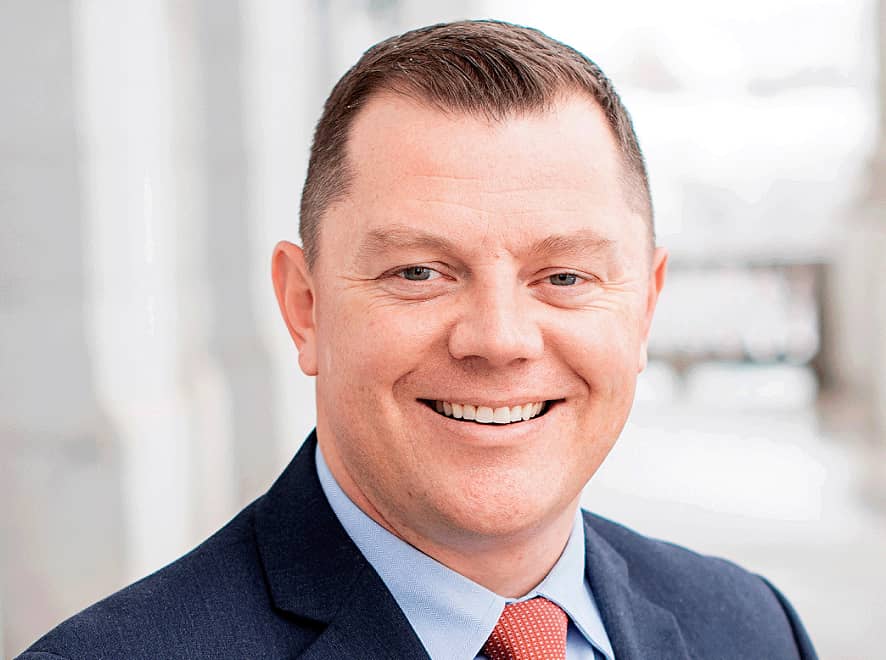
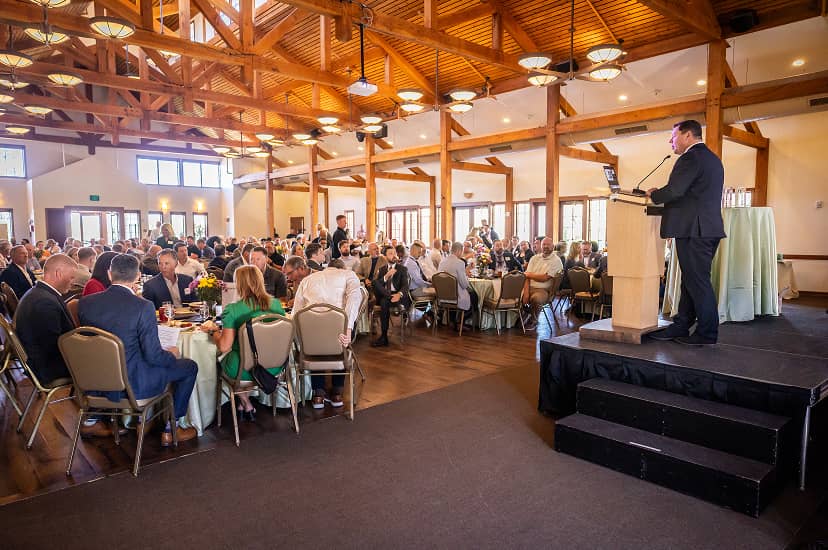
In a virtual Q&A last week, EDCUtah executive director Ryan Starks shared his “Vision Forward” with investors statewide. Ryan kicked off the discussion with a parable about American professional football coach and National Football League (NFL) executive Vince Lombardi and “getting back to basics.” He offered a high-level overview of EDCUtah operations and then took a series of questions.
We’ve recapped the Q&A session below. This discussion has been edited for more concise reading, but you can access the full recording here.
EDCUtah is a division of the Salt Lake Chamber, but we have a unique mission. We have our own budget, financing, and marketing team. The strength of our relationship with the Chamber is that now we’re an economic development organization with a built-in policy arm.
We met with some companies in the past couple of weeks that have said, “We’re interested in relocating to Utah or expanding. There’s this one issue, though, from a policy perspective that’s really challenging.” The nice thing about our partnership with the Chamber is now we can say, “Well, you’re in luck, because we have this inherent relationship where we can tackle the policy issue.”
We’re grateful to be part of the Chamber. We also have the independence and the autonomy to act as an independent economic development organization. So, the synergy between EDCUtah and the Chamber is strong and palpable.
The Salt Lake Chamber’s mission is to stand as the voice of Utah business, support their members’ success, and champion community prosperity. EDCUtah’s mission is to catalyze capital investment and strategic economic opportunities to create quality jobs in Utah.
The GOEO relationship with EDCUtah is one of the most important relationships we have. It sets the tone. GOEO’s tools are powerful, from the Economic Development Tax Increment Financing (EDTIF) incentives to various grants. GOEO has the backing of the state seal and can open doors in a way nobody else can.
I loved every day of my job at GOEO. Now that I’m here, I see opportunities to collaborate even more. If there ever were gaps or misunderstandings, I’m excited to address those.
I think [new GOEO executive director] Jefferson Moss is a tremendous leader. I think their management team, rural team, and business development team are tremendous. The opportunity for us to work hand-in-hand is going to create synergy.
There have been some questions to the effect of: “Should we work with EDCUtah, or should we work with GOEO?” My response is to work with both of us. We’re synced with trade shows. We’re synced with corporate recruitment activities, and with messaging. The relationship is just going to get stronger and stronger.
Utah’s industry associations are powerhouses. Look at what’s happening in the life sciences, aerospace and defense, tech, or manufacturing—just to name a few. Each of these groups is elevating Utah’s profile in a big way.
A recent project win – an aerospace and defense project – said that not only is the State incentive program and EDCUtah’s project management process robust, but they have also never been to a state with such a robust ecosystem for aerospace and defense. This partnership between the State, EDCUtah, and industry made all the difference for this company.
EDCUtah team members are not experts in all things. We can lean heavily on our industry partners for support, data, insight, and connections – whether it be 47G, BioUtah, BioHive the Bankers Association, or Silicon Slopes, and so on. The associations are additive to what we offer and help make Utah competitive.
I’ve had the opportunity to serve on the Port Authority Board for the past few years, and I’ve seen the great work they’re doing. They have port areas across the state from San Juan all the way up north. They’re filling an economic development need for communities.
As they establish those project sites, that’s fuel for Team Utah to recruit the right companies—manufacturers, logistics companies, energy companies, and retail. UIPA offers public financing tools, including a property tax differential, to incentivize companies to locate within a port area. Companies can use those alongside GOEO’s EDTIF and REDTIF incentive programs. And then they can access the project management and partner support coming from EDCUtah. When you put GOEO and UIPA and EDCUtah together, it becomes clear that Utah offers clear competitive advantages to expanding companies.
[WTCU president] Jonathan Freedman is a dear friend, and I think of EDCUtah and WTCU as being Yin and Yang. WTCU can take a company in Utah that’s seeking to expand globally, and take them onto the world stage, through trade shows and trade missions. There are so many good examples of companies that have grown internationally because of WTCU.
If you ask who’s bringing capital, infrastructure, and high-quality jobs to the state, that’s where EDCUtah plays a role. We recruit those companies, some of which are international.
When WTCU goes on a trade mission, they may interact with a company that’s interested in Utah. They can hand that lead off to us. We then can walk that company through the process, in partnership with GOEO, just as we would do with a domestic company, to help that company get established within the state. Likewise, as EDCUtah works with our members and our projects, if we learn there’s an opportunity for them to expand internationally, we’ll direct them to WTCU. We have a two-way relationship that is mutually beneficial.
Our bread-and-butter is corporate recruitment. Moving forward, you can expect EDCUtah to have a clear focus on visiting key cities and key companies to recruit new businesses. We call the program Global Strategy & Outreach (GS&O), and it has yielded many project wins over the years. We’re excited to get back in the saddle.
We’re also planning inbound activities. EDCUtah has a database of site selection consultants whom we keep in touch with frequently through email marketing campaigns. Next year, we’ll host a group of site selectors for a summer event in Utah. We’ll provide information to our investors on how to get involved when details are firmed up.
Utah has a fantastic story to tell. From being a scrappy, startup state in the mid-1800s to having the world’s best economy today, there’s certainly something there that’s worth sharing.
When you factor in the 2002, and now the 2034, Olympics … When you factor in the continued growth in key industry sectors, and Utah having the largest middle class, there’s something compelling happening here. EDCUtah’s opportunity is to partner with the State to share that good news. As my friend Brad Mortensen, president of Weber State University, likes to say, “We need to be louder and prouder about Utah and about who we are.”
The term that comes to mind is “momentum”. The buzz is palpable. People are asking, “What can we do to get ready for the Olympics? How can we support?”
Just this past week, I had the opportunity to visit with the CEO of the Olympic Committee, Brad Wilson. We talked about what role EDCUtah could play in terms of community readiness. We’re not at liberty to announce it yet, but we have put in motion plans for a partnership to help cities stand up their best messages for the Olympics. That could be through planning and zoning, business attraction, workforce development, wayfinding, community development, or other aspects. We’ll make some big announcements at our fall annual meeting, so buckle up. There are good things in the works.
We’re going to focus on recruiting corporate headquarters, especially among Fortune 500 companies. We’re going to get back into high-level, high-execution corporate recruitment.
We also want to grow our membership base. In May, we saw a significant increase in new and renewed investment. We’d love to grow that incrementally, strategically. One of our aspirational goals is to secure up to 300 investors by the year 2030. And then, we’d love to grow to 340 investors by the 2034 Olympics.
Who does EDCUtah partner with to ensure the growth coming to Utah is balanced with the available natural resources, specifically water and utility needs?
Ryan: It’s a great question, Ari. When I was at GOEO, we required every EDTIF-eligible project to go through a rigorous analysis of water consumption, power usage, and other aspects of sustainability.
The beauty of EDCUtah’s model is our collaboration with cities and counties. Mayors and city managers and economic development professionals are best equipped to understand how a project impacts their community. We certainly want balanced growth. That’s why we’re not just focused on the Wasatch Front – we conduct site visits statewide.
Given last year’s funding changes from GOEO, how is EDCUtah’s financial situation different? How secure is that situation?
Ryan: We’ve had a rough go for the past year. I was part of the GOEO team that limited the contract funding to EDCUtah. I take full responsibility for that. There were a lot of factors that went into that decision. Part of it was an experiment. Part of it was a political decision, and part of it was a hope that we would see a greater focus on some of the core competencies that EDCUtah offers.
Since that time – I’ll compliment the EDCUtah team here – they have been scrappy and hungry and willing to work hard and innovate. The EDCUtah team is committed to elevating the organization. We had a successful fundraising golf tournament just last week, and we have seen more investment coming in from both public and private sector organizations. We’re seeing membership dollars come in at a greater rate than we’ve seen in a long time.
Let me clarify that GOEO has always been an investor. Even when EDCUtah lost the state contract, GOEO still committed a sizable annual grant. With that, I think EDCUtah is in a good place, but we are not satisfied with just being in a good place. We want to be in a great place, so we’re continuing to look for opportunities to monetize some of our services, to generate revenue which ultimately benefits the investor community and the greater Utah economy.
I’m thrilled to see corporate headquarters as a new focus. I know that we’ve had a lot of success with target industries, but I’d like to suggest that regional headquarters is probably our largest opportunity. Utah is the best location to cover the western half of the United States. Salt Lake City’s economic development is part of that, and the success of the state is a strong downtown. We’ve got an education base, a transportation base, a quality of life base second to none in the West. So go for it, Ryan, and make that one of your hallmarks of success.
Ryan: Awesome, Jim. Thanks. You’re spot on that Utah is the place, and we think that we can capitalize on that. I’ll just give our friends at Salt Lake City a big shout out. Salt Lake City Economic Development Director Lorena Riffo Jenson and her team are tremendous partners, and we think that a healthy capital city translates to a healthy state of Utah.
Please consider county elected officials as well. It’s not enough just to coordinate with economic development directors or others.
Ryan: Kelly, you’re always full of good advice, and this is another gem. Thank you. We’ll definitely keep that in mind, and we love our friends down in Kane County.
I wanted to second the comment about the team being scrappy and ready to rock and roll. We in Green River secured our first EDCUtah project win this year, and we’re working hard with the team to bring more projects to the middle of the state and our rural communities.
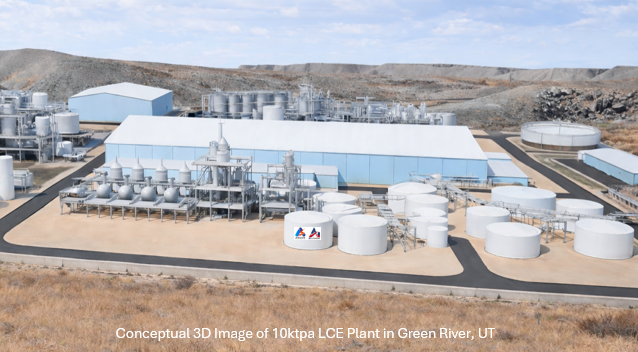
Ryan: I would love to just emphasize one key thing. Everything that we do at EDCUtah isn’t just us. It’s the culmination of so many people working together. Every single project includes multiple touch points. “We build together” – this is the theme we want to emphasize. The Airbuild project in Green River, for example, came as the result of collaboration among the City of Green River, EDCUtah, Utah State University Eastern, Better City, Utah Inland Port Authority, and the University of Utah PEAK water sustainability engine.
Ratio Therapeutics in West Valley City is another example. This project was the result of contributions from Jonathan Springmeyer of West Valley City, Doug Cole of NAI Premier, EDCUtah, Wasatch Group, the Governor’s Office of Economic Opportunity, and Kelvyn Cullimore of BioUtah. We’re grateful for those partnerships.
In short, what can you expect from ECDUtah moving forward? Deeper partnerships than ever.
_____
“Building Together” highlights examples of the collective impact of your investment and EDCUtah’s work in communities across the state.
For additional information or to schedule an interview, please contact us.


The Economic Development Corporation of Utah (EDCUtah) is pleased to close out the month with three new corporate expansion and relocation wins!
“Utah’s diverse and growing economy is strengthened by innovative companies across multiple sectors—from life sciences to clean technology and health and wellness,” said Ryan Starks, executive director of EDCUtah. “Companies like Microvascular Therapeutics, Reencle, and Maxtec, not only bring innovation and global investment to our state, but also create high-quality jobs and foster sustainable economic growth. Supporting these projects allows us to build on Utah’s reputation as a hub for innovation, attract international partnerships, and enhance the prosperity and quality of life for communities throughout Utah.”
Here are the latest companies to choose Utah.
Life sciences startup Microvascular Therapeutics (MVT) is collaborating with the University of Utah to advance a breakthrough device and procedure designed to stop brain tumors. Founder and CEO Evan Unger, currently operating out of his home through Utah’s ALTA program, plans to grow operations into an incubator space at the University of Utah. Over time, MVT anticipates creating up to 50 high-quality jobs in business development, clinical operations, finance, and medical specialties—building on the founder’s proven track record of company growth.
EDCUtah supported Project Kimble by hosting a site visit, conducting a market cost comparison through its research team, and outlining available state incentive programs. EDCUtah also facilitated an introduction to Kelvyn Cullimore of BioUtah. As MVT grows, the company plans to apply for Utah’s Economic Development Tax Increment Financing (EDTIF) program.
The company is gaining visibility and traction in the industry: MVT recently joined BioUtah and presented at the BIO International Convention in Boston.
MVT’s continued development reflects the strength of Utah’s life sciences sector and the value of collaboration among startups, research institutions, economic development partners, and social programs.
Reencle, a Korea-based producer of sustainable composting technology, is expanding its operations to the United States with a new presence in Springville, Utah. The company is leasing a 6,000-square-foot facility, creating six new jobs and investing $2 million in capital expenditures. Reencle delivers innovative, clean tech solutions that align with the growing U.S. demand for circular economy practices and environmentally responsible waste management. The Springville location represents Reencle’s first operational footprint in North America.
EDCUtah supported Project Worm by providing customized market data and cost comparison analysis to guide the company’s location strategy. EDCUtah also hosted Reencle’s North America General Manager and Korean CEO for a comprehensive “Why Utah” presentation.
The company is also collaborating with Brigham Young University on ongoing research and a commercial pilot project that demonstrates its technology’s ability to convert food waste into valuable compost, reducing landfill dependence and promoting sustainable waste management.
Maxtec – a healthcare technology company that produces respiratory and patient monitoring technologies – has reaffirmed its commitment to Utah by choosing to retain operations in West Valley City. Closely connected to its sister company Permapure in New Jersey, Maxtec evaluated several consolidation options and ultimately decided to maintain its 70-employee workforce in Utah.
EDCUtah supported Project Maxwell by conducting a comprehensive market cost comparison between Utah, New Jersey, and other potential locations. The findings helped demonstrate Utah’s competitive advantages and contributed to the decision to keep Maxtec’s operations in West Valley City.
Rex Buys, business development manager, led Projects Kimble, Worm, and Maxwell for EDCUtah.
_____
EDCUtah Investors: If you were involved with these projects and would like to have your organization mentioned, please email connect@edcutah.org and we’ll update this article.
For additional information or to schedule an interview, please contact us.

The Economic Development Corporation of Utah (EDCUtah) is pleased to announce that Ryan Starks will be the new Executive Director and will start on May 19. We caught up with Ryan to learn his thoughts about this new chapter for our organization.
First of all, I want to state that I have been a long-time fan of EDCUtah and believe in its mission. I admire the leadership of Jeff Edwards, Theresa Foxley, Scott Cuthbertson, and others who have helped shape Utah’s economy in lasting ways. Their contributions and leadership are legendary.
Long-term I want to establish EDCUtah as the private sector leader in the economic development space, and that means working closely with our different partners. There are a lot of different entities out there: associations, chambers of commerce, economic development organizations, and the State of Utah. I want EDCUtah to lead in convening these groups to accomplish shared goals. The time is now to do that convening and to create that shared vision. As part of these long-term efforts, I want to increase our membership significantly.
In the short term, I want EDCUtah to establish local and national relationships that will lead to long-term projects. This means a focus on in-state and out-of-state marketing the likes of which we’ve never yet done as a state. I feel like there’s a space for EDCUtah to really own that business branding, much the way the Utah Office of Tourism is branding the state in the travel sector. I think EDCUtah can do similar work, to help tell the story to the business community of why we’re such a great place to do business.
It’s pretty simple. It’s not just EDCUtah, rather it’s many people working together. When it comes to building business ecosystems and building a lasting economy, it’s all hands on deck. We have to look at ways in which we can solve some of the big problems that the state has, to attract new companies, and to facilitate existing company growth.
It takes all of us working together. “And” is an important, powerful word. It takes the public sector and the private sector. It takes rural Utah and urban Utah. It takes legislative leadership and executive leadership and leadership from EDCUtah. It takes universities and associations. How do we build together? We do it in partnership and in collaboration, in a way that will support job creation, capital investment, infrastructure, human talent, and an unparalleled quality of life—across the state. It’s not a one or the other approach. It’s a collective approach where we leverage the relationships with all partners, and we help drive positive economic growth through EDCUtah. I want to emphasize that.
I like to work hard. I like to have a lot of fun while working hard. I like to lift other people up who I get to work with, and so I believe in delegation. I believe in positive feedback and helping people become their best selves. I’ve taken different tests over the years, including StrengthFinders. It says that one of my inherent strengths is building other people up.
I also like to look at process, looking for efficiencies, pulling people together to solve complex problems. I love tackling big challenges, with a positive, focused attitude.
What my time at GOEO gave me is an understanding of the ins and outs of economic development across the state. I visited every single county, and spoke with city and county leaders, with chambers of commerce, with economic development directors.
I was at GOEO for six years, but I think we can look even further back than that. I worked for Wasatch County for eight years, and that gave me the county-level perspective. I learned that every county has unique opportunities, and that counties can really benefit from a partnership with EDCUtah. Wasatch County was an investor in EDCUtah, and we were able to do a lot of our work in partnership with EDCUtah. There’s value in strategic partnership between counties and EDCUtah because we can all leverage resources in a greater way.
I learned in these jobs that economic development is not a one-size-fits-all proposition. It takes unique strategies to solve the various economic development issues in every part of Utah. The GOEO experience also helped me understand the tools and resources available at the State level. That could be grants or incentives, or even the power of just convening people.
At EDCUtah, I envision doing similar things, working with stakeholders and communities, connecting them with those resources that I became so familiar with, and connecting them to the vision of building a strong economy, into where the State’s going. There are a lot of unique lessons that I only could have learned from the State, and I’m excited to apply those lessons now to the private sector.
There are concerns, but Utah maintains one of the most diverse economies in the country.With that economic diversity, we’ve proven in the past that we’re able to weather difficult storms. COVID-19 is an example of Utah coming out as the best state in terms of our recovery.
Another example is the Rich States, Poor States Report, commissioned by the American Legislative Exchange Council. Using 70 different data points, the report just ranked Utah as having the best economic outlook in the country for the eighteenth year in a row.
Even though there’s some economic uncertainty right now, the future still looks very bright. This is a time where we need to continue to build, and not pull back.The challenges are real. But the strength of our economy is also very real, and I’m confident that we can maintain our strength by continuing to invest in the long term. I believe our best days are still ahead of us, and I invite businesses and organizations to join us in this important cause and movement.
That the State of Utah is growing, that our economy is hot. That we need to stay focused on growing our economy in smart and strategic ways. We have the 2034 Olympics knocking on our door. We have a unique opportunity to prepare for those Olympics by making key investments into infrastructure and into Utah’s economy. These investments will create long-term returns that will benefit the next generation of Utahns.
EDCUtah can be more than an organization to promote the economy. It can be an integral part of a movement that benefits and lifts all communities in the State. I’m really confident that this window of time is going to create some unique opportunities for EDCUtah and for the State to accomplish big things. We can recruit big companies, support rural Utah, and hone in on our targeted industries.
Our investors have a voice in Utah’s economic growth. This is the opportunity to jump onboard with us, and together create some amazing things over the next decade.
_____
For additional information or to schedule an interview, please contact us.

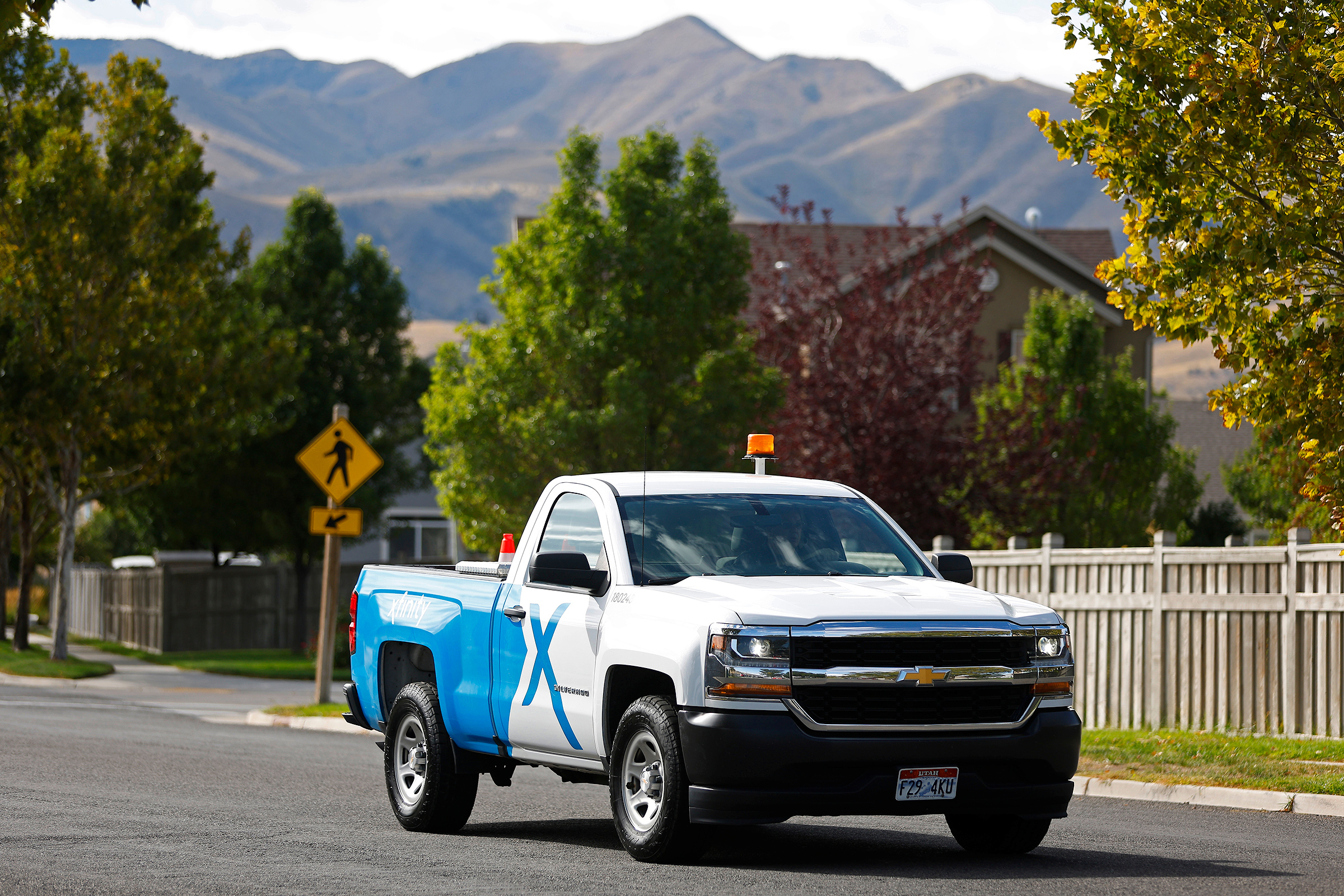
EDCUtah investor Comcast is bringing a cash-and-services small business grant program to the Wasatch Front. We caught up with Deneiva Knight, external affairs director, to learn more.
Comcast RISE started during the Covid pandemic, to help small business owners overcome hurdles during that time. In the last five years, we’ve awarded more than $140 million in monetary, marketing, and technology grants to help 14,000 small businesses nationwide. This year, the program focuses on five markets across the country, specifically Boston, Grand Rapids, Nashville, Seattle, and a segment of the Wasatch Front.
Small business owners in the communities of Bluffdale, Draper, Herriman, Riverton, Sandy, South Jordan, West Jordan, and White City are eligible to apply. The grant includes $5,000 cash, which the awarded business can use any way they want, plus a technology makeover, creative production, a media schedule, educational resources, and business consultation services. The marketing package includes professional commercial spots that are aired on our cross-channel networks.
We know based on research that small businesses are the fuel that keeps our economy going. Typically, the money that small business owners spend stays and circulates in their local communities. Furthermore, small businesses have a genuine and tighter relationship with the folks that they serve. So part of uplifting the community is just being an active business owner.
A way to stand out in your application is describe how your business supports the community. This could be anything. Does your business encourage employees to do any kind of community service work? Does your business provide funding for local initiatives or support employees volunteering for them? If you’re a small restauranteur, maybe you occasionally make meals for different groups that might need it, such as firefighters during the summer firefighting season. In other words, how does your businesses step up during a time of need?
First of all, Utah in general was chosen for a couple of reasons, one being that for the last couple of years we have ranked as the startup capital of the nation by a number of publications. Our economy is very strong, and we have a growing small business community. Being selected for the program is a nice accolade in itself.
As far as the specific cities, it was really hard to make the selection. We had to make that hard choice by focusing on communities with a high number of small businesses that have started over the last several years.
We’re hearing from business owners that have won over the last couple of years that they find three things very valuable. These are the mentoring and consultation support, the marketing support, and the business services.
I think a lot of small business owners launch a business due to passion and because it’s something that they resonate with. The owners may not necessarily come with all the business skills or acumen that are sometimes needed for a business to be successful. And so consultation and mentoring seem to be really helpful for small business owners. The consultants are from our Comcast business team locally, our regional marketing team, and some senior leaders at the company. It’s a great mix.
On the second point, oftentimes marketing budgets are tight. Connecting with our marketing team, then refining and reviewing a marketing strategy that will work and that is tailored specifically to these businesses, that interaction is invaluable. And then being able to place a 30-second commercial spot on our cross-channel network to drive business and bring in more customers, that’s also a big plus.
Lastly, I would say our Comcast business services – having a full suite of Comcast business services available – allows a business owner to streamline operations. It increases efficiency and allows those business owners to do the job they need to do, which is just to make sure their business is successful versus having to do a lot of the behind the scenes work taking up time.
The deadline to apply is May 31st. The application is available at www.ComcastRISE.com.
Applicants will want to gather their paperwork together. Your EIN number, some recent tax forms showing time in business, that sort of thing. And then I think just giving some thought to how your company does business in the community that you’re in, and what sets you apart, either about the products or services you offer, your customer experience, or how you engage with the community as a whole. What kind of things set you apart from other businesses would be helpful to think about before folks start to apply for the grant.
Comcast will host working sessions to help small business owners apply for the grant if they’re experiencing trouble or just want to do it in collaboration with a Comcast representative. At these sessions, we’ll talk about criteria and the application process.
We’re working with local chambers of commerce and economic development organizations throughout the state to set up these working sessions. We’ll do communication around that in the next couple of weeks, but we just encourage folks to reach out to their chamber of commerce to inquire when these working sessions will be taking place.
The call to action for EDCUtah investors is if you know of any small businesses, say in your supply chain or customer base, or if you are a small business owner in any of these communities that are eligible, you could apply for the grant and or encourage some small business owners in your network to apply for the grant. We’re hoping to get at least 500 small businesses in Utah to apply. We’ll make 100 awards.
We have a toolkit that includes communications and social media content you can use to share this news with your network.
_____
For additional information or to schedule an interview, please contact us.
The Economic Development Corporation of Utah (EDCUtah) is pleased to announce that Ryan Starks will be the new Executive Director and will start on May 19.
“We are thrilled for Ryan to step into this position and lead the EDCUtah team,” said Derek Miller president and CEO of the Salt Lake Chamber, the parent organization of EDCUtah. “Ryan brings a wealth of knowledge and experience, leadership skills and new ideas, and we are confident in his ability to elevate the business sector in this capacity.”
Previously serving as the executive director of the Governor’s Office of Economic Opportunity (GOEO), Ryan was instrumental in its growth. His leadership helped achieve historic wins, including Texas Instruments’ $11 billion investment, helping bring over 13,000 high-paying jobs to Utah and $16 billion in capital to Utah, and more.
“It’s an honor to step into this role at EDCUtah,” said Ryan Starks. “I’m deeply passionate about Utah’s dynamic business environment and look forward to building on the strong foundation that’s already in place. I’m excited to contribute in ways that support the important work of strengthening communities, driving growth and creating opportunities statewide.”
Ryan’s career spans public service, education and entrepreneurship, with prior roles at the Heber Valley Chamber of Commerce, Brigham Young University and as founding director of Wasatch CAPS. He also led international trade missions and launched initiatives like the Startup State and Joint Utah Mexico Partnership (JUMP) program to strengthen Utah’s global and rural economic reach.
“Ryan’s experience and unique qualifications to lead this organization will be exceptionally valuable, as he has an impressive understanding of Utah’s economic landscape,” said Tom Morgan, chair of EDCUtah’s Board of Trustees. “His passion for growth, partnerships and economic development is evident. I look forward to working closely with him to see that continue.”
As the executive director, Ryan will work closely with business leaders, site selectors and public partners to support recruitment efforts, provide strategic data and insights and grow the business community. Ultimately, EDCUtah is a one-stop shop for both companies and site selection teams, offering a wide range of business retention and expansion services to help business leaders make their next location decision.
Upon hearing the selection, Gov. Spencer Cox said, “Ryan has been a key part of my Administration’s efforts to keep Utah the best state for business and opportunity. I am thrilled that he will continue this important work leading the Economic Development Corporation of Utah and look forward to the public and private sectors working together as ‘Team Utah’ to drive economic prosperity.”
_____
For additional information or to schedule an interview, please contact us.

Anyone who has looked down into Rio Tinto Kennecott’s Bingham Canyon copper mine — located on the west side of the Salt Lake Valley and the largest human-made excavation in the world — can see that things are happening on a massive scale. In a sense, that’s also true about Kennecott’s other Utah land assets.
Kennecott owns approximately 95,000 acres of land (more than six times the size of Manhattan) in the Salt Lake and Tooele Valleys. The company’s land ownership is the result of over 100 years of copper mining in Utah’s Oquirrh Mountains. Today, this land is poised to become one of largest real estate opportunities in the western United States.
We spoke with Alan Matheson, Kennecott’s former general manager of land and water development, about the significance of these landholdings for Utah’s current and future real estate development and economic opportunities.
“Rio Tinto Kennecott owns most of the remaining undeveloped land in the Salt Lake Valley, and significant parcels in Tooele County,” explained Matheson. “Of course, not all 95,000 acres will be developed. Much of the land is in current mining operations, much provides a key safety buffer between communities and those operations, and other areas will be preserved for ecosystem conservation. Nevertheless, significant land along the foothills of the Oquirrh Mountains is developable and will help meet the needs of our growing community.”
Many of these areas are:
For developers, this means access to strong job markets, schools, and transportation, making the land ideal for residential, commercial, industrial, and mixed-use projects.
Because of Kennecott’s mining operations, large tracts of its land already have nearby infrastructure assets like roads, rail, and utilities. Many parcels are zoned for urban uses and have conceptual plans. Kennecott prioritizes ongoing collaboration with municipalities, public utilities, and transportation agencies to lower initial development costs, accelerate project timelines, and align with community goals. Taking a proactive approach, Kennecott is also addressing key challenges with water, remediation, and needed infrastructure upgrades. The result of these efforts is a series of highly attractive parcels that will contribute significantly to Utah’s future.
Kennecott’s landholdings tend to be large and contiguous, making them ideal for business centers, large-scale commercial hubs, and master-planned communities. Utah, like many other states, is experiencing a housing shortage, and this land can play a role in meeting Utah’s housing supply needs over the next few decades.
Matheson emphasized the value of partnerships: “We recognize that accommodating Utah’s growing population will require a team effort. To that end, we’re actively exploring partnerships with outstanding developers and public entities to provide the expertise, resources, and infrastructure needed to achieve our state’s vision.”
When it comes to master-planned communities, Utah has a proven model for success. “Most people are familiar with the Daybreak community,” said Matheson. “One of the most successful developments in the country, it’s a cutting-edge example of transforming land used for mining operations into a beautiful, livable, vibrant neighborhood.”
Plans for the Daybreak community – located in South Jordan, Utah, a suburb of Salt Lake City — began in 2001. At more than 4,000 acres, Daybreak is the largest master-planned community in the state’s history. Today, the community has an estimated 44,000 residents and just under 10,000 homes. Daybreak was developed to include key quality-of-life amenities such as housing, schools, retail, offices, transit, parks and trails, and entertainment.
In 2021, Larry H. Miller Real Estate purchased the remaining 1,300 acres of undeveloped land in Daybreak. They’re working together with the City of South Jordan on plans to build out a downtown center that includes the new baseball stadium for the Salt Lake Bees.
Kennecott prioritizes collaboration with local governments regarding the future use of its surplus land, and the company seeks development partners with a long-term vision for sustainability and economic opportunity. “What happens on our land will impact the future of not just the Greater Salt Lake region, but also the entire state,” Matheson said. “We are approaching the development of these lands strategically, with a focus on creating a brighter future for Utah.”
Corporate expansion and site selection trends can help inform Kennecott’s land-development strategy. And as the sites are developed, Utah’s public-private partnership for economic development can support companies and site selectors as they evaluate potential sites for corporate expansion.
“EDCUtah is a key player in Utah’s economic development ecosystem and a valuable partner for Rio Tinto,” said Matheson. “EDCUtah helps us network and build partnerships that allow us to achieve our goals. But more to the point, EDCUtah can help identify the companies that would relocate to this area, bringing jobs and economic opportunity. As we develop these lands, EDCUtah will play a critical role in attracting key tenants.”
“Most people don’t fully realize the history and impact of Kennecott and the Bingham Canyon Mine in Utah,” said Matheson. “Over the course of its 121-year history, the mine has produced more copper than any other mine in the world. But it’s also had significant local impact as one of the biggest taxpayers in the Salt Lake Valley—funding roads, schools, and other public infrastructure.”
In the early 1900s, the Utah Copper Company began developing the Bingham Canyon Mine in the Oquirrh Mountains. The company acquired tens of thousands of acres of land to support mining operations—everything from ore processing and waste storage to railroad infrastructure and company towns.
In 1936, the Utah Copper Company was acquired by the Kennecott Copper Corporation. Over the next several decades, mine production boomed. During World War II, for example, the mine produced about 30 percent of the copper used by the Allies.
Matheson explained: “The Kennecott mine is a vertically integrated operation. In addition to the mine itself, there is a concentrator, one of only two operating copper smelters in the United States, and a refinery. It’s unusual to have an operation that mines ore and then produces 99.99% pure copper in the same location. As we think about our nation’s energy future and economic interests, being able to produce copper and critical minerals domestically is essential.”
As Kennecott expanded the mine, the company continued acquiring land in western Salt Lake County and eastern Tooele County. This included not just mine sites, but also surrounding land for potential expansion and long-term residential buffer zones.
Then, in 1989, the global mining company Rio Tinto acquired Kennecott Corporation. Around the same time, Salt Lake Valley’s population growth started to take off—putting Rio Tinto’s land holdings on the periphery of rapidly growing suburbs. And as mining operations modernized and consolidated, less land was needed for industrial use. In response to these shifting trends, Rio Tinto formed the Kennecott Land Company in 2001 to plan and develop its surplus land in Utah.
“We know that our company has a social license to operate, and we need to make sure that we’re contributing to Utah’s quality of life, to the tax base, and to opportunities that benefit the residents of Utah,” said Matheson. “We have a resource that can be used to advance not just the interests of the company, but the people in the communities where we operate. We have been a big part of Utah’s history, and we want to be a constructive part of its future.”
For more information about Kennecott’s landholdings, contact Scott Baird, Kennecott’s current general manager of land & water development: Scott.Baird@riotinto.com.
_____
“Building Together” highlights examples of the collective impact of your investment and EDCUtah’s work in communities across the state. Do you have a story you’d like us to share? Email connect@edcutah.org.
For additional information or to schedule an interview, please contact us.

EDCUtah recently tuned in to a webinar hosted by the Reshoring Institute, a non-profit dedicated to reshoring manufacturing back to the United States. The Institute interviewed 18 executives across a wide range of industries on recent changes to tariffs. The webinar covered a lot of ground, so this recap focuses on what corporate executives are doing to manage volatile situations.
Rosemary Coates, executive director of the Reshoring Institute, led the discussion. She started with an historical perspective on tariffs, then outlined the goals and aspects of the recent moves by the Trump administration. Some takeaways include:
Going forward? In Coates’ words, a number of the companies are “stuck, not knowing what to do.” Others are modeling various alternative strategies and “what-if” approaches, using cross-functional teams. This involves an analysis of geopolitical risks (particularly with China and Taiwan), as well as consideration of moving manufacturing to alternative low-cost countries such as Vietnam, India and Mexico. Coates also notes that companies can work with economic development partners to facilitate managing tariff changes and reshoring.
In Utah in particular, EDCUtah investors are encouraged to work with the Salt Lake City Department of Economic Development and the World Trade Center Utah on foreign trade zone matters, and with the Manufacturing Extension Partnership on supply chain development and manufacturing best practices. EDCUtah will continue to engage with companies looking to reshore or diversify operations, and with foreign companies looking to find a manufacturing “landing zone” in the United States.
You can view the entire presentation here. For more information on the Reshoring Institute, visit their website.
_____
For additional information or to schedule an interview, please contact us.
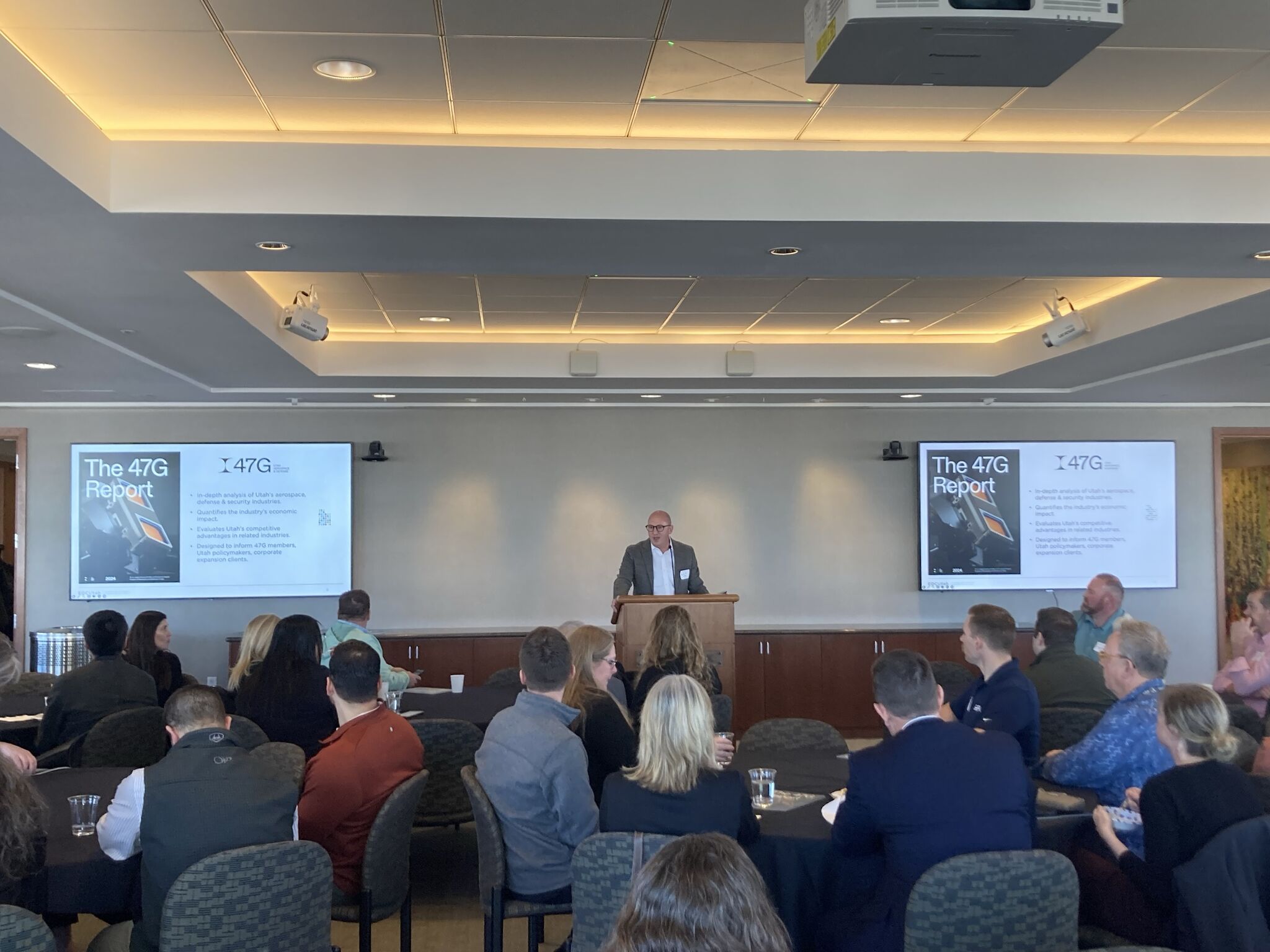
Each year, the EDCUtah research team publishes data on several key industry clusters in Utah. These industry profiles include information like cost comparisons, labor density, and key employers in the industry. More recently, 47G commissioned EDCUtah to conduct an in-depth analysis of Utah’s broader aerospace, defense, and security industries.
The 47G Report set out to quantify the economic impact of aerospace and defense activity in Utah, as well as adjacent industries such as advanced materials manufacturing and cybersecurity technology. The report also evaluates the Beehive State’s competitive advantages in related industries. It offers valuable insights to better inform 47G members, Utah policymakers, and corporate expansion clients looking to bring their aerospace, defense, and security operations to Utah.
Here are a few takeaways from the report:
The EDCUtah Research team analyzed data collected by multiple federal, state, and private organizations to examine the broader aerospace and defense industry in Utah. The broader industry includes the traditional guided missile and aerospace vehicle parts manufacturing as well as national security, space research, and their critical supply chains. Because of tech’s growing influence on aerospace and defense, sectors like artificial intelligence, cyber security, machine learning, and other activities critical to domestic and internet security are included in the analysis.
This broader definition of aerospace and defense yields impressive statistics that demonstrate its importance to Utah’s economy. In 2023, the industry:
Utah has a rich history and legacy of aerospace and defense in the state. The state is home to multiple military installations, research facilities, and private companies that contribute to the success of the industry.
Since its establishment in 1939, Hill Air Force Base has been a key installation specializing in aircraft maintenance, repair, and overhaul. It is also home to the Ogden Air Logistics Complex, which maintains and modernizs Air Force aircraft and weapon systems. Other notable military installations in Utah include Camp Williams, the Roland R. Wright National Guard Base, and the Tooele Army Depot, among others.
According to the Milken Institute, the University of Utah ranks no. 1 in the institute’s Technology Transfer and Commercialization Index and Brigham Young University ranks no. 4. This index measures a university’s efficacy of utilizing its research and development capabilities to develop new technologies that can be applied outside of the university. These two universities ranked higher than notable universities such as Stanford University and the Massachussetts Institute of Technology (MIT). Utah is also home to research facilities such as the Space Dynamics Lab at Utah State University, Falcon Hill Aerospace and Research Park, and the Dugway Proving Grounds. These facilities contribute to the advancement of space and weapons research that are critical to both the nation’s defense and Utah’s strong economy.
Finally, Utah is home to companies such as Boeing, Duncan Aviation, L3Harris, Lockheed Martin, and Northrop Grumman—many of which had at least one corporate expansion project with EDCUtah. These companies contribute to maintaining a highly skilled labor force in Utah and, in turn, benefit from the state’s significant educational assets.
EDCUtah estimated the total economic impact of the broader aerospace, defense, and security industry. This analysis is comprised of three four parts: direct, indirect, induced, and total impact.
The direct impact is the immediate, quantifiable metric in the industry. For example, the industry employs over 236,000 individuals directly in the industry. Additionally, businesses in the industry require inputs for the goods and services that they provide. In engaging with the broader economy to acquire these inputs, they create jobs and income that is captured as indirect impact. Finally, the wages of the direct and indirect employees are spent on the broader economy, creating induced impact. The total impact simply combines the direct, indirect and induced impacts to see how the industry affects the region’s economy.

The results of this analysis show that the industry has a doubling effect on employment with a multiple of 2.02. This means that every direct job in the industry results in another job due to its indirect or induced effects. While the multiples aren’t quite as large for the output and compensation numbers, they are still notable with total impacts of 1.77 and 1.86.

For a deeper dive into the aerospace, defense, and security industry in Utah, contact EDCUtah at connect@edcutah.org or 47G at contact@47g.org. This report is not yet accessible online, but a physical copy may be requested.
_____
Each month, EDCUtah’s Research Minute highlights interesting economic development data and timely research insights. Want more data? Explore the benefits of investing with EDCUtah.
For additional information or to schedule an interview, please contact us.

The Economic Development Corporation of Utah (EDCUtah) announced this week that Scott Cuthbertson will be stepping down from his position as president effective April 25.
Scott has led EDCUtah since 2023, championing Utah’s business environment to help catalyze strategic economic opportunities across the state. During his tenure, Cuthbertson adopted EDCUtah’s five-year strategic plan, oversaw a community services revamp, navigated a transition with the Utah Governor’s Office of Economic Opportunity, unified EDCUtah within the Salt Lake Chamber family of teams, and launched a successful state-to-state economic development initiative with South Carolina.
“Scott has demonstrated consummate professionalism throughout his tenure at EDCUtah, consistently setting a high standard for himself and those around him,” said Tom Morgan of Zions Bank, who serves as chair of the EDCUtah Board of Trustees. “Scott’s exceptional work ethic and ability to engage with partners has led EDCUtah through notable transitions and toward remarkable achievements. His focus on job creation has positively impacted communities across the state, providing new opportunities and driving economic growth.”
Erin Farr, EDCUtah vice president of business development, will serve as interim director during the transition. Farr has worked with EDCUtah for more than 10 years over the course of her career. In her current role, Farr leads a team focused on supporting businesses seeking to create new job opportunities and invest in Utah communities. She brings extensive experience in advancing strategic initiatives, generating new business opportunities, and fostering strong and lasting client relationships.
“It’s been a pleasure to work alongside Scott, whose dedication to Utah has shaped EDCUtah. His commitment to economic prosperity is evident in the work we’ve seen over the years he’s been involved,” said Derek Miller, president and CEOof the Salt Lake Chamber, EDCUtah’s parent organization. “EDCUtah remains in good hands with Erin’s steady leadership, guiding EDCUtah to its next chapter – one that we’re confident will be filled with strength, purpose and growth for Utah’s business community.”
Miller is leading the search committee to oversee the selection of EDCUtah’s next executive director. The committee includes executive leadership at the Salt Lake Chamber and EDCUtah, as well as representatives of EDCUtah’s Board of Trustees.
_____
For additional information or to schedule an interview, please contact us.