Building Together: Utah’s Real Estate Market on the National Radar

When we at EDCUtah seek an independent opinion about Utah’s economy, we often ask Steven Price of Price Real Estate. As a developer, landlord, and creative thinker, he has wide-ranging experience and insights to share. We caught up with Steven recently to hear his thoughts on education, transportation, artificial intelligence, and more.
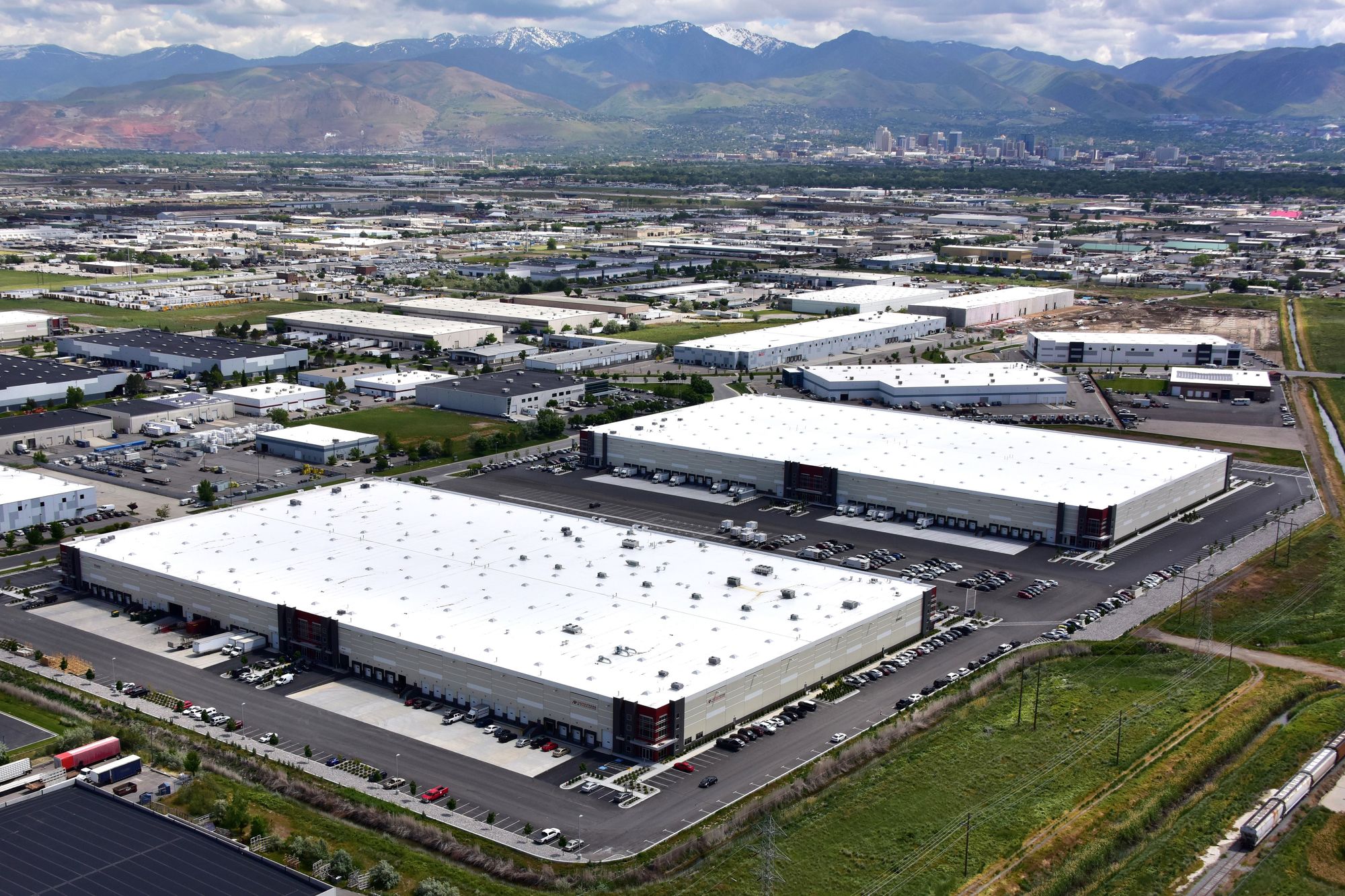
The Salt Lake City market has grown and matured over the last 10 years. We have national and international tenants in sectors such as aerospace and defense, supply chain logistics, e-commerce, medical device manufacturing, advanced and AI manufacturing, and life sciences. We’re seeing the growth of new companies, as well as existing businesses that have much larger footprints now.
On the development and leasing side in Utah, we have a General Partner-Limited Partner (GPLP) structure that didn’t exist 10 years ago, with many of them in multifamily/lodging and industrial development. As the industrial markets grow, we often had outside developers or investors. But now we have the general partners, limited partners, and investor groups that have come to develop in Salt Lake City, the Northwest Quadrant, and spreading north and south on I-15.
We also have capital looking at this market that never looked here before. Part of that is probably due to Covid-19 and the work-from-home economy that brought more people to Utah. Part of it is the Epic and IKON passes that allow people to ski throughout the world. Those passes bring people to Utah. Accelerating the growth has been the expansion of the Salt Lake City International Airport and the Delta hub – not just the commercial side, but also on the fixed-base operator (FBO) side.
When Price Real Estate staff attend national conferences, we consistently hear Salt Lake City mentioned by keynote speakers and economists in breakout sessions. That just didn’t happen ten years ago. Utah is on the national radar screen for sure. And the question is—if you’re not in Utah, why not?
Price Real Estate is a little over 23 years old. In the beginning, we focused one hundred percent on industrial—anything from traditional rack-and-stack storage to manufacturing. And we paid attention to the industry clusters targeted by the Governor’s Office of Economic Opportunity and EDCUtah. By 2004 or 2005, we started targeting aerospace and defense, life sciences, e-commerce, and outdoor recreation.
By 2010, we were also buying urban core buildings in Salt Lake City. I had a personal commitment. I did not want these historic industrial buildings torn down for another kind of project, another kind of building. The question is, what makes a city livable? It’s what you do when you’re not working. So, these buildings are now adaptive reuse buildings with dozens of local businesses in the urban core, giving residents and visitors more options and more livability.
We found that both local, national, and international tenants wanted a landlord that they could grow with. We have a strategy of growing local businesses. If you sign a lease with us, you’re going to renew. Approximately 97% of our tenants renew their leases. Sometimes you don’t know how fast you’re growing, and sometimes you’re giving back space. Sometimes you need additional space to accommodate growth. We’ll give our tenants another space until we can get them into another building.
Tariffs impact three different issues for landlords: 1) How do we manage our buildings? 2) What are the costs to operate? Property taxes, insurance rates, and all other costs are significantly increasing. And 3) what are the impacts of tariffs if we want to build a new building?
And then there’s the impact of tariffs on our tenants. Tenants throughout the U.S. have done a few things. They’ve either sold down their inventory, in some cases lower than what the levels were in June 2020. Or they’ve surged inventory, getting product in faster than before. I use an I-15 analogy. Sometimes I-15 is moving at speed, in all lanes in both directions. Other times, you’re starting to see red lights in front of you. You’re slowing down. Is it the weather? Is there an accident? Is it just rush hour? What’s slowing us down?
Right now, we’re seeing tenants, developers, and capital markets pump their brakes. We’re starting to see red lights, but there are no airbags going off.
The cause for the slowdown is different than 36 to 48 months ago. It’s uncertainty about tariffs, trade policy, employment, and interest rates. All of those factors are working their way through commercial real estate. It’s the reason you see so few cranes working on multifamily projects in downtown Salt Lake City. It’s part of the reason we haven’t seen a new office building since 95 State in downtown Salt Lake City. It’s the reason we’re not tilting up as many industrial buildings. There’s been a traffic pause, but no accident yet. Red lights but no airbags yet.
We have an extremely well-run state. State leaders run a balanced budget here, and government stays out of your way. The State invests in the right things, like transportation infrastructure and education.
The next thing that gives me confidence is Utah’s gross domestic product. It’s very similar to the U.S. GDP. If you look at each of the different sectors of the economy, we’re well-balanced. In fact, Utah has what Natalie Gochnour calls an “elite economy.”
Another thing is that the Wasatch Front is growing. The four-county region of Salt Lake, Weber, Davis, and Utah Counties are on a steady growth trajectory.
Salt Lake City International airport is another point of confidence. We often underestimate the importance of a well-run international airport. To have a Delta Air Lines hub here, and the presence of United and American Airlines, are key fertilizers in the Utah economy. About 60% of people around the U.S. fly those three big airlines. The number of non-stop direct domestic flights to and from Salt Lake City International Airport accelerates Utah’s businesses and visitor economy. And you look at the growing international coverage with new direct nonstop flights to Incheon, to South America, and a second daily flight to Amsterdam. All of this together really builds the Utah economy.
Finally, the University of Utah – with its medical school and their engineering school and business school and so much more – is training some of the best talent in the Mountain West.
These factors combined give us, as a real estate investor, tremendous confidence in how the Utah economy is growing and how it will grow in the future.
Utah talks about a secret sauce, and one of those is that we can work together, on small things or big things. We worked together to help bring the Winter Olympics here, not just once but twice.
We know that Utah has housing affordability issues. One way to attract businesses is to focus on housing. Things will not be less expensive in the future; they’ll be more expensive. We can counter that with jobs that offer upward mobility. We need to make sure we attract the right kinds of jobs that allow Utahns to enter the workforce, remain in the workforce, and achieve upward mobility.
The state also faces issues with transportation infrastructure as the Wasatch Front grows. How do we more efficiently get people to their jobs and back home so they can have live, work, play, worship balance, and quality of life? Transportation infrastructure will be vitaly important.
If we can get those things right, Utah will continue to grow.
_____
“Building Together” highlights examples of the impact of your investment and EDCUtah’s work in communities across the state. Do you have a story you’d like us to share? Email connect@edcutah.org.
For additional information or to schedule an interview, please contact us.

Each month, EDCUtah’s Research Minute highlights interesting economic development data and timely research insights. This month, we review rent affordability in the U.S. and how Utah compares.
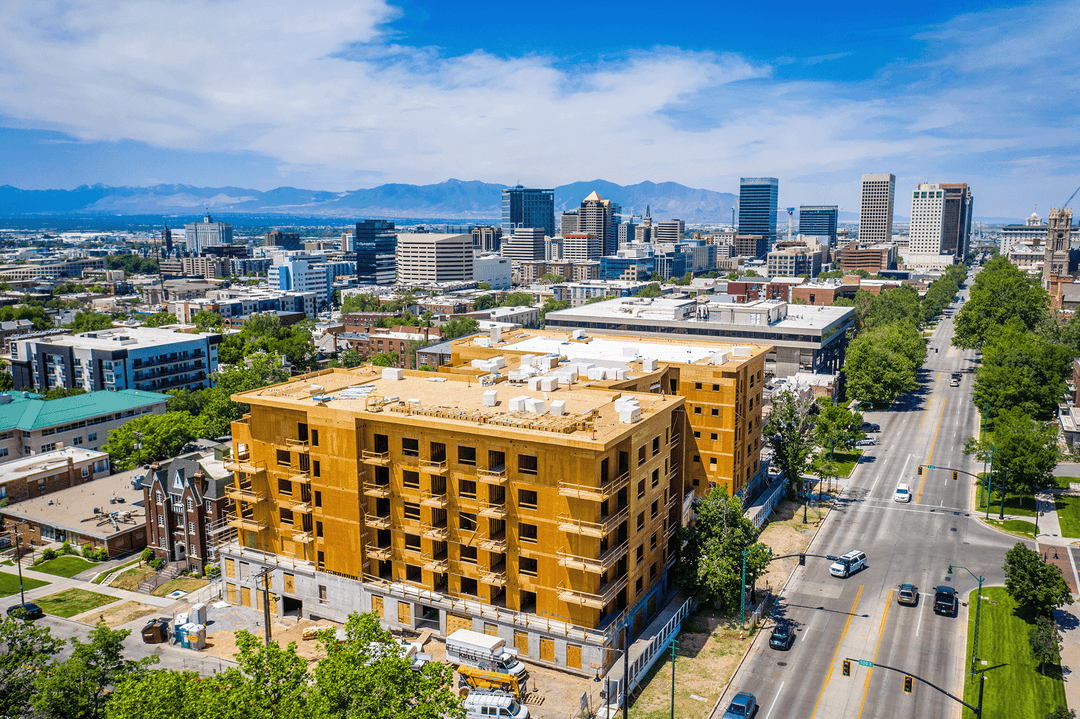
Housing affordability in Utah has been a hot topic for both residents and businesses across the state. According to three different sources — Zillow, Redfin, and CoStar — residential renting became more affordable for Utahns in 2024, while becoming generally less affordable in the United States. While the cost of purchasing a home in Utah continues to rise, there is room for optimism now that rent prices have stabilized and even decreased, making the market more affordable for Utah’s renters.
Zillow and Redfin, two online real estate market and brokerage services, frequently publish reports on trends that their internal data shows in the housing market. Similarly, CoStar tracks real estate data and EDCUtah uses that data to see how these trends impact our state. Each publishes data on rent prices but they reported different changes in rent based on their data on both the national and local scale. Redfin and Zillow only use major metro areas in their analysis, so they were only able to report on the Salt Lake metro. CoStar has data on Utah’s other metro areas that show similar trends to the Salt Lake metro. This report will focus on the Salt Lake metro because of the two reports recently released by Redfin and Zillow.
Zillow, Costar, and Redfin reported rent increases of 3.5%, 1.1%, and 0.1% respectively across the nation in 2024. This variance in values is expected since each source is pulling from a different sample of real estate throughout the country. Although there is disagreement in the exact rate of rent growth across the country, there is agreement that prices are still rising and may be stabilizing from the extreme growth in prices that peaked in 2022.
Meanwhile, Zillow was the only source that saw an increase in the price of rent in the Salt Lake City metro, with only a 0.3% increase in prices, while Redfin and CoStar reported that the metro decreased rent prices by 6.5% and 1.1% respectively. Zillow ranked the Salt Lake City metro as the third most affordable metro for renters in the United States, and Redfin ranked Salt Lake City as the fourth most affordable metro in the nation.
Wages have generally increased nationwide, and Redfin’s report looked into this wage growth to better understand affordability. Using Census Bureau data, they estimated that the median income for American renters increased by 5.3% in 2024. They found this increase in median wages was greater than the increase in rent prices, thus making rent more affordable nationwide. Still, the median renter in the United States is allocating 34.9% of their income to housing expenses. For the Salt Lake City metro, Redfin determined that the median renter is allocating roughly 27.5% of their income for housing, while Zillow’s report suggests that Salt Lake City renters are able to allocate an even smaller proportion of their income to housing, at 19.9%.
CoStar suggests that the decrease in rental prices is likely due to the completion of many multifamily housing units in 2024. While this is true, 2024 also saw much fewer multi-family housing units begin construction than had begun in previous years. For Salt Lake City metro to maintain housing affordability while growing in population and opportunity, building additional units will remain important to meet growing demand.
_____
Want more data like this? Explore the benefits of investing with EDCUtah.
For additional information or to schedule an interview, please contact us.

100 jobs
$35.9 million capex
Project Vaulted
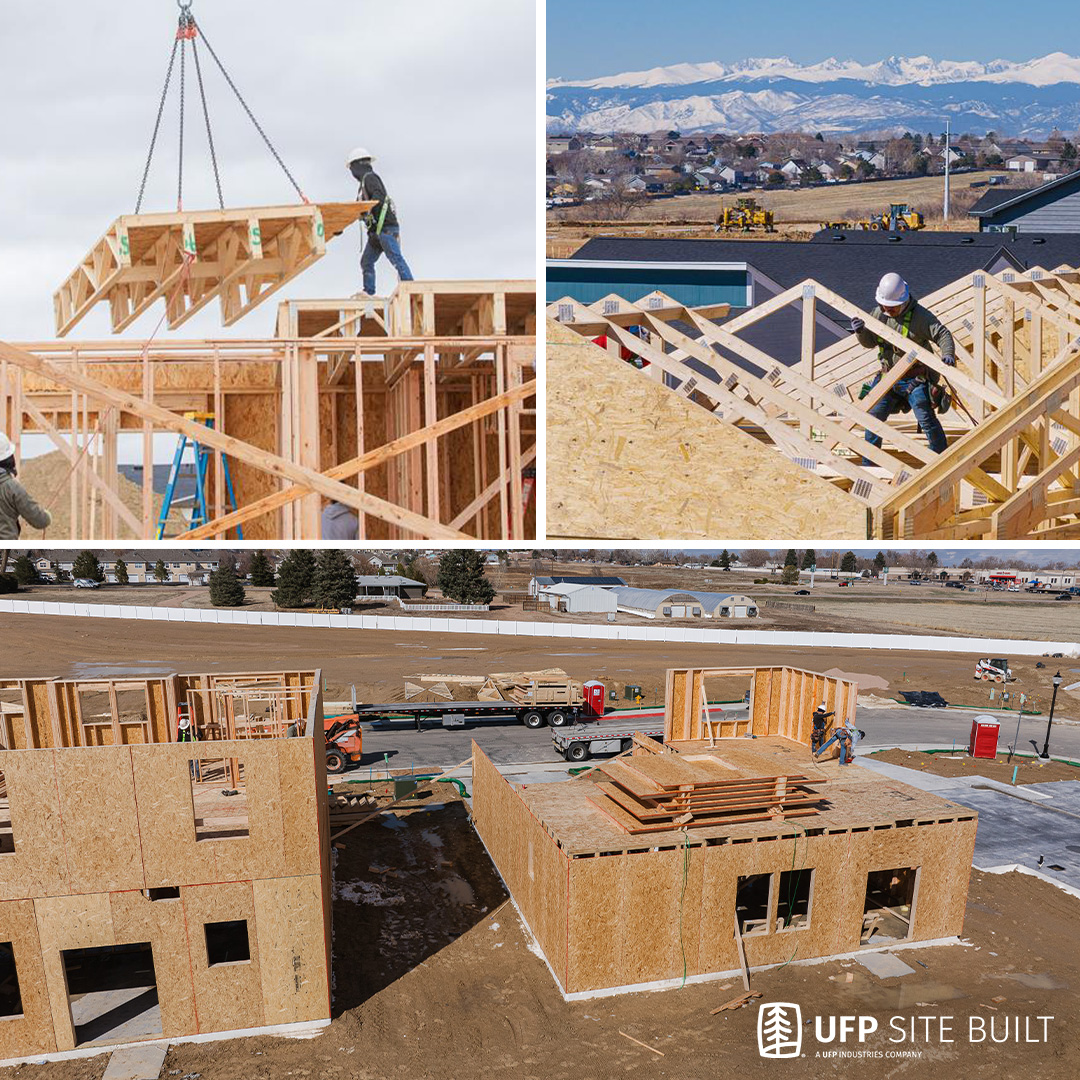
Congratulations to Tooele County and Grantsville City! UFP Industries, a Fortune 500 company and a leading provider of building materials and packaging solutions, announced plans to bring approximately 100 new technically-oriented jobs to Tooele County and invest $35.9 million in Utah over the coming years.
“We are excited to welcome UFP Industries to Tooele County,” said Tooele County Council Chairman Jared Hamner. “This investment brings quality jobs and strengthens our local economy while helping builders meet housing demands.”
The company’s announcement resulted from collaboration among Grantsville City, Tooele County, EDCUtah, Romney Group, Colliers, and Governor’s Office of Economic Opportunity. EDCUtah supported the company’s decision to expand in Utah by issuing a request for site information (RFI), introducing them to local communities, and coordinating a Utah site visit. Additionally, EDCUtah guided the company through the state tax incentive process and connected them to other resources to support their growth in Utah.
“We are pleased to welcome UFP to Utah where they will find a surging construction market ready to benefit from their products,” said Scott Cuthbertson, president of EDCUtah. “UFP’s industry expertise will address supply shortages and support home builders across the Beehive state and their investment in Tooele County will create new jobs and accelerate economic growth in the region.”
UFP Site Built is a national leader in designing and manufacturing value-added wood and non-wood structural components for the construction industry, such as prefabricated wood trusses and wall panels. As a subsidiary of UFP Industries, a global enterprise founded in 1955 and publicly traded since 1993, the company serves the retail, packaging, and construction markets. Committed to exceptional customer service, UFP invests in people and technology to deliver world-class products that drive success. The company’s expansion will help meet the rising demand for housing and commercial development as Utah experiences record population growth.
“Utah’s booming population requires innovative solutions to keep housing both available and affordable,” said Mike Ellerbrook, executive vice president of UFP Site Built. “With this investment, we are strengthening our ability to provide high-quality structural components that support the construction of single-family homes, multifamily housing, and commercial developments across the state. We are proud to grow our footprint in Utah and create new opportunities for the local workforce.”
The Utah Governor’s Office of Economic Opportunity (GOEO) – an EDCUtah founding investor – assisted the project by approving UFP Industries for Economic Development Tax Increment Financing (EDTIF).
“Access to high-quality building materials is essential for creating more affordable and reliable housing for Utahns,” said Ryan Starks, executive director of the Governor’s Office of Economic Opportunity. “This expansion supports our state’s economic priorities by strengthening the supply chain, creating quality jobs, and investing in rural communities. We welcome industry leaders like UFP who help drive smart growth and keep Utah a great place to live and work.”
Jared Stewart, senior business development manager, led Project Vaulted for EDCUtah. Thane Smith with Romney Group, Tom Freeman with Colliers, Mayor Critchlow with Grantsville City, and representatives of Tooele County were all involved in the UFP Industries project, helping to facilitate its success in the region.
_____
EDCUtah Investors: If you were involved with this project and would like to have your organization mentioned, please email connect@edcutah.org and we’ll update this article.
For additional information or to schedule an interview, please contact us.