Western Governors University Expands in Salt Lake City, Utah


5,000 jobs
1 million sq. ft.
$2.5 billion capex
Project Talon
Congratulations to Salt Lake City! Western Governors University (WGU), the nation’s leading nonprofit university, has announced plans to develop a new headquarters in downtown Salt Lake City. This investment further positions Utah as a center for higher education innovation that prepares learners from all backgrounds for a rapidly evolving economy and workforce. The university intends to create more than 5,000 jobs and invest approximately $2.5 billion in Utah over the next 20 years, creating new opportunities to help individuals and families improve their lives.
“We’re thrilled to welcome Western Governors University’s national headquarters to downtown Salt Lake City—an investment that represents a generational win for our economy and a defining moment for our city’s innovation future,” said Salt Lake City Mayor Erin Mendenhall. “With more than 10,000 employees nationwide, an operating budget nearing $2 billion annually, and the scale of a Fortune-level headquarters, WGU will be a strong anchor in our urban core.”
The announcement came at a public board meeting of the Utah Governor’s Office of Economic Opportunity (GOEO). Gov. Spencer Cox said of the institution’s decision: “Expanding access to education that prepares people for career growth is essential to Utah’s economic success. By establishing its headquarters in Salt Lake City, WGU strengthens Utah’s role as a center for innovation, bringing education and workforce needs closer together and helping advance higher education for learners across the country.”
The headquarters will serve as the primary office location for WGU’s people and will largely span a 10-acre block in downtown Salt Lake City. The project will be developed in phases as a mixed-use community of innovation.
“We’re excited to welcome the expansion of Western Governors University to downtown Salt Lake City,” said Ryan Starks, executive director of EDCUtah. “Utah is a place where innovation, education, and economic growth come together. As a major institution already deeply rooted in the state, WGU will help strengthen Salt Lake City’s thriving urban core, attract and retain talent, and create thousands of new jobs.”
At full buildout, the project is expected to include approximately 1 million square feet of office space, supporting up to 5,000 employees, alongside other mixed-use elements that will be part of the master plan to redevelop the city block. Some of the possible amenities include a collaboration space for shared R&D, an auditorium, simulation centers, showcase hubs for convening WGU and cross-sector innovation, a WGU welcome center, dining and refreshment options for employees and the surrounding community, an employee cafeteria, an on-site childcare center, and ample open space for connection. The campus will be accessible via public transportation and designed with sustainability and well-being in mind, with the goal of achieving both LEED and WELL certifications.
“For WGU, Salt Lake City and Utah are not only part of our origin story but also offer a unique foundation for advancing our mission,” said WGU President Scott Pulsipher. “Being headquartered here allows us to support our employees, deepen partnerships, and expand how we build pathways to opportunity for learners. Together, WGU, Salt Lake City, and Utah will continue to elevate the belief in the inherent worth of every individual and advance a shared mission to change lives for the better.”
This was a competitive site-location process for WGU, and EDCUtah worked with many critical partners throughout the project. Special thanks to the Salt Lake City Department of Economic Development, the Salt Lake City Community Reinvestment Agency, the Utah Governor’s Office of Economic Opportunity (GOEO), Endeavor Real Estate Group, and CBRE.
“WGU’s major expansion represents a significant investment in Utah’s future workforce,” said Jefferson Moss, executive director of GOEO. “By creating thousands of high-paying jobs in the information technology sector, WGU enhances Salt Lake County’s reputation as a center for innovation and economic growth — and the students it serves will help power and build Utah’s thriving innovation economy.”
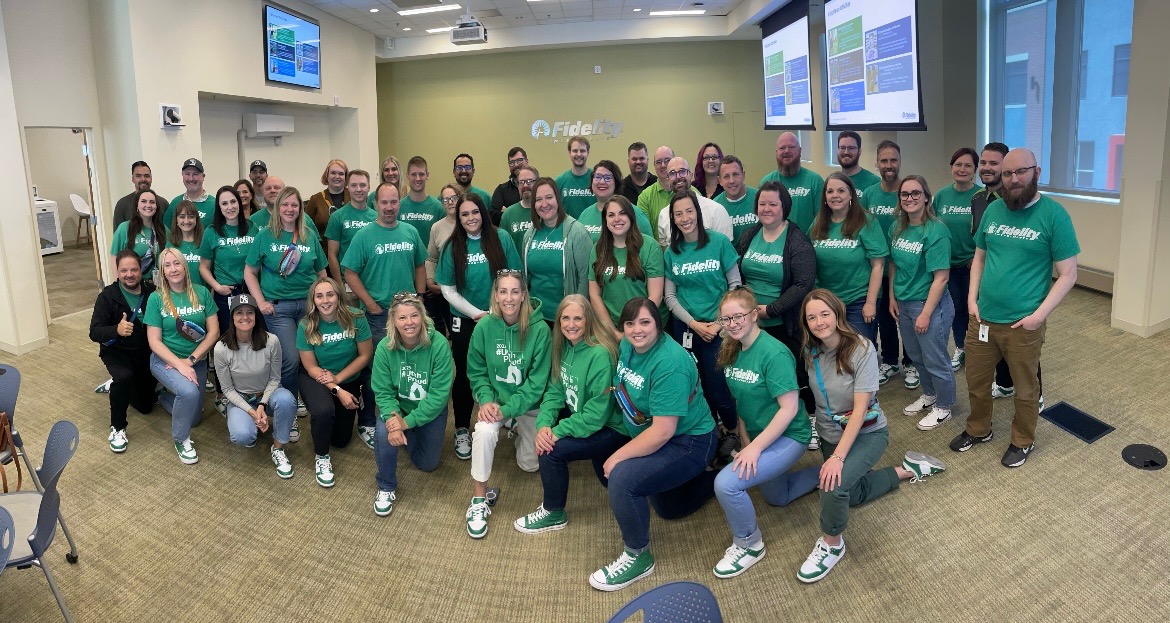
Other groups that championed Utah during this site selection process include Goldman Sachs, Fidelity Investments, ARUP Laboratories, University of Utah, Brigham Young University, Delta Air Lines, Select Health, Northrop Grumman, Spherion, Blaser Ventures, Larry H. Miller Real Estate, The Point, the Utah Inland Port Authority, the Northern Utah Economic Alliance, and Layton Construction.
Rex Buys, business development manager, led Project Talon for EDCUtah.
_____
EDCUtah Investors: If you were involved with this project and would like to have your organization mentioned, please email connect@edcutah.org and we’ll update this article.
For additional information or to schedule an interview, please contact us.


Each month, EDCUtah’s Research Minute highlights interesting economic development data and timely research insights. This month, we explore the Archbridge Institute’s Social Mobility score and how Utah earned the no. 1 rank in the country.
Utah ranks first in the nation for social mobility in the 2023 Social Mobility in the 50 States report published by the Archbridge Institute. For residents, this translates to a better chance of moving up the social and economic ladder in Utah than in any other state. For businesses, this makes Utah an attractive location because it gives their workforce the best opportunity to live the American dream.
Social mobility has typically referred to the ability of individuals to surpass the earnings of their parents at the same age. In their research to create a social mobility index, the Archbridge Institute included not only this intergenerational income element, but also metrics that more broadly measure one’s ability to improve their life and well-being. Archbridge Institute applied four pillars to the index:
Archbridge Institute analyzed each pillar for all 50 states and ranked them by their scores. Utah ranked no. 1 for overall social mobility, no. 4 for Entrepreneurship and Growth, no. 5 in Education and Skills Development, no. 8 in Social Capital, and no. 17 for Institutions and Rule of Law.
Each of the four pillars contained additional subcategories of measurement. While the report does not give detailed descriptions of the specific data used to generate the rankings, they can still provide insights into general areas of strength and improvement. The subcategories where Utah showed its greatest strengths were:
Utah’s lower rankings appeared in the following subcategories:
While there is room for improvement in Utah’s social mobility, it should be noted that even Utah’s lower rankings just barely fall in the bottom half of all 50 states. Utah is not far from sitting in the top half for all subcategories.
But how does the Archbridge Institute index compare to more traditional measures of social mobility? The index aligns closely with income mobility, poverty rates, and income inequality data for Utah. In a 2014 study, for example, Salt Lake City had the highest score for intergenerational mobility out of the 50 largest community zones in the country. Additionally, Utah has the nation’s second lowest poverty rate (9%) and the lowest level of income inequality as measured by the Gini Index. (Both of these Utah data comparisons use the U.S. Census Bureau’s 2023 American Community Survey 1-Year Estimates.)
Utah has proven to be a place where individuals can increase their income potential and also improve their overall standard of living and well-being. Utah is a place where people want to work, and where companies can have a meaningful impact on the lives of their employees and on the communities where they operate. Doing business in Utah not only makes financial and logistical sense for companies – it makes financial sense for employees, too.
_____
For additional information or to schedule an interview, please contact us.