EDCUtah Announces FY 2025 Economic Development Successes and Leadership Awards
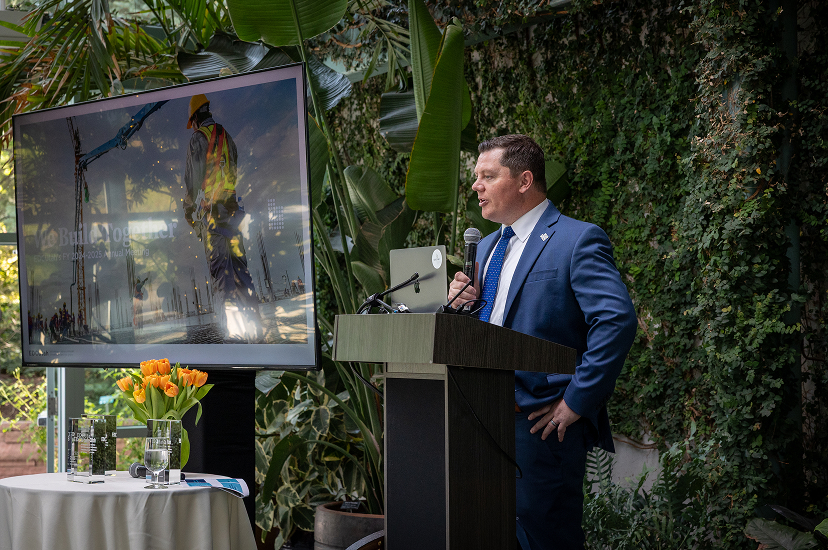
On Sept. 4, the Economic Development Corporation (EDCUtah) held its 2025 Annual Meeting to celebrate the success of Utah’s public-private partnership for economic development. EDCUtah released its 2024-2025 Annual Report as well as its strategic plan for the current fiscal year.
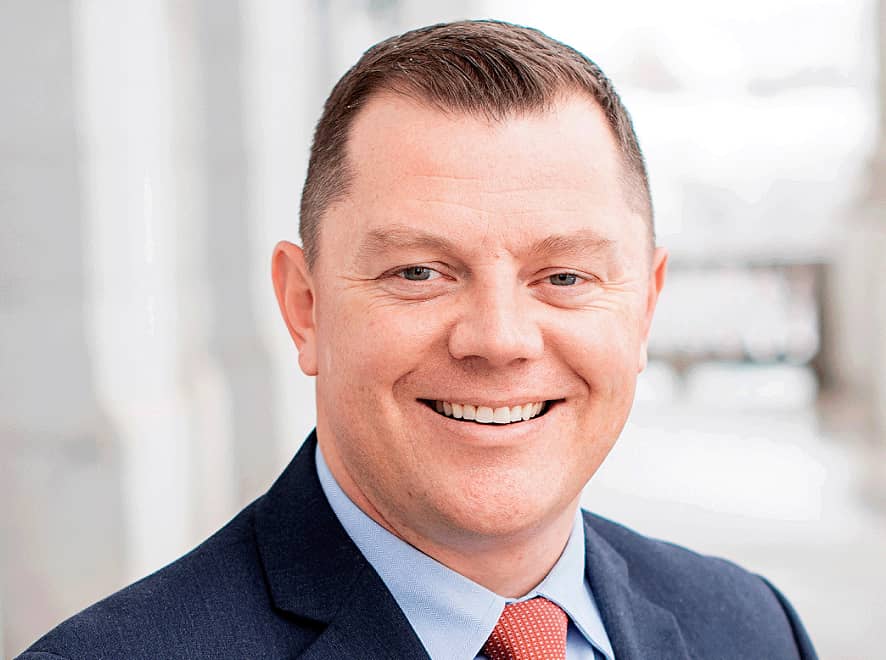
“EDCUtah runs on two things: a scrappy staff that delivers big results and investors who put real fuel in the tank,” said Ryan Starks, executive director of EDCUtah. “Together, we turned hard work into jobs, investment, and a whole lot of momentum for Utah.”
In the 2024-2025 fiscal year, every $1 of investment in EDCUtah generated an additional $3,876 in Utah’s economy. This figure is derived from an economic impact model, and it includes the direct, indirect, and induced financial impact of the corporate expansion and relocation projects announced last fiscal year.
Between July 1, 2024, and June 30, 2025, EDCUtah supported 20 companies in their decision to expand in or relocate to Utah. Together, these companies announced 3,213 new or retained jobs and $1.3 billion in projected capital expenditure. Notable project wins include AeroVironment in Salt Lake City, Edwards Lifesciences in Draper City, Fervo Energy in Beaver County, and Nucor in Brigham City. As of Sept. 4, EDCUtah had just over 100 active corporate recruitment projects in its pipeline.
EDCUtah also recognized outstanding individuals and developments for their leadership in Utah’s economic development. The following recipients of the 2025 leadership awards are making an incredible, tangible impact on our state – helping to bring jobs, investment, and prosperity to Utah communities:
The 2025 leadership awards were presented by Brigham City Mayor DJ Bott, Judd Cook of Enbridge Gas Utah, and Nancy Volmer of the Salt Lake City Department of Airports.
To learn more about our awardees and to view the 2024-2025 annual report, click here.
_____
For additional information or to schedule an interview, please contact us.
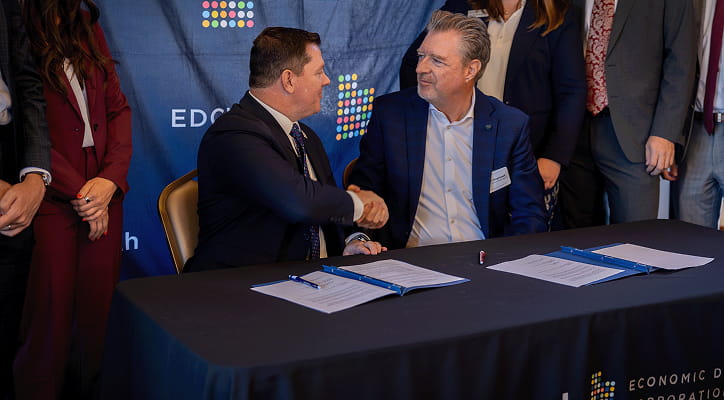
The Economic Development Corporation of Utah (EDCUtah) and the Southern Utah Economic Alliance (So.Utah) signed a Memorandum of Understanding (MOU) to formalize their partnership and strengthen coordination between Utah’s statewide business recruitment efforts and southern Utah’s five-county region.
Under the agreement, So.Utah will continue leading economic development engagement across Washington, Iron, Beaver, Kane and Garfield counties. The organization will provide companies and statewide partners with direct access to local leaders, communities, sites, infrastructure, workforce resources, and other regional opportunities.
EDCUtah and So.Utah have also established reciprocal representation on their respective boards, creating a direct and ongoing connection between statewide and regional economic development efforts.
Working alongside state and local economic development organizations, EDCUtah and So.Utah will coordinate company outreach, project responses and site visits for businesses evaluating opportunities in southern Utah.
Ryan Starks, executive director of EDCUtah said, “At EDCUtah, our mission has always been to bring the right people to the table on behalf of the businesses we serve. Collaboration is the ingredient that makes ‘Team Utah’ work, and agreements like this put that principle into practice. By formalizing our relationship with So.Utah, we are building a stronger, more coordinated effort to bring investment and critical jobs to communities across our state.”
“We’re honored to formalize this partnership with EDCUtah,” said Todd Brightwell, CEO of So.Utah. “Southern Utah has tremendous opportunities, and companies need a clear path to understand what we have and how to connect with the right people. We know our communities, our sites, and our local leaders. EDCUtah brings statewide and national reach, along with decades of recruitment experience, while collaborating with the state connects important state resources and programs. Bringing those strengths together gives southern Utah a stronger, unified voice and a better opportunity to compete for the projects that will bring high-value jobs and investment to our region.”
For businesses considering an expansion within Utah or a new location in the state, the agreement provides a coordinated team connecting state resources, statewide recruitment capabilities, regional expertise, and local decision-makers.
Ryan Starks and Todd Brightwell are available for interviews about this partnership upon request.
EDCUtah is Utah’s statewide economic development organization, working with state and local government and private industry to attract high-value companies and grow Utah’s economy. Since 1987, EDCUtah’s mission has been to catalyze quality jobs and capital investment across the state through corporate recruitment and retention, economic research, site selector marketing, and community strategy. Learn more at www.edcutah.org.
So.Utah, the Southern Utah Economic Alliance, is a private-sector-led, publicly supported regional economic development organization serving Washington, Iron, Beaver, Kane and Garfield counties. So.Utah works to expand, recruit, and retain businesses while serving as a regional convener and connecting companies, communities and partners with the data, relationships and resources needed to succeed. Its mission is to advance a resilient, competitive and sustainable economy across southern Utah. Learn more at soutah.org
_____
For additional information or to schedule an interview, please contact us.
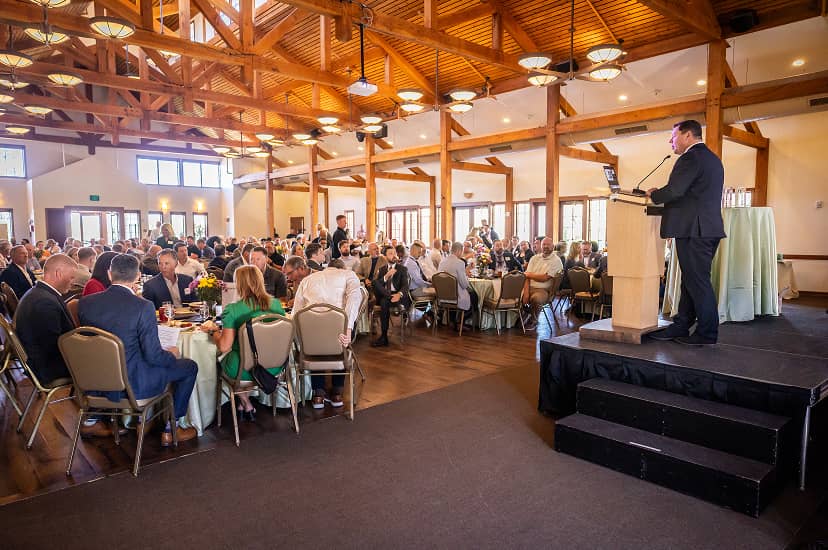
Once a year, EDCUtah highlights the fiscal year’s achievements, notable project wins, and key people and organizations that helped these efforts. Between July 1, 2025 and June 30, 2026, EDCUtah helped 12 companies expand in or relocate to Utah, representing 8,519 new and retained jobs and $20.2 billion in projected capital expenditure. Capital expenditure is at a record high, and every $1 invested in EDCUtah generated $8,180 in Utah’s economy this year.
The year’s results took center stage at EDCUtah’s Annual Meeting at The Garden Place at This Is The Place Heritage Park, filled to the brim with leaders, partners, and government officials eager to hear how Utah’s economy keeps landing at the top of national rankings, and what comes next, including a new partnership aimed at southern Utah.
Executive Director Ryan Starks welcomed attendees and highlighted EDCUtah’s expanding list of partners, including an MOU we signed with the Utah Governor’s Office of Economic Development (GOED) at the beginning of 2026. He previewed deeper work with site selection teams nationwide and a city partner exchange to Austin, Texas, then closed with the line that carried through the meeting: “Let’s build together.”
Derek Miller, President and CEO of the Salt Lake Chamber, delivered a brief keynote centered on partnership, framing economic development as work that depends on the state, local government, and the private sector moving together. He credited Utah’s current strength to investments made a decade ago and cautioned against complacency: “The prosperity we enjoy right now was earned a decade ago. We cannot coast. We have to keep our foot on the gas.”
Wins spanned industries, from American Tungsten and Antimony Ltd (formerly Trigg Minerals) to Karman Space & Defense and Stadler Rail, with 101 more projects active in the pipeline as of Sept. 3. EDCUtah Deputy Director Erin Farr broke down how this year’s 12 wins came together: 33% site selector led, 30% through EDCUtah partners, 27% company direct. “Let’s play the long game and build together,” she said.
EDCUtah cannot accomplish these wins alone; dedicated partnerships and passionate Utah leaders make them possible. At the meeting three companies shared how they’re expanding in the state:
EDCUtah announced a new Memorandum of Understanding (MOU) with the Southern Utah Economic Alliance (SoUtah), designed to strengthen collaboration between the two organizations.
EDCUtah recognized three partners for turning collaboration into results. Bob Stevenson, Davis County Commissioner, received the Public Sector Leadership in Economic Development award: “I’m very touched and honored by this award. I love Utah and it’s a privilege to serve the residents and businesses of our community.”
Christy Alter, a vice president at Goldman Sachs, received the Private Sector Leadership in Economic Development award: “Goldman Sachs invested in Salt Lake City over 25 years ago in part because of Utah’s exceptional talent and the collaborative ecosystem fostered by organizations like EDCUtah.”
And Rocky Mountain Power received the Institutional Cornerstone in Economic Development award, with President Dick Garlish noting, “Energy is the backbone of economic development, and Rocky Mountain Power is proud to help provide the reliable energy foundation that allows communities and businesses to grow, innovate and thrive.”
Between the GOED MOU, the SoUtah partnership, deeper work with site selectors around the country, and the Austin state-to-state exchange, EDCUtah is signaling that the year’s results represent a floor, not a ceiling. As Ryan Starks and nearly every speaker put it: let’s build together.
Since 1987, EDCUtah has worked with state and local government and private industry to attract and grow competitive, high-value companies and spur the expansion of local Utah businesses. More at www.edcutah.org.
Lindsey LeBaron, Director of Marketing and Communications, 801-420-5815

In May, EDCUtah announced the appointment of Jon Hawkins, principal at Inside the Rings, as a strategic advisor. In this role, Jon will help support community development, advise cities on Olympic readiness initiatives, and foster economic development opportunities throughout Utah.
Jon’s experience in Olympic readiness includes consulting, governance, and advocacy. He serves on the boards of the Utah Sports Commission, the Olympic Legacy Foundation, and the USA Climbing Foundation, and he also chairs the legislative Olympic Coordinating Committee. In each of these roles, Hawkins has helped shape projects, policy, and conversations around major events, stakeholder priorities, and the broader impact of sport.
Recently Jon has been talking with dozens of EDCU investors and other contacts. We caught up with him to find out more about Utah’s Olympic efforts.
The Kem C. Gardner Policy Institute puts the potential economic impact at about $6.6 billion, but I think it could actually be a bigger opportunity, when you look at how businesses, cities, counties, higher education institutions can multiply the effect of the Games themselves. If these constituents really put forth an effort to participate, the economic opportunity for everyone is going to be massive. One of the reasons I say that is because the Olympics touch nearly every sector of the economy.
The organizations that are prepared to participate will benefit the most. And by prepared, it’s not a matter of starting in 2032 or even 2030, it means starting now. The partnerships that are needed to maximize the impact of the Games for your organization, those relationships take time to build. Working through logistics of things, that’s going to take time as well. Starting with a strategy and a plan now is a lot better and a lot less expensive than waiting until 2030 or 2032 to come around.
I’ve been talking to all sectors of the economy, organizations both public and private. It’s interesting that despite the diverse nature of these organizations, the conversation is pretty much the same. It’s along the lines of “I know that I want to get involved, but I don’t know how. Help me understand how to get involved.”
What we do at Inside the Rings is to understand what a given organization’s goals are, determine the right pathway for their involvement, and then we strategize on the approach that will take the fullest advantage of the Olympic Winter Games.
Not all communities can afford to have a venue, or to be honest with you, wants to have a venue. But they do want to capture the magic that comes with the Olympic Games, and there are a set number of pathways or different routes to participating.
In our discovery discussions, we identify the different pathways that would help them reach their goals.
There are other questions such as “Can we get a venue here? Can we actually host an event?” The answer is probably not, because the cost is astronomical and a lot of the planning is already in place. It’s very limiting for communities that don’t have an existing venue that want to host a competition now.
For the communities that already have Olympic venues, they’re asking, “Is this venue good enough? Does it need to be upgraded? Is there something else that’s going to be built that might take that opportunity away?”
The answers here are generally that our venues are in good shape, and other than some shifting of a few ski and snowboard events to different venues, things are pretty well set.
First of all, the cool thing is almost everybody is excited to have the Olympics back. There’s a lot of nostalgia around 2002 and the wonderful opportunity that it was.
One of the biggest things that I’ve noticed in talking with organizations and communities that were involved in 2002, the focus then was on the venues, traffic, ticket sales and merchandise sales.
The opportunity before us in 2034 includes those same concerns, but there are other opportunities. I recently talked to a contact of mine at the State Department who is the liaison to the International Olympic Committee (IOC). What he highlighted is that the IOC, the U.S. Olympic and Paralympic Committee (USOPC), and the organizing committee here in Utah all are working to ensure that the athletes have the best experience possible. The questions revolve around setting up the field of play and venue infrastructure, getting athletes from place to place, and housing and feeding the athletes and their coaches.
One thing my contact said to me was that no one’s ever focused on how the business community can get involved, or how the fans can get involved. He made me realize, “The Olympics are coming to Utah, but how is Utah coming to the Olympics?”
An opportunity for Utah organizations is to create an experience for community members and fans. For example, how do we set up cities and counties to be able to bring people out of their homes, bring people together to have an Olympic experience that doesn’t necessarily involve getting a ticket and going to an official venue. Watch parties, for example, are a way to bring residents, visitors, community organizations and businesses together to create an Olympic memory.
That’s another common question I hear. Not every business wants to be a big sponsor or can afford to do so. The same goes for cities. There are more modest levels of support at an individual sport level that can be very impactful for the team and for the organization giving the support.
Every other country in the world that participates in the Olympics has government sponsorship of its Olympic teams. The U.S. does not. I’ve talked to several different national governing bodies (NGBs). These NGBs are the official overseers of specific sports. Folks are familiar with U.S. Swimming, U.S. Ski and Snowboarding, U.S. Track and Field, those sort of organizations. The big ones are doing great and have resources. But other NGBs are not so fortunate, and have some pretty tight constraints.
I would advise companies and communities to look for ways to get involved in the short term. As I mentioned before, I would say start planning and building those relationships now. The Olympics in 2034 might seem like a long ways away. The good thing is we have three Games between now and then that allow us to dry-run different approaches. Every year between now and 2034, any relationship with an NGB picks up momentum.
As I mentioned, other national governments help sponsor their countries’ Olympic team, and because of that, those teams have funds to do a lot of research and development.
For example, with the sliding sports, especially Germany, Austria, Switzerland, even Latvia, those teams are crushing it. That’s in part due to research and spending on composite materials. They have a technology advantage over the U.S. team.
We’re doing a really good job winning medals with the resources that we have here. If we could involve our manufacturing side, expand the research and development, and develop better technologies for our sliding sports, we’d be in a more competitive position with those countries that are leading those sports. The same goes for biathlon, and even ski and snowboard to an extent.
There are U.S. manufacturers out there that are willing to help, but they may not be aware of the opportunity or how to get involved. I’m encouraged by some early efforts at Weber State University and by our friends at the 47G industry association to bring better composite technology to our sliding sports. Developments like that tell me that there are opportunities to build public-private partnerships that could be as meaningful to our teams as high-dollar donations.
I think what’s been reaffirmed is excitement for the games. In the conversations that I’ve had, you don’t have to sell them to anybody. It is one of the easiest door openers I’ve seen. Everyone wants to be invited and included and participate in the games.
I think that’s unique to Utah. Obviously we have this phenomenal legacy from 2002. If you’re out on the streets of Salt Lake or anywhere else in the state, you’ve got people still wearing their Olympic volunteer uniforms. That’s because of the experience they had, and the positive uplift that it was for Utah. So it’s not surprising there is total excitement.
I think one of the most surprising things are the number of organizations that are engaged in planning. There are organizations up in Ogden, for example, that have already outlined 50 to 60 different projects that they want to work on. These are to support a reimagined downtown Ogden, in other words, a level of planning to make the city a major Olympic hub.
These are not small-scale projects, and that effort reaffirmed to me that it’s time to start preparing now across our state.
Everybody at the organizing committee is doing a phenomenal job. They’re great to work with, and they’re great people. They have a lot on their plate and a lot of people don’t understand what the committee’s responsibility is. I’ve talked to some of the members, and they say they can’t do what people are asking them to do.
Some of the requests are simply not in the committee’s scope. There are very strict parameters that the organizing committee can and can’t do. The committee just has to focus on what those responsibilities are, and not try to get every organization in Utah involved. That’s why EDCUtah and the Chambers of Commerce are great places to begin the process of getting involved. We can figure out a plan together, and not be a burden on the organizing committee.
Six months ago, I called Ryan Starks of EDCUtah and told him I was starting this consulting business. I was calling to ask, “What do you think?”
His immediate response was that EDCUtah would love to bring Inside the Rings on as a strategic advisor for the Olympics. Ryan recognizes that for EDCUtah and its investors, the Olympics are perhaps the greatest opportunity to showcase Utah to the global business marketplace and to site selectors that we’ll see in our lifetimes.
So I don’t work for EDCUtah but I do engage with the organization and with the clients that EDCUtah sends to me, to help them understand what the opportunity is for involvement in the Olympics. My services can help strengthen the relationship with EDCUtah. We’ll provide more detail in the coming months.
_____
For additional information or to schedule an interview, please contact us.

Today we’re celebrating Utah’s 16th Shovel Award from Area Development! Each year, Area Development recognizes states that stand out for their ability to attract high-impact economic development projects. Using data submitted by state economic development agencies such as EDCUtah, Area Development evaluates the top projects based on job creation, capital investment, industry diversity, and each state’s overall economic strategy.
This recognition wouldn’t be possible without the many community and industry partners across the state who support Utah’s economic prosperity every day.
“Utah’s Silver Shovel performance in 2026 is built on medical technology, aerospace, and food processing — a combination that reflects the state’s ability to compete across very different industrial sectors. Stryker leads the roster with $615 million and 862 medical technology jobs in Salt Lake County, one of the larger medtech investments in the region this year. AeroVironment adds 526 aerospace jobs in Salt Lake City, and Bridor brings $277 million and 400 food processing positions to the same market.
Advanced manufacturing anchors the industrial middle of the portfolio. Nucor invests $205 million and 200 steel manufacturing jobs in Brigham City, and Stadler Rail brings $189 million and 250 transportation positions to Salt Lake City. ACS Manufacturing contributes 223 general manufacturing jobs in Clearfield, and UFP Industries adds 100 construction products positions in Grantsville City.
Energy and life sciences round out the picture. OxEon Energy brings $99 million and 103 renewable energy jobs to North Salt Lake, and Ratio Therapeutics adds 100 life sciences positions in West Valley City. Coast Pay contributes 100 financial services jobs in Draper City. Microvascular Therapeutics brings a medical device presence to Salt Lake City, and AirBuild adds 15 renewable energy positions in Green River. Utah’s breadth of investment across sectors and geographies earned it a well-deserved Silver.”
Learn more about EDCUtah’s business expansion and relocation services.
_____
If you were involved with this project and would like your organization mentioned, please email connect@edcutah.org and we’ll update this article.
For additional information or to schedule an interview, please contact us.
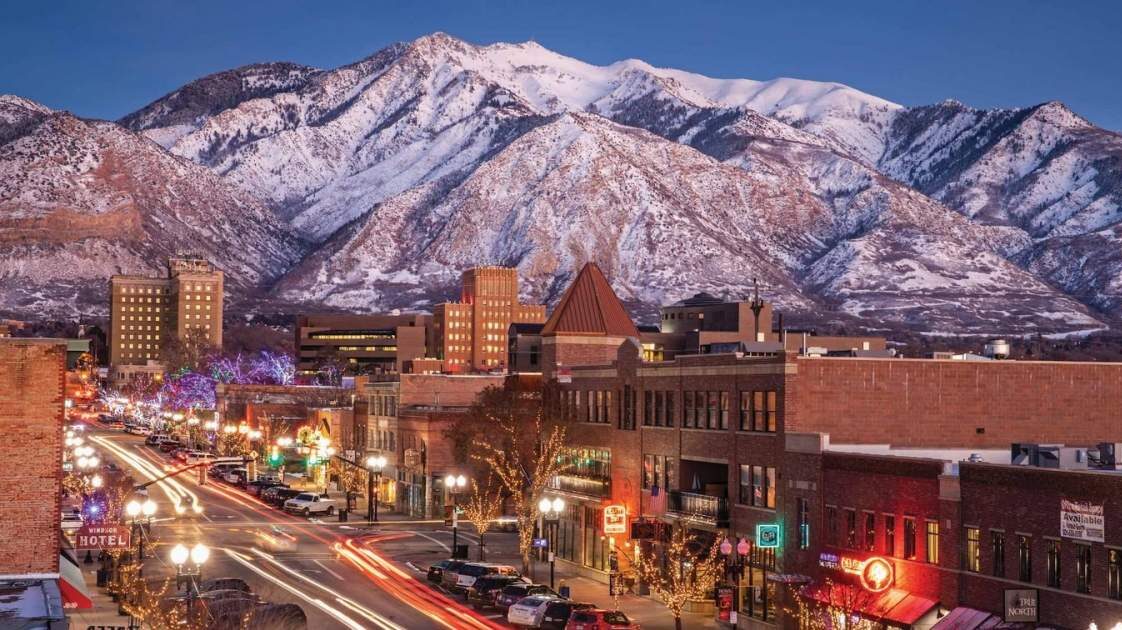
Ogden City is one of 15 Utah communities taking advantage of EDCUtah’s Community Match Grant program in 2024.
On May 13-18, 2024, Ogden City Business Development is hosting a week-long celebration of the aerospace & defense and advanced materials manufacturing industries. Acceler8 Wasatch Week was organized in partnership with Acceler8 Wasatch, 47G, Utah Advanced Materials Manufacturing Initiative, Weber State University, APEX Accelerator, Catalyst Accelerator Ogden, and Hill Air Force Base.
“Ogden is a community of makers – both of things and relationships that are crucial to the success of the aerospace and defense industry,” said Liesl Limburg, Ogden City business recruitment manager. “Ogden City boasts an environment that emboldens technology and innovation, supporting the current needs of industry while also looking ahead to the future.”
The goal of Acceler8 Wasatch Week is to inspire collaboration, innovation, and business growth to further the trajectory of Northern Utah’s growing role in national defense. Ogden City is using EDCUtah Community Match Grant funds to host one of the business networking opportunities available throughout the week.
EDCUtah Community Match Grants provide funding to cities and counties in support of specific economic development projects, professional development opportunities, and welcoming and belonging initiatives. Funding for the grant program comes from EDCUtah’s annual Golf for Grants fundraising tournament, which brings together EDCUtah investors for a day of networking on the links while supporting local communities.
Other 2024 EDCUtah match grant recipients include:
Application deadlines for the 2024-2025 fiscal year will be announced in the coming months. Community Match Grants are available exclusively to EDCUtah public sector investors. Explore the benefits of investing with EDCUtah.
_____
For additional information or to schedule an interview, please contact us.

For years, Utahns have received information from the news media and others regarding the water situation in Utah in terms of drought, limited supply, and the need to conserve water. Measurable progress has been made in water conservation, but incremental gains are no longer sufficient. The question facing Utah’s business and civic leaders is not whether conservation matters, but whether we are prepared to make the level of change required to sustain long-term economic and environmental resilience.
The current water situation is historic. This past winter was Utah’s warmest on record. It also brought the lowest peak snowpack on record, peaking three weeks earlier than normal. Utah’s largest reservoir, Lake Powell, is at its lowest level since initial filling in the early 1960s. In addition, the Great Salt Lake (GSL) continues to face decline driven by drought conditions that are further exacerbated by a trend of increasing temperatures.
To understand where meaningful change must occur, it’s critical to focus on how water is used. Statewide, approximately 60 percent of Utah’s municipal water is used outdoors. Most outdoor water is being applied to grass lawns. Unlike most indoor water use, which is treated and returned to the system, new research shows the 91 percent of outdoor water is depleted or fully consumed. Water depleted outdoors is lost through evaporation and plant uptake. That distinction is important because water that is depleted cannot be returned to the natural system to fill lakes and reservoirs or to benefit important ecosystems like the Great Salt Lake.
This is where the greatest opportunity lies. Reducing outdoor water consumption through efficient landscape design offers the most immediate and scalable way for individuals to conserve and reduce their water footprint. For businesses, developers, and communities, this is less about restrictions and more about aligning landscapes with Utah’s climate while maintaining functionality.
The opportunity is real and significant. A 2024 study showed that residential lawn watering alone depleted approximately 408,000 acre-feet of water in the GSL watershed in a single year, nearly three times the capacity of Deer Creek Reservoir. Cutting that depletion in half is an achievable goal, and the benefits that would accrue to Utahns in terms of water supply needs and GSL recovery would be tremendous.
Organizations like Utah Water Ways (UWW) are working to accelerate this transition. Through the Slow the Flow, Save H2O campaign, UWW is shifting the conversation from awareness to action, providing practical tools, incentives, and real-world examples to help homeowners, businesses, and municipalities make water-wise decisions easier to implement.
This year’s campaign is: “Water Runs Utah.” The purpose of this campaign is to remind Utahns of the importance of water in their daily lives and in maintaining a high quality of life. Water runs recreation, it runs food, it runs the economy, and it runs our future. But, what happens if water runs out? Even without drought conditions, parts of the state have water deficiencies. The GSL watershed and the Colorado River Basin are indicators of broader supply challenges that will shape business decisions and long term planning.
Tools are already in place. Incentive programs offset the cost of turf conversion and smart controllers. Planning tools like the Utah Plant Finder can help simplify water-wise design. Demonstration projects across the state show how landscapes “designed for Utah” can be implemented. The barrier is no longer information; it’s adoption at scale.
For Utah’s business community, water is not just a resource issue, it is a competitiveness issue. Proactive investment in water-efficient practices, whether in development standards, corporate campuses, or community partnership, will position organizations to mitigate risk, align with emerging policy, and contribute to a more resilient statewide economy.
_____
Bart Forsyth is a policy advisor for Utah Water Ways. To learn more about these programs and initiatives, visit slowtheflow.org or email info@utahwaterways.org.
For additional information or to schedule an interview, please contact us.
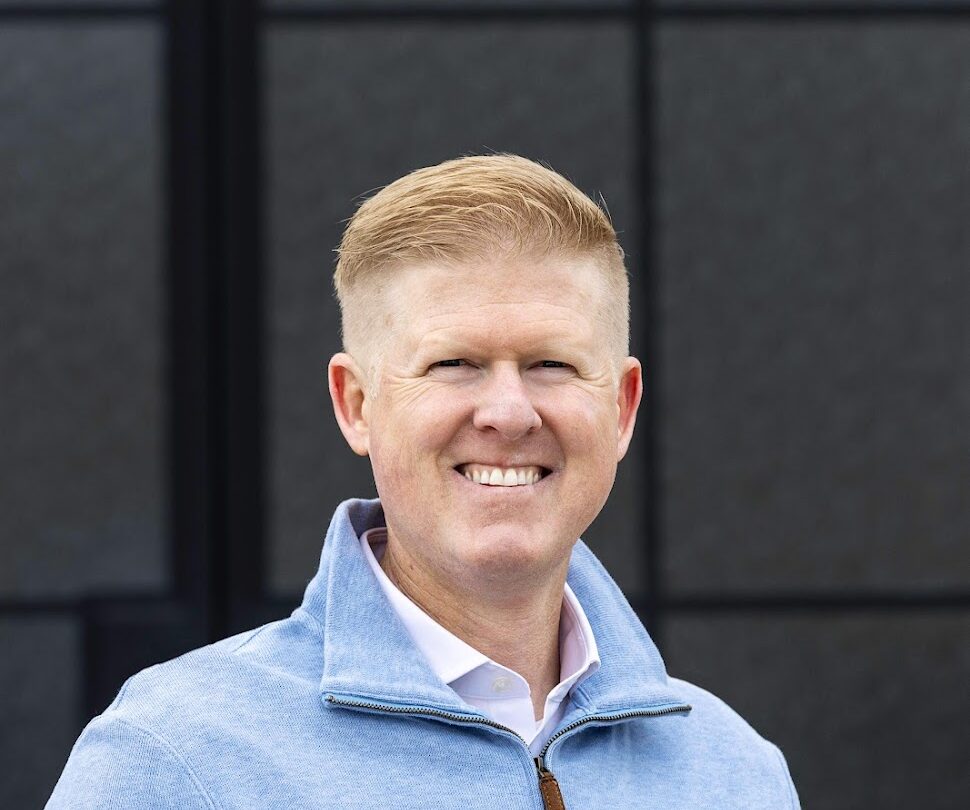
The Economic Development Corporation of Utah (EDCUtah) announced the appointment of Jon Hawkins as a strategic advisor, effective May 1, 2026. In this role, Jon will help support community development, advise cities on Olympic readiness initiatives, and foster economic development opportunities throughout Utah.
“We are thrilled to welcome Jon to the EDCUtah family,” said Ryan Starks, executive director of EDCUtah. “His leadership in the community, coupled with his strong business acumen, makes him a natural fit to support EDCUtah’s mission of creating a prosperous and resilient economy.”
Jon’s experience in Olympic readiness includes consulting, governance, and advocacy. He serves on the boards of the Utah Sports Commission, the Olympic Legacy Foundation, and the USA Climbing Foundation, and he also chairs the legislative Olympic Coordinating Committee. In each of these roles, Hawkins has helped shape projects, policy, and conversations around major events, stakeholder priorities, and the broader impact of sport.
“I’m honored to join EDCUtah as a strategic advisor for Olympic readiness,” said Hawkins. “Utah has an extraordinary opportunity to build on its legacy in sport and global engagement, and I look forward to leveraging my experience to help advance Utah’s vision, strengthen partnerships, support strategic growth, and shape what comes next.”
_____
For additional information or to schedule an interview, please contact us.

The Economic Development Corporation of Utah (EDCUtah) and the Governor’s Office of Economic Opportunity (GOEO) today announced the signing of a new memorandum of understanding to enhance and clarify their collaboration on economic development throughout the state.
“This new agreement plays well to the strengths of both organizations, and to feedback we’ve received from industry leaders and communities,” said Ryan Starks, EDCUtah executive director. “By leaning into those strengths and unifying our efforts, we’re opening a new, more efficient and effective chapter of economic development in Utah.”
This collaboration represents a proactive shift that enhances teamwork, specifies how the two organizations will collaborate, and reduces redundant effort. By pooling resources and expertise, EDCUtah and GOEO are better equipped to offer exceptional support to communities and growing businesses throughout Utah.
“This new agreement represents a forward-facing evolution for Utah and our aim to help people choose to stay, build, and grow here,” said Jefferson Moss, executive director of GOEO. “Our aim is to work together to provide a seamless, welcoming experience for any business looking to call Utah home, while also providing the best possible support to our local communities.”
The new agreement outlines shared responsibilities between the two organizations, including:
With the agreement signed, EDCUtah and GOEO will now work to operationalize their efforts with the ultimate goal of creating a stronger, more connected economic landscape for Utah to bring more economic development opportunities to Utah’s communities.
_____
For additional information or to schedule an interview, please contact us.
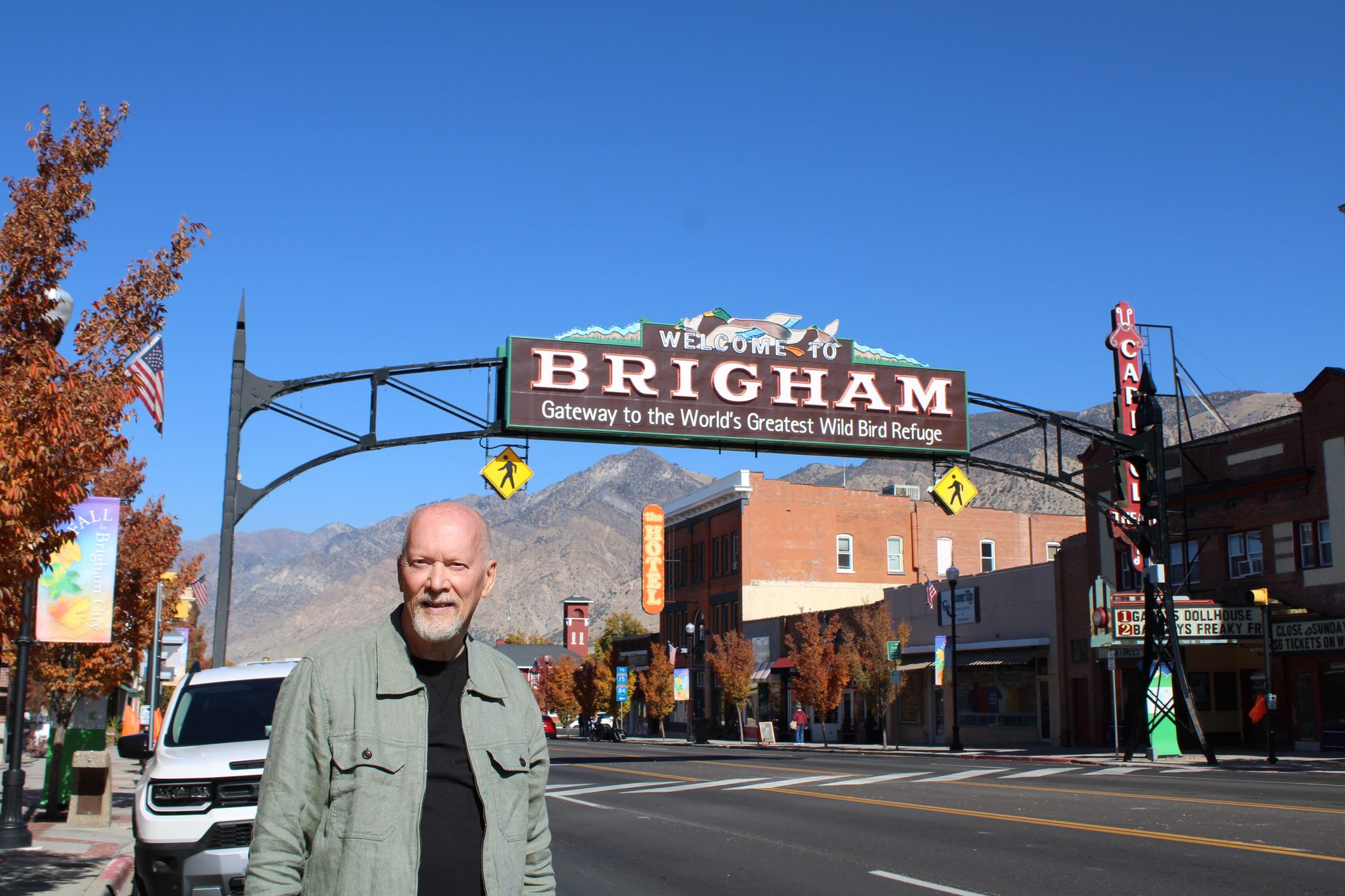
Brigham City Economic Development Director Paul Larsen has worn many hats during his nearly three decades of service — planner, problem-solver, and community builder. This year, he received EDCUtah’s Public Sector Leadership in Economic Development Award honoring his long-time efforts in Box Elder County. As he prepares to retire at year’s end, Larsen shares lessons from a career dedicated to helping his community thrive.
I’ve always approached the job as someone who lives here. It’s important to experience the consequences of your decisions. My first bit of advice is to live in the community you serve.
Second, see every project through residents’ eyes. Development always has impacts, and your responsibility is to minimize those where you can. If you can defend your work to the average resident, you’ll sleep well at night.
When I came here nearly 30 years ago, I didn’t know much about Brigham City. Growing up in Montpelier, Idaho, my only connection was driving over for peaches and pears during harvest season. My mother canned fruit. We would drive over here every year during harvest time, fill the car with peaches and pears, and drive home. Then she would spend two weeks bottling fruit.
Before my job interview, I arrived early and was struck by how much I liked the place — the Main Street, the parks, the mountains. It felt like home. Over the years, I’ve learned its history and what makes it special – from the co-op, the Academy building, and the bird refuge to the Fruitway, Spiral Jetty and Golden Spike National Historic Park. That deep appreciation helps me understand what matters to residents.
Have a broad background. My career has spanned natural resources, planning, land use, and economic development, and that mix has been invaluable. You don’t need to know everything, but you should know who to call when you don’t.
Get involved with EDCUtah, the Utah Alliance for Economic Development, and professional groups like the Urban Land Institute or American Planning Association or Main Street America. Keep learning.
Also, recognize that everything a city does contributes to economic development — from public safety and utilities to libraries and parks. Our city budget is about $100 million, and I like to say that’s our economic development budget. Because quality services make businesses want to be here.
Economic development is full of highs and lows. Recently, we worked for over a year on a food manufacturing project only to have it fall through. The reasons were out of the control of either the company or Brigham City, and it happened quickly. We went from having a press release, to suddenly…they’re not coming.
My advice is to focus on what you can control. Do your best on your end and accept that sometimes external factors will change the outcome.
On the bright side, persistence often pays off. Niagara Bottling is a great example — their first site fell through, but we worked with them to find a better option on Forest Street, and they’ve grown steadily since.
Nucor is another success story. They’re now on their third expansion here, but our first interaction almost went off the rails. During a site visit in 2005, after heavy rains, one of their reps called me from a flooded property asking, “What are you trying to sell me? I’m standing in 18 inches of water!” Fortunately, we worked through it, and the company has become a fantastic partner. The lesson: be flexible, understand company needs, and play to your community’s strengths.
In economic development, sometimes you just think to yourself, “I want this project so badly.” And you’re tempted to sugarcoat things. But in reality, you need to tell companies the hard truths. If a company needs more water or new power infrastructure, be upfront about costs and timelines.
Good projects appreciate transparency. It’s not their first rodeo, either. They know that development requires investment. When you’re honest, you can work together to solve challenges.
Main Street is the heart of the community, you know? A healthy downtown reflects a healthy city. I once read about a CEO who visited a town with boarded-up storefronts and decided not to locate there. The reverse is also true.
When we were working with Procter & Gamble on its Box Elder County site, their visiting team loved eating at the Idle Isle Café on Main Street. It was a beloved café with hometown cooking. They’d step outside after lunch, look around, and say how great our downtown looked. That impression mattered.
Although Idle Isle has since closed, downtown Brigham City looks better than ever thanks to grant funding and revitalization efforts combined with the hard work of merchants and business owners. You can’t replicate that atmosphere in new developments. It shows pride, and that resonates with both residents and prospective businesses.
I couldn’t have done my job without EDCUtah. When I was talking about my career path, EDCUtah was critical in bringing me along and helping me understand economic development.
Their business development team worked with us on major projects like Procter & Gamble, Niagara, and Nucor. Their research team provides the kind of demographic and market data a city our size could never compile alone.
And the events…the quarterly breakfasts, the opportunity to network and meet people. That’s just priceless. I tell people that of all our memberships, EDCUtah is the last one I’d ever want to lose.
I grew up wanting to be an astronomer, until my first semester of physics and calculus convinced me otherwise. My other love was the outdoors, so I earned a degree in fisheries and wildlife at Utah State University. I planned to become a bear biologist, but the job market didn’t cooperate.
There were two openings on the Interagency Grizzly Study Team up in Yellowstone National Park, a five-year project. I was one of five finalists, but I didn’t get picked. If I’d have got that job, I’d be a bear biologist today. Professor Barry Gilbert suggested I look into landscape architecture. I really liked what I saw, so I went back and got my master’s degree. That degree landed me in West Valley City as a planner.
Six years later, I applied to be Brigham City’s city planner. The job description never mentioned economic development, but when I started, they said, “Oh, by the way, you’re also our Economic Development Director.” I had no idea what that meant, so I attended classes at the Economic Development Institute for three years, joined the Utah Alliance and EDCUtah, and leaned on great mentors like EDCUtah’s Alan Rindlisbacher (now retired).
Economic development is a deeply gratifying field. Seeing how your work improves people’s lives — through jobs, infrastructure, and community vitality — makes it all worthwhile.
_____
“Building Together” highlights examples of the collective impact of your investment and EDCUtah’s work in communities across the state.
For additional information or to schedule an interview, please contact us.