Building Together: Tooele City Feels Like Home to Central States Manufacturing
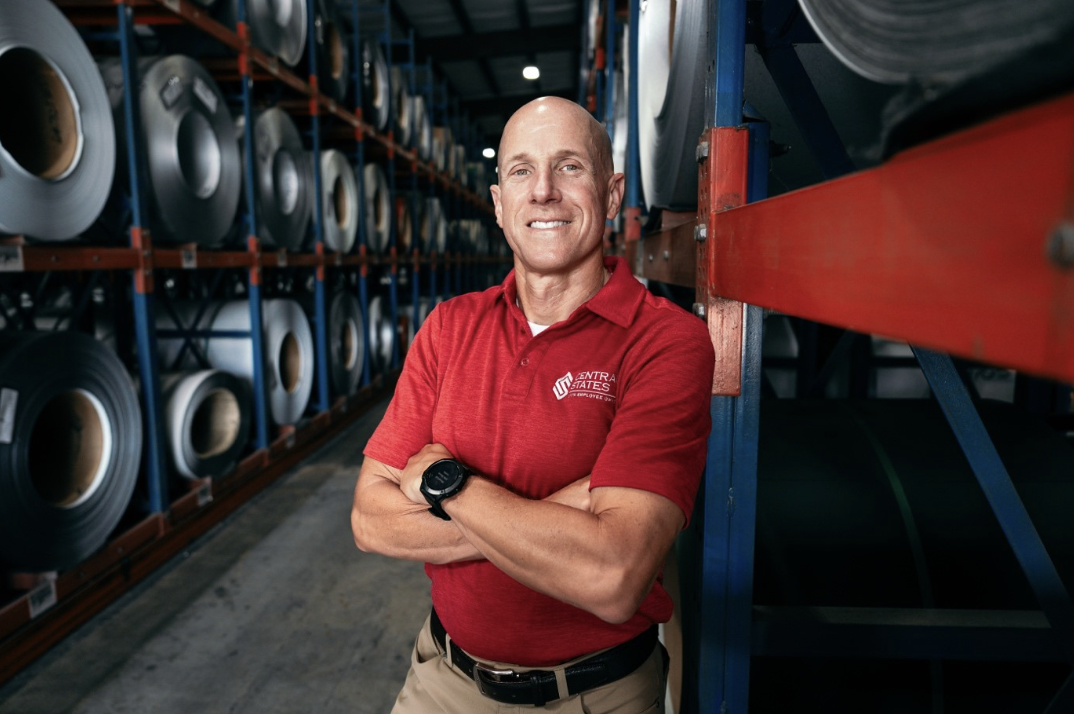
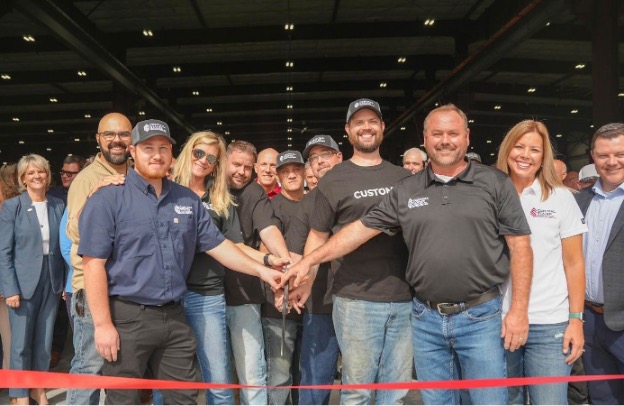
Manufacturing is a significant growth sector for the Utah economy thanks to companies like Central States Manufacturing. The company announced an expansion in Tooele City in June 2023, after working with EDCUtah and several Utah partners to evaluate locations for their next manufacturing facility.
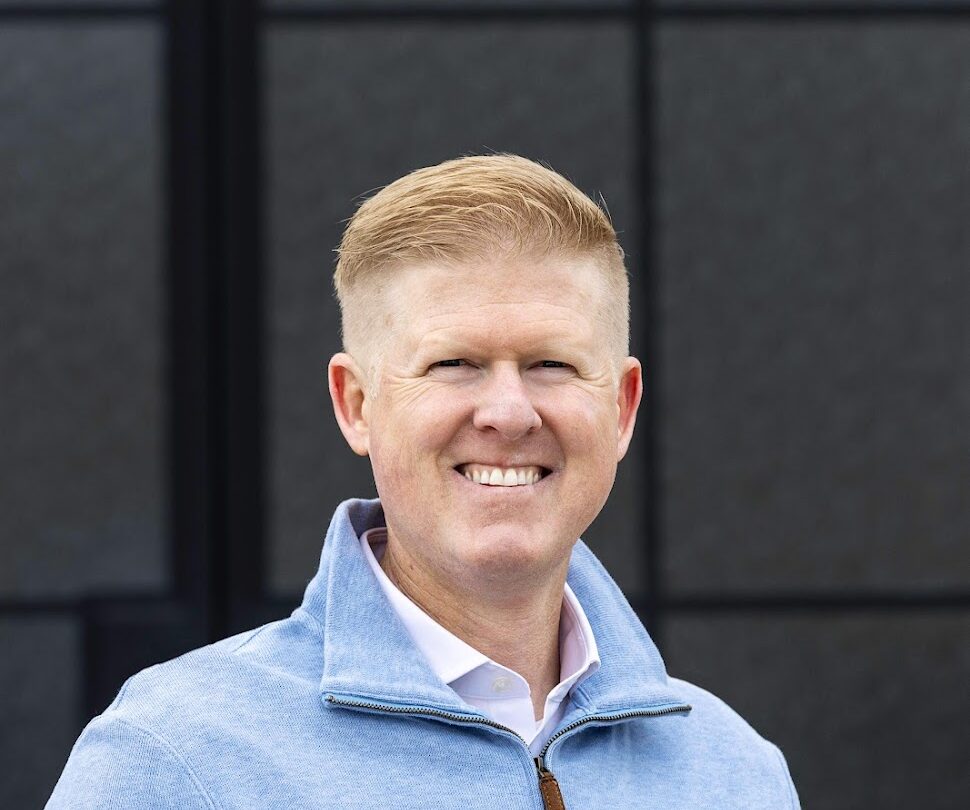
An employee-owned business headquartered in Arkansas, Central States produces metal building components for residential, commercial, and agricultural projects. We caught up with CEO Jim Sliker to learn more about the company’s values and why it selected Utah and Tooele City for its expansion.
We’ve got big growth goals, and we’ve been blessed with results. When I stepped into this role, we had revenues of $265 million. This year, we’re going to close around $900 million in revenue. We doubled the number of our locations, and we’re expanding our reach regularly. We also reached a point in our business where we have enough sales west of the Rocky Mountains to support a western expansion.
We narrowed our western expansion down to three states, and we ultimately selected Utah for two reasons: Utah offers valuable logistics advantages, and we felt we could be successful hiring in Utah. In this day and age, the hardest thing about growing a company is securing and retaining talent.
From the very beginning, we experienced successful and open dialogue with everyone from EDCUtah, Tooele City, and other parties. I’ve been able to talk about our needs, concerns, and constraints openly and honestly. All parties are interested in finding win-win solutions, and we continue to receive support as we establish operations.
Tim Ruger, our business unit president over the facility, and I put boots on the ground to get feel for the communities we were considering. I met with Tooele City Mayor Debbie Winn, her team, and other community partners. A local company was kind enough to show us their operations. I also participated in a local community service project.
I was super impressed with Tooele City Mayor Debbie Winn. She truly cares about her constituents, and she wants to improve their well-being. She is a partner with businesses, easy to work with, and very transparent.
Tooele fits our culture, and everybody I met had that “own it, can do, act in love” mindset. We thrive in small towns – and it’s also a growing area, so the number of potential candidates is there. After the visit, Tim and I looked at each other and said, “This feels like home.”
This plant is our 12th U.S. manufacturing facility, and it will be one of our largest at approximately 115,000 square feet. It will support our full product line for current large customers and new partners from the Rocky Mountains to the Pacific. Over the next five years, the company plans to invest over $25 million in the facility. It will have the capacity for three operational shifts, like most of our plants.
We named Jered Chandler the Tooele plant manager in September. Our current plan of record is to commission the site in May. In late March, we hope to do an open house, introduce ourselves to the community, do a big service project, and hold a recruiting fair. We might even do something fun like a community cookout.
We want to introduce ourselves and give people an understanding of who we are and what we’re about. We would then start hiring. Our commitment to Utah is to hire 150 jobs over the next five years. We’ll start out with a single shift of operation, but I’m excited to see that grow over five years, and I’m very optimistic about the plan we’ve got together. We’re happy to be part of the Utah family.
We’re a purpose-driven company. Our purpose is to provide well-being and financial freedom for employee owners and their families. We really live by it. It’s our true north. Part of this approach requires a meaningful compensation and benefits programs. It also takes training and development to help employees be all they can be and to find satisfaction in their jobs.
Employee ownership is our primary vehicle to financial freedom. We all have skin in the game and a stake in the outcome. Employees are an owner on day one of employment. At the end of every year, our share price is determined by a third-party, independent, unbiased trustee. Our employees get a contribution of stock, based on a percent of their earnings.
This keeps us focused on customer service. We operate in line with our values, and so that we can successfully grow the business and the share price—which accumulates wealth for all the employee owners.
Our values can be described in three simple phrases: Own It, Can Do, Act in Love.
We have a commitment to the customer, the company, and each other before self in that order. We’re trying to make raving fans out of our customers by being easy to work with, having a high degree of quality, and caring about our customer’s business as much as we care about our own.
We want to be reliable and do good work. We’re not perfect by any means. There are going to be constraints, there will be things that go wrong, and there will be things we don’t do well. We understand the need for change and we’re open to it. We take pride in what we do, and we try to understand root causes to get better.
We delegate the decision-making authority to the frontline employees who serve our customers. Our people can determine pricing, address issues, and approve reimbursements. We trust the owners to do a good job for customers.
When our customers visit our plants, the first thing they notice is that our people care about their work and the people around them. Our customers love their delivery drivers, they love their inside-sales people. That’s because we also strive to act in love. The word love for us is an everyday feeling. With every interpersonal interaction we have, either inside the company or externally, we get to choose how we act. We choose patience, kindness, and humility.
Those are our values, the foundational pillars of our culture—and that’s what makes us special.
Central States is the first company that I’ve worked for that’s employee owned. I’ve been here 11 years, but I don’t think my personal strategy has had to change. My philosophy and actions—transparency in the business, sharing all the scorecards, communicating financial results to all staff—already align with employee ownership. It’s my job to serve the people here.
The biggest difference is that when we set strategies, we evaluate whether it will help us provide well-being and financial freedom for employee owners and their families.
We have never had a layoff, nor would we ever, unless it was to truly protect the company from catastrophic conditions. We’re in the construction industry. It is very cyclical, and we go through ups and downs. But during COVID-19, for example, we never even talked about layoffs. That creates some challenges in the business in how we deal with business cycles.
The other big change for me is the passion. I love that people in this company speak freely. They challenge the business. They challenge me. That creates such a great dynamic inside the organization.
_____
“Building Together” highlights examples of the collective impact of your investment and EDCUtah’s work in communities across the state.
For additional information or to schedule an interview, please contact us.
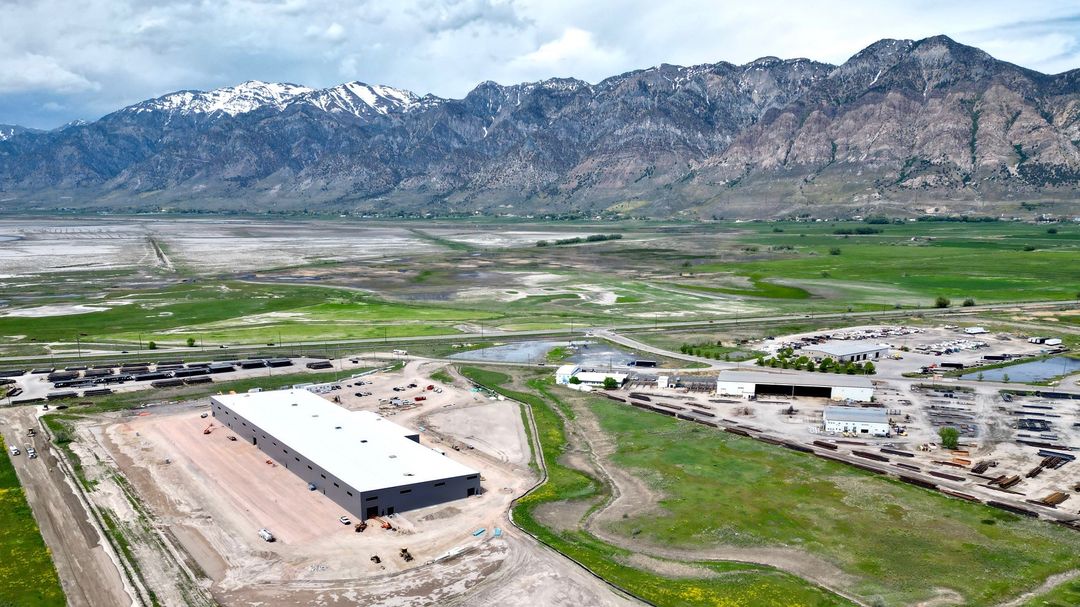
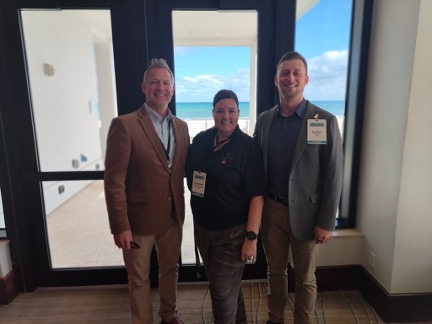
EDCUtah’s Development Ready Communities (DRC) training program includes a primer on economic development for Utah elected officials at the city and county levels. Greg Bisping, EDCUtah vice president of community strategy, moderated a recent session. He was joined by a diverse group of presenters from EDCUtah’s investor community:
The training covers many topics in detail—but here are four things elected officials should know about economic development in Utah.
One key concept discussed in the training is the balance between the goals and methods of economic development at the state and local levels. Understanding that relationship allows all community leaders to better leverage their own roles and the roles of other stakeholders.
Paul Larsen, community and economic development director of Brigham City, explained that relationship this way: “We all have the goal to grow, diversify, and improve economic and social conditions in our state and communities. How we get there can differ. The State prioritizes corporate growth and high-paying jobs that contribute to income tax. That drives the focus of their efforts and how they structure their incentive programs.”
When it comes to local government, the tools and targets change, Larsen said. “Sales and property taxes are the main sources of revenue for municipal governments. High-paying jobs are great for a community’s quality of life, but those jobs are not necessarily a boost for city budgets.”
Local governments often need support recruiting and retaining local retail and other small businesses. Jen Wakeland, strategic development director for Beaver County, emphasized the value of collaborating across jurisdictions.
“I take a holistic approach. A win for Milford City is going to have a positive impact on Beaver City and vice-versa,” Wakeland said. “The County’s role is to make connections with all of our stakeholders, to work out ahead of time what our economic development priorities are. Economic development is best served by partnership and collaboration between cities and counties. It’s not a competition.”
Marcia White, the regional economic development planner for the Wasatch Front Regional Council (WFRC), emphasized the critical need for a comprehensive economic development plan. As one of the seven associations of governments (AOGs) in Utah, WFRC plays a pivotal role in shaping the state’s economic future by crafting a regional Comprehensive Economic Development Strategy (CEDS) every five years.
This strategy is a key component of Utah’s broader economic opportunity ecosystem, designed to support local cities and counties in their economic development initiatives. White highlighted that WFRC, along with other AOGs across the state, serves as a valuable resource for communities as they develop or update their economic plans.
White also underscored the importance of coordination among regions and communities to maximize the effectiveness of economic development efforts. With Utah’s continued growth, aligning infrastructure investments, development patterns, economic development site selection, and job opportunities is essential for creating vibrant, economically thriving communities where quality of life remains high.
Other speakers stressed that community-level plans should align and support a given city or county’s general plan. Brigham City’s Paul Larsen stated that general plans should include an economic development component, and that economic development efforts should be considered an implementation strategy for the general plan.
Jason Burningham, principal and owner of LRB Public Finance Advisors, and Ben Hart, executive director of the Utah Inland Port Authority, spoke about the use of tax increment financing (TIFs), Community Reinvestment Agencies (CRAs), Redevelopment Agencies (RDAs), and associated Public Infrastructure Districts (PIDs).
The general discussion focused on managing the pros and cons of TIFs. Burningham and Hart both noted that TIFs are useful for improving public infrastructure, something that companies find attractive when considering an expansion in Utah.
While TIFs can attract new businesses, they can also cut into city revenue. “There’s only so much property tax to go around,” one speaker noted. TIFs often require a considerable amount of discussion and negotiations with all stakeholders, such as schools and other districts. The Port Authority offers communities a distinct advantage in that it negotiates with all stakeholders in developing a TIF. “This is more efficient, and it can take local officials off the hot seat,” Hart said.
Hart also noted that the Port Authority, which has 11 project areas currently around the state, doesn’t dictate strategy. “We try to support the long-term goals of local communities. We look for communities that are ready and willing to focus on logistics projects.”
Burningham stressed that all incentives should be performance-based. Echoing the discussion about planning, he said that a good plan puts in place policies that can help communities make incentive decisions in a consistent, transparent, and effective manner.
Rounding out the session were Brad Simons, gas development services consultant for Enbridge (formerly Dominion Energy), and Ginger Chinn, executive vice president of public policy & government affairs for the Salt Lake Chamber.
Simons highlighted the valuable resources available to municipal leaders through infrastructure partners. “Infrastructure – whether it be gas, electrical, water, internet, and more – can be complicated,” Simons said. “Your partners are ready to answer questions and discuss project timelines, so please reach out.”
Chinn introduced some of the statewide initiatives and organizations available through the Salt Lake Chamber, including legislative policy efforts and the Women’s Business Center of Utah. “The Chamber is a statewide organization, and we have members from all 29 counties in Utah. Please let us know what issues you face, so we can better represent the needs of your business communities to Utah’s Legislature and executive branch,” she said.
A recording of the elected officials training is available by request for EDCUtah investor communities. We encourage you to share this article, or the recorded training, with the elected officials in your community. Want to learn more about these and other EDCUtah community investor resources? Contact us at connect@edcutah.org.
_____
“Building Together” highlights examples of the collective impact of your investment and EDCUtah’s work in communities across the state.
For additional information or to schedule an interview, please contact us.

Infrastructure, branding, greater awareness nationally and internationally – the benefits Salt Lake City and Utah gained from hosting the 2002 Winter Olympic Games were significant. What’s in store for 2034? Even more!
The selection of Salt Lake City and Utah as the host of the 2034 Olympic and Paralympic Games is the result of decades of hard work, visionary leadership, and strategic investments. Many organizations represented on the Salt Lake City-Utah Committee for the Games are also EDCUtah investors – including Salt Lake City. We caught up with Salt Lake City Mayor Erin Mendenhall for her perspective on how the 2034 Games will contribute to the continued economic prosperity of Utah and its capital city.
Salt Lake City is at the heart of the Games, from the medals plaza to several of the events. Also, we hope to be hosting the International Houses from across the globe.
We haven’t parsed out how much of the $6.6 billion impact in the report is directly attributed to Salt Lake City. Those are some questions we’re in the process of examining. I do believe we’ll see the majority of the economic impact cited in the report centered on the Capital City.
Both the City and Smith Entertainment Group have expressed keen interest in the potential of locating the medals plaza in the sports, entertainment, culture, and convention district.
Since we started this work in earnest in 2020, I’ve been beating the drum that we shouldn’t have another temporary medals plaza. The City owns Gallivan Plaza, where the 2002 medals ceremonies took place, but I’m afraid Gallivan is just not big enough. We are an Olympic city, and I would like to see a permanent legacy site for the celebration of the Games.
We stand out the world over for maintaining and using our Olympic sports facilities, and we should also have the permanent legacy of a medals plaza. I hope to see that in the district.
Yes. I think we should set our sights as Utahns to becoming an ongoing host of the Winter Games.
We know that the Salt Lake City-Utah Committee for the Games has budgeted just over $31 million in future capital investments. Since 2019, the State Legislature has invested a total of $94.6 million, some of it ongoing and some of it one-time, for the maintenance of the sports facilities.
Of the $31 million, I hope we’ll see funds centered around the heart of the Games here, between the Olympic Village at the University of Utah and the medals plaza and sporting events that will happen downtown. Again, the investments should happen with the idea of permanence in mind. That could include, on a tertiary level, the opportunity to expedite some of our transit plans.
As a city, we finished our Transit Master Plan update last year. We know that we’re the fastest-growing state in the nation by population percentage. We know our downtown residential population is doubling to 10,000 in a four-year period. Transit investments are one of the biggest-impact investments that cities can make for quality of life and affordability. Transit investments also make a lot of sense as we saw in 2002 for the hosting of major global events.
I hope there’s potential to attract federal investment on the implementation of our expanded transit network as we build toward 2034. This includes multiple modalities such as bus and light rail.
The intangible benefits that include our identity nationally and globally are profound. As Utahns, we know the impact that the 2002 Games had on our identity, because of our lived experience. We witnessed the economic impacts, population trends, and community asset investment that were spurred by the Games.
I don’t think we can underestimate the breadth of intangible benefits that we will get from becoming a multi-Games host. Similarly, we’re only beginning to contemplate the economic and identity impacts of being a two-team capital city, with our basketball and hockey franchises. It would be an interesting case study in the coming years to measure the impact of these cumulative sports “anchors” making their home here in Salt Lake City. It is powerful that the International Olympic Committee is looking at us as a reliable and consistent host of the world.
Our greatest asset is the growing diversity of our people. The more diverse our city becomes, the stronger and more welcoming we become. The Games are not only going to showcase how different we are from 2002, it will also help us to continue to grow.
The endorsement of our city and state as represented by future Olympic Games is a shot in the arm for continued economic stability, and it will help attract the key industries that we want and need to grow here. And the Games are fun!
In the divided world that we find ourselves in, I know the Games can unify us. I’ve seen this in Paris when we all marveled at Celine Dion’s performance to spectacular displays of athleticism in women’s rugby. It’s not just the experience of sport, but particularly Olympic and Paralympic sport, that brings us together as a global community in a way that nothing else does.
Working over the next decade toward hosting the 2034 Games does something for our community. To be planning on welcoming the world, literally building toward that goal, talking to our kids about how they can be a part of that welcoming or perhaps even representing our nation in these sports – that does something to a community. It’s like when a family focuses on volunteerism. Showing up for those opportunities to give back to the community affects the character of that family.
It’s not a reach to say that the way that we prepare is going to build our community. My biggest hope is to lift our youth up. We have the youngest demographic in the nation, and there is a tremendous amount of potential in our young people.
These Games should be a major catalyst for our youth to go for their dreams. And I don’t just mean that they should have sporting dreams. I mean that their reach to the globe could include anything from STEM to arts to anything they want to do. The Games should connect them to more opportunity on a global scale if we do this right.
_____
“Building Together” highlights examples of the collective impact of your investment and EDCUtah’s work in communities across the state.
For additional information or to schedule an interview, please contact us.

The Utah Inland Port Authority (UIPA) is developing strategic and sustainable logistics-backed economic development solutions to enhance the lives of Utahns and establish Utah as a global industry connector. In 2023, Jaime Hernandez joined EDCUtah as the UIPA project manager, a new role on the business development team created by a partnership between EDCUtah and UIPA. In this role, Jaime manages corporate expansion and recruitment projects for UIPA sites.
In this Q&A, Jaime spoke with UIPA executive director Ben Hart about the impact of the Port Authority on Utah’s economic development.
Ben: Our premier area encompasses the 16,000 acres near the Salt Lake City International Airport in Salt Lake County, but we have sites across the state and bring to market the best of what the state can offer. We’re going to be – and have been – aggressive in site development. Part of this effort is based in helping communities around the state identify what their economic development priorities are and helping them achieve those goals. On the other side of the equation, we are and will be showcasing sites that site selectors and companies will find very attractive, all across Utah.
There are examples from the northern, central, southern, and western parts of the state. In the north, Box Elder County’s project area is seeing the construction of Lakeshore Learning’s assembly and distribution center. That’s a 1.2 million-plus square foot facility that will employ 540 workers. We were able to help the local government put together a compelling incentive that landed that opportunity.
In central Utah, we’ve been working with Northrop Grumman here in Salt Lake City. That incentive has landed. And we’ve been working with other companies to make sure they have good rail access for their operations in the Northwest Quadrant.
In southern Utah, BZI Steel in Cedar City will be hiring up to 800 people, and the company will now be able to get its product shipped right out the door via rail. At the same time, we’re able to help get their site built out with additional infrastructure needs. And in the west, we have a couple of projects underway in Tooele.
All these sites represent a diverse offering we can present to site selectors and companies.
Ben: UIPA is currently collaborating with a company called CPCS to improve Salt Lake City and Utah’s logistics infrastructure. Their efforts include analyzing commodity flows, assessing current infrastructure, and formulating logistics strategies on both regional and statewide levels. This plan aims to enhance road and rail systems for better freight movement, perform SWOT analyses in strategic areas, and map out commodity flows. CPCS will also build essential partnerships, engage with communities via open houses, and provide in-depth analyses and strategies for logistics enhancement. Additionally, they will develop tools for continuous analysis and stakeholder engagement.
This is going to be part of our value proposition for the state for the next 20 to 30 years. Right now, Utah is heavily dependent on road-based transportation. Our goal is to make rail a more viable option across Utah. That means better access, better pricing, and better service.
We’re also looking at the air transportation component, including drone delivery services in advance of the 2034 Winter Olympics if we are lucky enough to get them.
Overall, Utah has very strong international and regional airports, we have great road access with I-80 and I-15, and we have unique rail capabilities as well. We want Utah to become the logistics capital of the United States, but we won’t get there just by using roads. We’ve got to have multi-model capabilities. When you bring all those things together, as the planning process will help to do, Utah will have a full suite of options for those companies with sophisticated logistics needs.
Ben: The Inland Port gives Utah a significant advantage when it comes to attracting, recruiting, and helping businesses to expand. Two of the most important capabilities we provide to site selectors and companies are: 1) streamlined incentives that incorporate all the downstream taxing entities, and 2) assistance with infrastructure development through our infrastructure bank.
There’s a speed-to-market element here. We focus on industrial property, and when you’re talking about three percent vacancy in those properties nationwide, it’s really a question of how fast you can get new buildings vertical. We work with local officials to help businesses get through permitting and entitlement processes, put together solid incentive offers, and lastly, help with infrastructure where needed – all these aspects are part of the value we bring.
Ben: We’re really pushing for industrial projects. We’re trying to incentivize and target advanced manufacturing companies first and foremost. That will naturally lead to warehouse distribution as a secondary follow-on.
Our project areas, each with unique characteristics, are designed to attract diverse industries such as logistics, manufacturing, agriculture, and technology. These areas leverage their geographical advantages and resource availability to support economic activities tailored to their specific strengths and local infrastructure.
Ben: We’ve got a fully capitalized $65 million infrastructure bank that gives us the ability to create public financing options very quickly. The bank uses a tax increment approach for funding.
We’re trying to remove barriers, whether that’s lining up permits, or getting incentive packaging on the table quickly, or public financing options – those are all things that we can expedite. Our whole pitch with “speed to vertical” is that we can shorten the time needed in any of those key needs.
UIPA has an incredible toolkit to support businesses looking to expand or locate within one of our project areas.
In Utah, we have the Authority Act, which facilitates the use of tax differential in specific project areas, guided by local statutes and our project area plans. This includes funding for affordable housing, development of land and intermodal facilities, public infrastructure, and environmentally friendly construction. Additionally, we can provide funding in our project areas through the Authority Infrastructure Bank (AIB). Typically, the AIB will focus on projects that generate revenue and serve the public interest, aligning with long-term economic growth objectives.
This comprehensive approach, encompassing bank loans, area incentives, and tax differential reinvestment, supports businesses in achieving strategic and sustainable development goals in Utah.
Ben: The Port incentives are coming from the local property tax increment. They can be layered with the State’s incentives offered by the Governor’s Office of Economic Opportunity. So, we can put attractive, “stacked” incentive deals on the table, hand in glove with the State.
This means the site selector or company doesn’t have to negotiate with every tax entity. We can work with all those tax entities in a streamlined way to provide the client with one contract process through the Inland Port. In other words, they don’t have to go work with a bunch of other downstream tax entities. Again, we’re able to streamline the entire process.
Ben: Today, we can implement Infrastructure Bank loans, incentive processes, and other public financing tools in 60 to 90 days, in contrast with a lot of jurisdictions across the country where those processes might take two to three years, particularly when you’re negotiating with downstream tax entities. Our board can turn around decisions that quickly.
In terms of construction, permitting-, and entitlement-support timelines, it varies by location. With that said, we stress to our communities that they need to be ready for development. Those are things we’re working on now. For example, we’re having infrastructure conversations upfront, so these sites are more ready for development.
Some project areas are further along the process while others are still in a greenfield state. The Northwest Quadrant has some buildings already, while other locations need more work to get to site-ready status. For example, Cedar City is dialed when it comes to logistics, but has some other needs. They should be ready to start building within the year.
Ben: It’s a little bit of everything. For example, at the Global Logistics Center in the Northwest Quadrant, they can support the entire design and build process, or they can lease a company acreage and the company can bring in their own construction resources.
Ben: We’re thrilled about working closely with EDCUtah. It’s a game-changer for us and the wider community. EDCUtah is key to helping us boost economic growth across the state and connect more deeply with our communities. Together, we’re focusing on bringing in new businesses by tapping into EDCUtah’s strengths in business development, community strategy, and site selector marketing. This partnership is about making Utah a standout place for logistics and tech, all while looking after our beautiful state.
It’s more than just a partnership; it’s a powerful way to make sure our efforts really count, boosting Utah’s economy and making life better for everyone here. We’re on the same page about making a big, positive splash, and honestly, I can’t wait to see where this collaboration takes us.
_____
“Building Together” highlights examples of the collective impact of EDCUtah and our investors in communities across the state. Do you have a story you’d like us to share? Email connect@edcutah.org.
For additional information or to schedule an interview, please contact us.

Recognized as one of the most important economic opportunities in Utah’s history, The Point consists of 600 acres of state-owned land that is being built into Utah’s Innovation Community.
The Point of the Mountain State Land Authority (Land Authority) and their private-sector master developer The Point Partners (comprised of partners Lincoln Property Company, Colmena Group, and Wadsworth Development Group) recently signed an agreement for Phase 1 development. The first 100 acres will include a walkable promenade; Central Green; regional trail connections; transit-oriented development; a balanced mix of jobs, housing, retail, shopping, entertainment; and more.
In this Q&A, Alan Matheson, executive director of the Land Authority, and Scott Cuthbertson, president and CEO of EDCUtah, share their thoughts on the project.
Scott: The Point is going to be the largest corporate campus between Salt Lake City and Utah County, offering an urban setting with a great laborshed. It’s a reasonable drive to the airport and it’s in the heart of Silicon Slopes, a thriving national tech hub.
Unlike private-sector developments with multiple owners, The Point is owned by the State. As a result of a robust process to gather input from the public on what they’d like to see at the site, there are ambitious goals in place around walkability, sustainability, innovation, open space, housing, and economic opportunity. For a company that’s looking to attract a lot of talent, The Point is where that talent can live, work, and play—surrounded by great amenities.
Alan: The Point is a premier location in a premier state, and it has a compelling and achievable vision to build on Utah’s advantages. That vision is based on sophisticated analysis, creative planning, and input from thousands of Utah residents—16,000 people to date. We have the advantage of being a blank canvas, so we can achieve the vision more easily than redeveloping an already developed site.
Any smart investor is looking for proven and sustainable returns. That’s Utah, with our economy, workforce, lifestyle, and sound, business-friendly public policies. At The Point, we want to reflect the best of Utah.
Alan: We advance State initiatives and priorities, so we’ll focus on the State’s targeted industry clusters, including life sciences, energy, technology, and aerospace & defense. But it won’t be limited to those areas. We welcome all companies that will be a good fit, and we recognize that there is real value in finding innovation at the intersection of different industry types.
We’re creating a place that will bring together people of different backgrounds to share ideas and find solutions. All aspects of this project are focused on doing things in better ways. We’re working very closely with the Utah System of Higher Education to bring academia and the private sector together to create, nurture, and commercialize ideas that generate economic development and solve some of Utah’s greatest challenges.
Scott: This innovation aspect will be appealing to site selectors and companies. The Point will be a place where companies can join a dynamic ecosystem of innovators, entrepreneurs and educators. It will be a great place to create and commercialize ideas.
Alan: Businesses want a site that’s easily accessed by employees and customers, and well-connected to its region. That’s happening here. FrontRunner—the commuter rail line that extends from Ogden to Provo—will have a new station immediately adjacent to the site, along with upgrades that will make FrontRunner more efficient throughout the system.
In addition, light rail will connect to FrontRunner, go through The Point, and on to Utah County. A mobility plan is under development to allow people to move around the site conveniently. This includes a circulator and apps that will help you find the easiest and least expensive way to get around The Point. With these strategies, this site will be very connected to the region.
Beyond that, the State is investing in and working with our utility companies to install critical backbone infrastructure—roads through the project, water, sewer, electrical, gas, fiber, and everything else that’s needed for a successful community.
And we’re not just looking at the infrastructure we need today. We are planning for a potential vertiport as advanced air mobility continues to develop as a viable transit option.
Alan: This will be one of the premier shopping areas anywhere in the West. The Promenade will be a walkable street with ground-floor retail and residential and commercial space. There will be an event center. Convergence Hall, probably the first building constructed, will be the innovation heart of the project. It’s being designed and programmed right now by The Point Partners and the Utah System of Higher Education.
I’m also really excited by the River-to-Range Trail, a multi-use trail that will connect the Jordan River Parkway to the regional trails east of Interstate 15 (I-15). It will be a critical link connecting the most expansive trail system west of the Mississippi. People will love it for recreation and for active transportation—commuting on their bikes or e-bikes.
“We think placemaking and business attraction go hand in hand. Businesses want the best talent, and the best talent wants to live in the best places. We’re building a place that will attract the workforce of today and tomorrow.”
Scott: I’m excited about the concept of live-work-play. You’ll have your needs met locally, and your family can probably do fine with only one vehicle in the garage for those occasional longer-drive needs.
I also like the emphasis on open space. Lots of green space is programmed throughout the project. It will be exciting for you, on your lunch break, to take a quick mountain bike ride in the nearby hills.
Alan: Demolition on the site is now complete. That creates a blank canvas on which to build. The plan is to start the backbone infrastructure in the spring of 2024. That will include key roads, such as connections to I-15 and Bangerter Highway, and electrical, gas, water, sewer, storm water, and so forth.
The Point Partners will then identify parcels to develop within Phase 1—the first 100 acres. We expect to get their first applications in the fall of 2024, and that they’ll be able to start site work and vertical construction in 2025.
We expect Phase 1 development will entail a combination of build-to-suit and spec construction, including office, residential, retail, and entertainment. We’ll probably see the first occupancy in 2027. From there, it’s just going to take off.
Phase 1 will be outstanding, and most business development opportunities will be able to fit within its framework very well. We also imagine opportunities that will come along that fit better outside of Phase 1—think of sub-campuses within the remaining 500 acres. We have a process in place so that The Point Partners and the Land Authority can work together to support those opportunities.
Scott: We will market the product to our network of site selectors nationwide and to decision makers in certain international markets. Using our in-house research and marketing teams, we can help augment the efforts of the team at The Point and coordinate with the master developer. Lastly, we can help companies navigate the State’s incentives program run by our partners at the Governor’s Office of Economic Opportunity.
Alan: EDCUtah is a valuable and valued partner. They have the team, the resources, and the relationships to share the opportunity The Point represents. EDCUtah can facilitate that important connection between companies and place.
Scott: Our mission is to catalyze strategic economic opportunities and quality jobs in Utah, and that’s what The Point is all about. The Kem C. Gardner Institute forecasts that, at the end of the buildout of the project, The Point will bring 46,000 jobs, $4.5 billion in annual earnings, and $7 billion in annual GDP. In short, this is going to be a key economic hub for the state, and our stakeholders care a lot about seeing that kind of prosperity.
Alan: As a State project, The Point is designed to provide benefits for all residents. In part, that’s the economic activity Scott mentioned and the new tax revenues that can fund priorities such as infrastructure, social services, and education throughout the state. It’s also about creating opportunities for businesses that care about Utah and will invest in our communities.
Ultimately, it’s about investing in Utahns’ quality of life. The Point will be a place where anybody can come with friends and family to enjoy a bike ride or a stroll in a beautiful outdoor area, interact with public art, get something to eat, or enjoy a concert or performance. We think it will be a great gathering place for all. The Point will be known globally and loved locally.
_____
“Building Together” highlights examples of the collective impact of EDCUtah and our investors in communities across the state.
For additional information or to schedule an interview, please contact us.

Throughout the year, EDCUtah brought you Utah’s top economic development highlights as they’ve happened. As we close out 2023, here’s our list of news worth celebrating. We’ve arranged them in roughly chronological order, but we’d like our readers to weigh in.
The start of 2023 was also the start of new tenures in leadership at the Economic Development Corporation of Utah (EDCUtah) and the Governor’s Office of Economic Opportunity (GOEO). Scott Cuthbertson joined EDCUtah as president and CEO, succeeding Theresa Foxley, and Ryan Starks took the reins as GOEO executive director, succeeding Dan Hemmert.
In tandem with the EDCUtah leadership change, our organization added four new staff members in the third quarter, with three more hires planned for the fourth quarter. Val Hale also joined EDCUtah as a community ambassador consultant. These changes support the implementation of EDCUtah’s new five-year strategic plan, which builds upon several decades of success with a vision focused on long-term economic prosperity. EDCUtah remains true to our core competencies—economic research, professional project management, strategic marketing, and community strategy—while sharpening our focus on strategic recruiting and economic opportunities by sector and geography.
Utah’s economy was ranked No. 1 in the nation by the American Legislative Exchange Council and U.S. News and World Report. These rankings follow more than a decade of similar accolades and 30 years of intentional work by economic development partners across the state. They also set the stage for Utah’s next phase of economic opportunity, as Scott Cuthbertson wrote for the Deseret News.
The push to increase the number of expansion projects in all regions of the state has been a multi-year effort, and 2023 saw some encouraging progress. Throughout the year, “Team Utah” (EDCUtah, GOEO, and local/regional partners) successfully attracted and retained companies across the state. Rural Utah landed 12 projects in manufacturing/distribution, food processing, outdoor products, and other sectors – the highest number of rural projects in a calendar year yet. Some notable wins included Schreiber Foods, C & J Specialties, and Kent Outdoors. Others such as Procter & Gamble and Lakeshore Learning are mentioned below.
In February, Procter & Gamble (P&G) announced continued expansion of its presence in Box Elder County, with plans to add 300 jobs and invest $400 million. With more than a decade in Utah, P&G is a steady growth agent and has spent or committed more than $1 billion in capital expenditures in that time.
The growth story started in 2007 when the company announced plans for its first greenfield site (e.g. from the ground up) in the United States in more than 30 years, with an initial investment of $300 million. Production started in Box Elder in 2011, and expansion followed in 2015 ($400 million) and 2020 ($310 million). Currently about 500 people work at the Box Elder facility.
In February, Texas Instruments announced plans to bring up to 800 new high-tech jobs to Lehi during the next 20 years. Capital expenditures associated with the project are $11 billion, the largest investment resulting from a corporate recruitment project in Utah history.
To support this and other CHIPS Act-related projects, in October, the University of Utah launched the Utah Network for Integrated Computing and Semiconductor research and education (UNICOS). UNICOS convenes major employers, higher education, and community partners to collaborate on workforce training and cutting-edge research to create a highly skilled semiconductor workforce and spark innovation. Led by the University of Utah, UNICOS is a network spanning the entire state. ECUtah is pleased to serve on the UNICOS government advisory board.
EDCUtah, the Center for Economic Opportunity and Belonging (CEOB), and other partners released a Toolkit for Building Belonging in April. The digital toolkit offers a collection of proven practices for building cultures of belonging in the workplace. Activities in the toolkit were curated from national sources, Utah focus groups, and Utah employers, and they were vetted by leaders from Utah’s multicultural communities. The toolkit has already exceeded project goals for first year adoption.
In July, the CEOB “graduated” from EDCUtah and became a separate non-profit. The change allows CEOB to expand its mission to address gaps not only in economic opportunity, but also in education, health, and housing in Utah.
In June, Delta broke ground on a new pilot training facility in Salt Lake City, Utah. The new 47,000-square-foot facility is anticipated to bring upwards of $120 million in capital investment to the region. Located next to Salt Lake City International Airport (SLC), this is Delta’s first significant training facility investment outside of its Atlanta headquarters, which opened its first pilot training facility in 1968.
Also in June, the Wall Street Journal covered the opening of the University of Utah’s Stena Center for Financial Technology We followed up with an interview of the center’s executive director, Ryan Christiansen, to amplify the news with our investors and our projects.
Financial technology, or fintech, is one of the fastest-growing fields in the world, and Utah is a leading location for this innovative and multidisciplinary industry. Tech and finance companies employed more than 180,000 people in Utah as of mid-2022, up 18% from five years earlier, according to an EDCUtah analysis of Bureau of Labor Statistics data. In 2023, Area Development named Salt Lake City among the top five emerging growth markets for fintech in the U.S.
EDCUtah launched a new partnership with the Utah Inland Port Authority (UIPA) and GOEO to accelerate economic opportunity and create new opportunities for Utahns. The partnership aims to align incentives, promote targeted business growth, and foster responsible economic development strategies. As part of the agreement, Jaime Hernandez joined EDCUtah as a UIPA project manager to facilitate corporate expansion and recruitment projects interested in any of the Utah Inland Port Authority (UIPA) sites.
In August, Lakeshore Learning selected Box Elder County for a new Western U.S. distribution center. In October, the company broke ground on what promises to be one of largest buildings in Utah at more than 1.2 million square feet.
In October, a third-party accounting firm released an analysis of Utah’s tax incentive program for fiscal years 2019 to 2022, and the results were impressive. In this conversation between EDCUtah’s Scott Cuthbertson and GOEO’s Ryan Starks, readers can learn more about how the Economic Tax Increment Financing (EDTIF) program benefits Utah’s economy and taxpayers.
In December, The Point – one of the most significant economic development opportunities in Utah’s history – signed a development agreement with Innovation Point Partners and released an overview of its Phase One plans. Led by Lincoln Property Company and its local partners Colmena Group and Wadsworth Development Group, Innovation Point Partners brings extensive experience building large-scale, sustainable communities and innovative, mixed-use projects.
_____
“Building Together” highlights examples of the collective impact of EDCUtah and our investors in communities across the state.
For additional information or to schedule an interview, please contact us.

Financial technology, or fintech, is one of the fastest-growing fields in the world, and Utah is a leading location for this innovative and multidisciplinary industry. Tech and finance companies employed more than 180,000 people in Utah as of mid-2022, up 18% from five years earlier, according to an EDCUtah analysis of Bureau of Labor Statistics data. In 2023, Area Development named Salt Lake City among the top five emerging growth markets for fintech in the U.S.
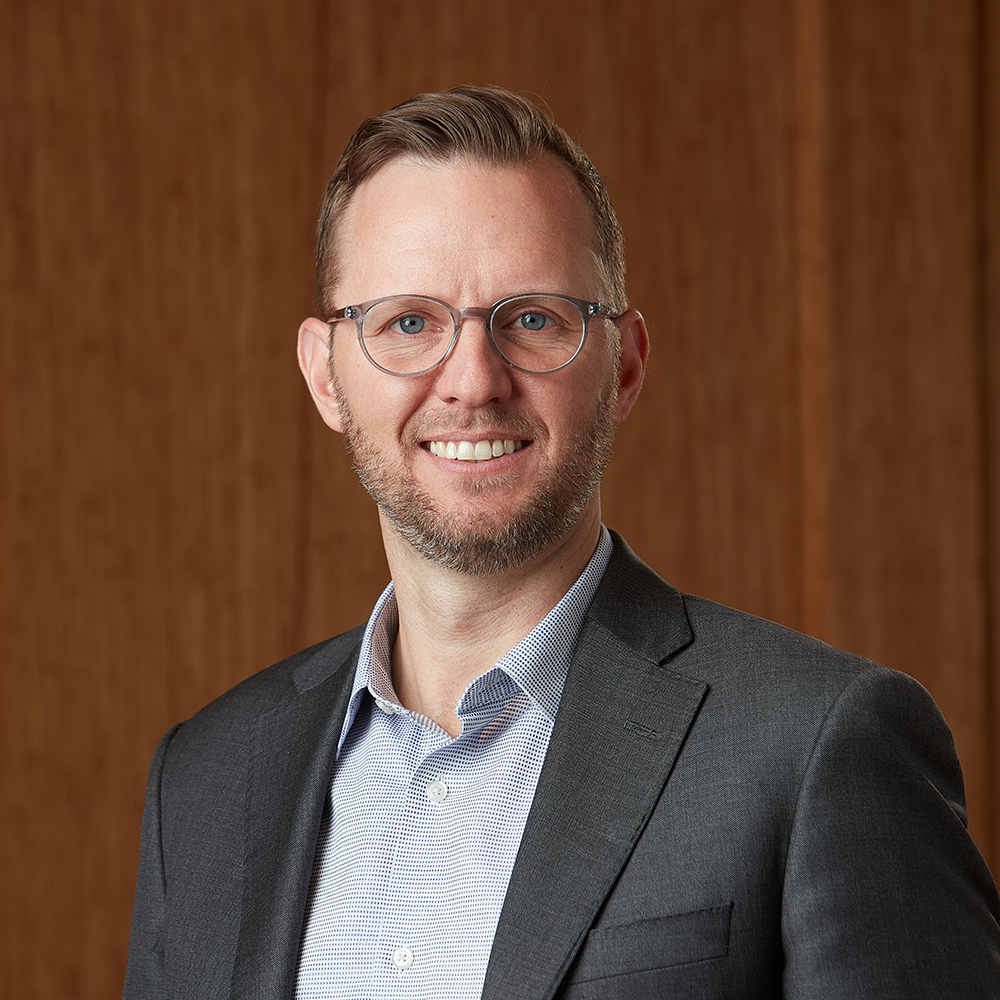
Now, “a new, multimillion-dollar fintech-education center is Utah’s latest bid in a multistate race to become one of the nation’s top fintech hubs” (Wall Street Journal). I caught up with Ryan Christiansen, executive director of the Stena Center for Financial Technology, to find out more.
Utah has nice trends working in our favor. First, we have a long history of leadership in the finance and technology industries. Marriner Eccles of Utah served as chair of the U.S. Federal Reserve from 1934 to 1948, and many technological breakthroughs were born in Utah.
Approximately 180,000 people are employed in the finance and tech industries statewide. And the growth is sustainable, with a pipeline of a quarter million students and a 50 percent growth in bachelor’s and graduate degrees in the last five years. In other words, our talent pool is growing year over year. This clustering is a big deal. With all the tech and financial talent here, it’s easy to cross-pollinate into the fintech industry.
Since 2020, Utah has seen four fintech exits, each of more than $1 billion. Clearly, there’s momentum and funding to support further innovation.
Utah’s industrial bank sector is another big factor. The great majority of industrial banks in the country are located here, making for a wonderful talent and knowledge pool. If you consider what’s referred to as “embedded banking” or “banking as a service,” you see a lot of industrial banks moving into that space. Fintechs that don’t necessarily want to pursue a bank charter are “leasing” the bank charter and bank services from industrial banks. That provides a strong foundation for technology to be built upon.
Lastly, you’ve got a state legislature and a governor who are very pro-business, and it makes a big difference.
The Stena Center launched in January 2023 with the mission to bring together education and industry to accelerate financial and technological innovation. President Taylor Randall decided that we needed a concerted focus, in part because fintech is a space where you can move from the academic setting to commercialization very quickly, compared to, say, biotech.
Our bachelor’s program in fintech involves cross-disciplinary collaboration with the College of Engineering, the School of Law, and the School of Business. We also connect industry leaders with academic partners to work on real-world problems. This includes traditional industry research, to influence thought leadership at the regulatory and product levels. Our industry partners are involved in the classroom to help guide students while also benefiting from direct access to up-and-coming talent.
The Center has a venture capital fund for early-stage investment in student, faculty, and alumni ideas and products. Each year, we organize a cohort of about ten companies, combined with an accelerator program. Our goal is to quickly move innovations from an academic setting to the commercialization stage, and students can earn a master’s degree by participating in this process.
Executives were surprised by the breadth of our sector, and they were surprised by the collaboration taking place between government, academics, and industry.
I was encouraged by their level of interest. The conversations ranged from, “This is a very interesting discussion, and we’d like to think about it,” to asking serious questions about bringing operations to Utah. Some interest is driven by our business-friendly reputation and by the amount of collaboration our contacts perceived. I thought the trip was going to be a sales job, but it turns out that many people are already sold on Utah. We primarily provided resources and answered clarifying questions.
The big challenge is industry-wide and not exclusive to Utah. As fintech grows, so does the need for financial-grade security, privacy, and regulatory knowledge. To be honest, that’s not always the primary focus in fintech. Instead, there’s been a mentality of “let’s run fast and break things.” Now, the market is too big and too broad, and fintech companies need to offer their customers the same protections as traditional banking institutions.
On one hand, many banking professionals don’t have the innovative mindset you see in fintech companies, but they do have experience with the security, privacy, and regulatory environment. On the other hand, tech professionals in fintech have been very innovative, but they don’t have as deep an understanding of compliance issues.
That’s the challenge our cross-collaborative degree program seeks to address. We are educating students about banking protections while also retaining the innovative mindset.
Some of it focuses on the deposit market and how small banks can gather and retain deposits through fintech-based services. We’re also working on a study of Community Reinvestment Act innovations.
A third example is what will be an annual overview of the industry, identifying all the fintech companies and fintech sectors in the state, which is not an easy task. Part of the study will look at the wages generated by fintech companies here. Next year, we hope to expand the report to be national in scope. This study will help us understand the drivers of growth – what are the economic, technological, and regulatory impetuses year over year?
First, the Stena Foundation – holy cow – their commitment to the University of Utah and this industry is just huge. The Center aligns well with the foundation’s goals of inclusion. Fintech is uniquely positioned to bring underserved groups into the financial marketplace, and that’s important to Steve and Jana Smith.
Two, there are lots of ways to get involved. If you are part of a new fintech company, or an alumnus in the financial services industry, please reach out. Visit the Center’s website to learn more.
_____
“Building Together” highlights examples of the collective impact of EDCUtah and our investors in communities across the state.
For additional information or to schedule an interview, please contact us.