Building Together: 10 Questions for Edward Castro Bennett of Green River
February 18, 2026
EDCUtah’s Community Spotlights seek to elevate Utah communities and connect them with business leaders to help shape future growth. In this Q&A, Green River City Manager Edward Castro Bennett shares how the community is leveraging regional partnerships, infrastructure planning, and clean energy innovation to support projects that are feasible and built to last.
Tell us about Green River.
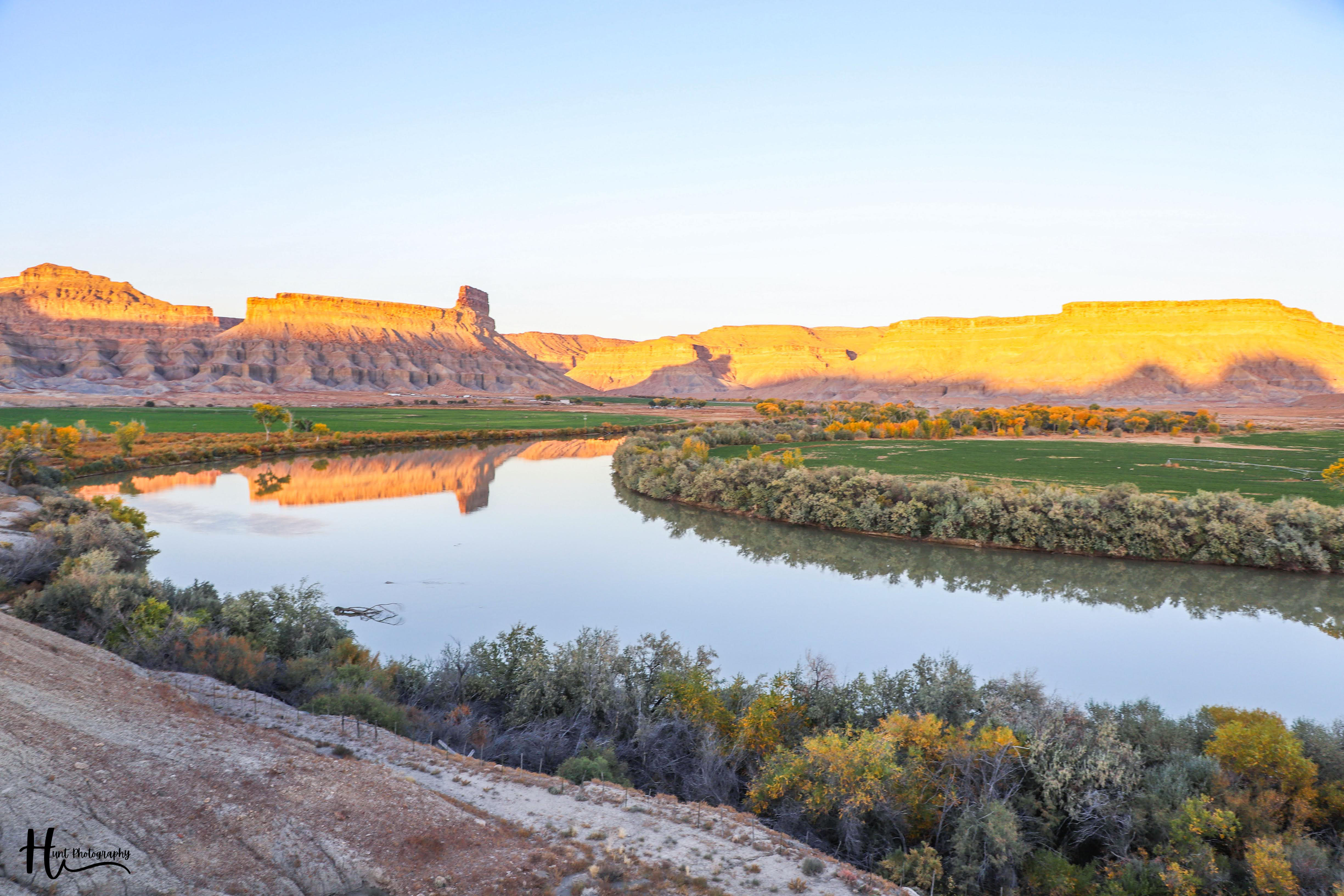
Green River is a small, resilient, western desert community on the edge of some of the most remarkable landscapes in the country. We sit in Utah’s Gunnison Valley, surrounded by the Book Cliffs, canyon country, major highways, rail lines, and vast stretches of public land. People tend to pass through us on their way elsewhere, and what often gets missed is that Green River is much more than just a stop along the way.
We are a service town in the truest sense. We provide food, lodging, fuel, emergency services, and infrastructure support for travelers, recreationists, truckers, energy workers, researchers, and neighboring rural communities. That service role extends well beyond our city limits and into a region that depends on us far more than the size of our population suggests.
We are also a river town. The Green River has shaped our history, our economy, and our relationship with the land. Water here is not abstract or taken for granted. It’s something we manage carefully, respect deeply, and plan around with intention because so much depends on getting it right.
At the same time, Green River is a connector. We connect people to the outdoors, to energy development, to rail and freight movement, and to remote parts of the state that rely on a stable hub. With that comes responsibility. Our decisions affect visitors, workers, and communities spread across a wide area.
Green River offers steady progress, serious partners, and a community that is prepared to do this work the right way.
What sets us apart is not just where we are on the map, but the role we play. We carry regional weight with a small team, limited resources, and a strong sense of stewardship. That has shaped how we think, how we plan, and how seriously we take our obligation to do things right, not just for today, but for the long haul.
You’ve worked as City Manager for almost two years now. What community developments are you most proud of?
I am most proud of the foundational work we are doing. When I arrived, my mandate was to bring the city into a modern economic development ecosystem.
This past year, we launched a rebrand that gave Green River a fresh identity with a .gov web domain, a new executive seal, and our guiding North Star: “Waypoint to Wild.” It’s more than a slogan – it’s a direct call to action. It reflects who we are as a community, rooted in grit and history, while opening doors to new opportunities for growth, pride, and belonging.
We also made history with Airbuild Inc, the first EDCUtah-supported corporate expansion project in Emery County’s history. When their proof of concept succeeds, it will be a revolutionary step for sustainability. We’ve also continued to support A-1 Lithium as it expands operations here, proving Green River is playing a real role in the future of energy in Utah and the intermountain West.
Tell us about the Airbuild project win and why that matters to Green River?
Airbuild matters because it reflects the direction Green River is heading. The company brings clean energy innovation, job creation, and environmental stewardship together in a way that is practical and grounded. We expect our partners to uphold our ideals of experiencing the west and being active members of the community. Airbuild is doing that in real time.
The project also demonstrates that Green River can support complex, forward-looking investments. It shows that a small rural community can be a serious partner in projects that matter at a regional and national level.
How does the city approach working with developers and property owners?
We strive to be transparent and consistent. We focus on clear rules, early and open communication, and mutual respect. Developers and property owners deserve to know what is expected of them, how timelines look, and where flexibility can (or does not) exist.
I have a four-pronged approach to everything we do in town. I ask three questions (the third has two parts):
- Is it legal?
- Is it ethical?
- Will it a) provide for the greater good for the community, or b) cause the least amount of harm?
That’s it. That’s the criteria for every decision we make.
We work to partner without compromising the long-term interests of the community. That means asking as many questions as possible early-on in the conversation. There is an incentive to avoid surprises later-on, and focusing on projects that are feasible, responsible, and aligned with our planning goals makes all these things easier.
What types of incentives or local support are available for development projects?
The City of Green River supports development through coordination and partnerships rather than one-off local incentives. We work closely with the Governor’s Office of Economic Opportunity (GOEO), EDCUtah, and most importantly the Utah Inland Port Authority to connect projects to state level tax incentives, financing tools, and funding programs that a city our size simply does not have the capacity to administer in house.
The Inland Port partnership, in particular, allows Green River to leverage tools that would otherwise be out of reach. Instead of trying to recreate complex incentive programs locally, we focus on being a strong, reliable on the ground partner while the state brings resources, expertise, and scale. We currently have nearly 10,000 acres of Inland Port project zones within our city limits.
Our role is to do the best we can for our citizens and all the residents in our little corner of the world. When we can align with the right partners and keep city processes clear and predictable, then good projects move faster, risks are better managed, and investors can move forward with confidence knowing commitments are real and coordination is already in place.
What opportunities are you most excited about in 2026?
Right now, we have five major economic development and downtown revitalization efforts underway at the same time. That includes the Thriving Communities Program through the U.S. Department of Transportation, our Brownfields work with the U.S. Environmental Protection Agency (EPA), the Broadway and Main engineering and redesign project and a Green River Economic Development Blueprint, both sponsored by GOEO, and our participation in Utah Main Street through the State Historic Preservation Office. That’s a lot for a small city, but it’s intentional. These projects are complimentary and we are engaging in them so we can do all the background, technical groundwork all at once.
As these efforts wrap up, we will have clear plans, the ability to prioritize projects, and tools to allow for real implementation of future development. Instead of reacting to opportunities as they appear, we will be ready with engineered designs, cleaned and usable sites, aligned incentives, and a shared downtown vision through which developers, property owners, and the community can move forward.
What projects are the city working on to enhance quality of life for its residents?
A big part of our work right now is not just physical projects, but cultural as well. We are intentionally shaping how the city functions, how people are treated, and what kind of community we want to be. That means setting clear expectations for residents, staff, and council; follow through; communication; and mutual respect – both within city government and across the broader community.
On the development side, we are being deliberate about the kind of growth we support. Forward-thinking development for us means projects that recognize there are real people living here, not just parcels of land or investment opportunities. We are working to create places where people can gather, walk, work, and live in ways that strengthen connection instead of fragmenting it.
Quality of life is built through consistency and care. When a city like ours operates predictably and plans with humans in mind, I truly believe we can create a culture where people feel invited, supported, and willing to build their future here.
What is the city currently doing to address infrastructure, power, water, roads, growth, skilled labor, housing?
If we build it, they will come. If we focus on planning ahead, then we can mitigate the risks instead of waiting for systems to fail. On infrastructure, that means assessing capacity, prioritizing maintenance, and sequencing projects so investments make long-term sense. Water and wastewater planning is especially critical given our desert environment. We are consistently working on upgrades and working with interested parties to reduce angst and allow for the leveraging of resources.
We coordinate closely with our local utility providers and regional partners to ensure reliability and future capacity. Road improvements are prioritized based on safety, condition, and long-term use rather than short-term fixes. This is automated at this point, utilizing an AI program to evaluate our roads and give us clear direction on maintenance and upkeep.
On growth, workforce, and housing, we recognize that these challenges are regional, not isolated. We work with intrastate agencies and potential employers to find solutions that reflect the scale and realities of rural Utah rather than importing models that do not fit.
What’s one thing you wish more people knew about Green River?
I wish more people understood how much responsibility we carry. Green River does far more than its size suggests. We keep things moving for travelers, industries, public lands, and nearby rural communities across a huge stretch of the state, often with a very small team and limited resources. When something works, we are probably serving people well beyond our city limits.
That reality shapes how we think, act, and feel. We have to be careful and we have to think long term. There is not much room for trial and error in a rural place like this. Decisions around water, roads, infrastructure, public safety, and land use carry real consequences, and fixing mistakes later is hard and expensive. And money is not something we have in spades to use willy-nilly. We value our taxpayers and recognize every penny we spend is because of them.
Because of this, we tend to move deliberately. We focus on doing things right the first time, even if it takes longer. The responsibility we carry has made this community aware that what we do here matters to a lot more people than most realize.
In your opinion, why should people invest in Green River right now?
People should invest in Green River because a lot of unglamorous work has happened behind the scenes to make sure systems function, expectations are clear, and long-term decisions are not being made in isolation. We’re not chasing trends or trying to sell a version of Green River that doesn’t exist. We’re focused on building the basics first. That means infrastructure, land use, utilities, downtown reinvestment, and regional coordination that can actually support growth rather than strain it. When projects move forward here, they will do so on a foundation that is thought through and durable.
Green River knows who it is and what role it plays in the region. We respect the limits of a small rural city, and we plan within them instead of pretending they are not there. At the same time, we are clear about where we are going and the kinds of projects that make sense here. For investors who think long term, this is the moment. The plans are coming together, the groundwork is nearly complete, and the city is positioned to move from planning to implementation. Green River offers steady progress, serious partners, and a community that is prepared to do this work the right way.
“Building Together” highlights examples of the impact of your investment and EDCUtah’s work in communities across the state. Do you have a story you’d like us to share? Email connect@edcutah.org.



.png)
Utah business updates from the insiders.

©XXXX EDCUtah. All rights reserved.


